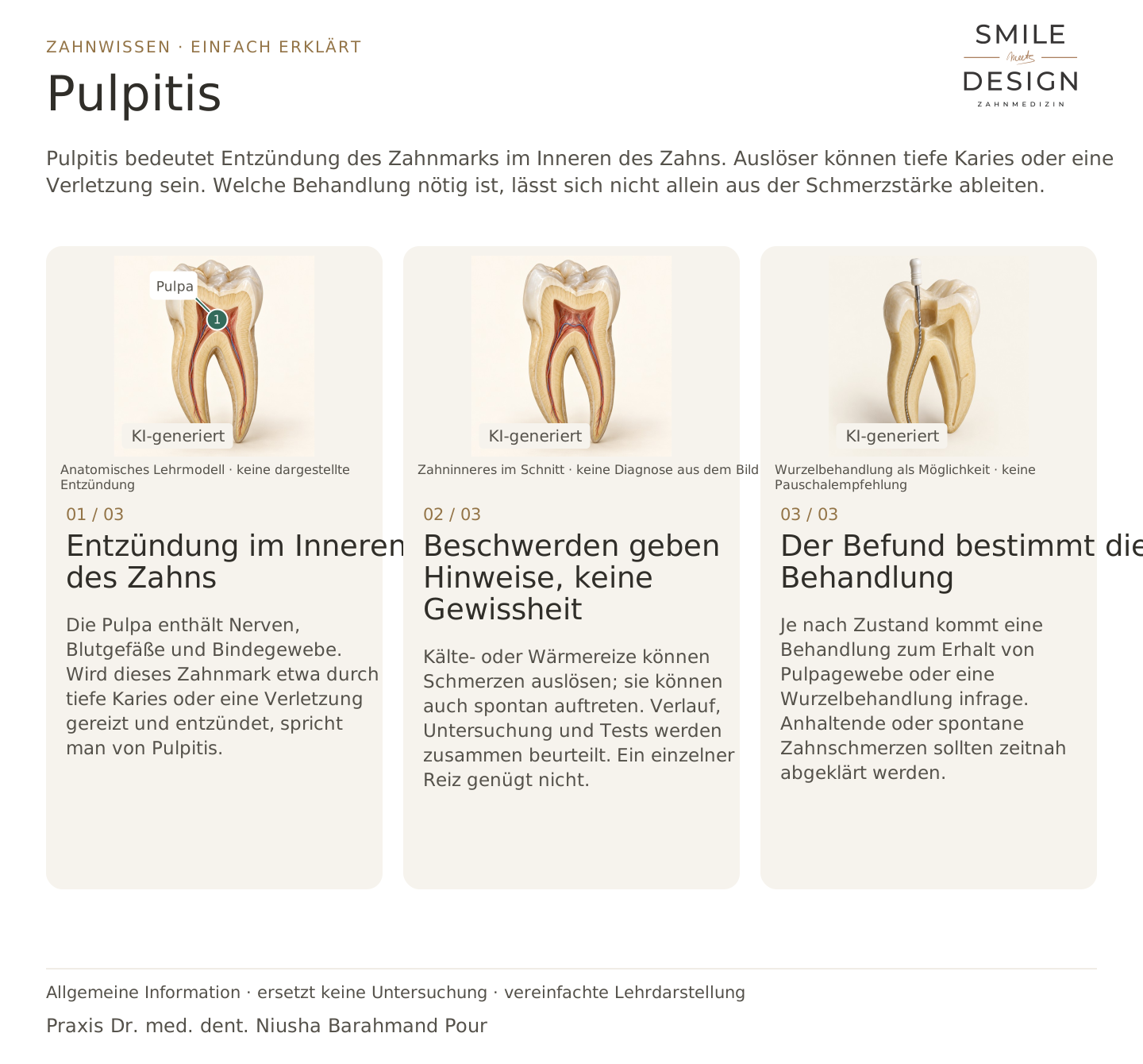
What does pulpitis mean?
Inflammation of the pulp inside a tooth.

Pulpitis means inflammation of the pulp inside a tooth. Causes can include deep decay or an injury. Pain intensity alone cannot determine which treatment is needed.
For dental trainees & teams
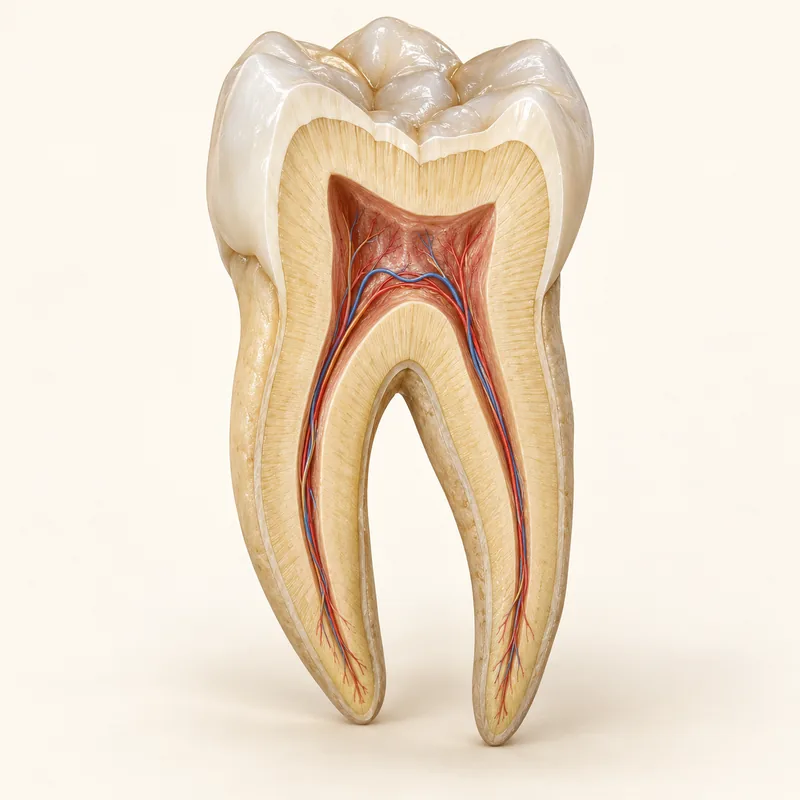
The pulp contains nerves, blood vessels and connective tissue. When it becomes irritated and inflamed, for example due to deep decay or an injury, this is called pulpitis.
Cold or heat may trigger pain; pain may also occur spontaneously. Its course, the examination and tests are assessed together. A response to one stimulus is not enough.
Depending on the condition, treatment to preserve pulp tissue or root canal treatment may be considered. Persistent or spontaneous toothache should be assessed promptly.
Inflammation of the pulp inside a tooth.
For example, deep decay or an injury to the tooth.
The condition of the tooth and pulp, assessed through symptoms and examination.
Three steps. Straight to the point.
Explanations are also shown on screen.

Silent film in German · English explanations in the three views above
Pulpitis is inflammation of pulp tissue. Necrosis means tissue has died. They are not the same and require clinical assessment.
No. Exposed dentine and other changes can also cause sensitivity. The cause needs examination.
No. Depending on the findings, measures to preserve pulp tissue may be possible. An examination establishes the options.
Symptoms and history are considered alongside clinical tests and, where appropriate, X-ray findings. A photograph or a single cold test is not enough for a reliable assessment.
A question to discuss with Dr. med. dent. Niusha Barahmand Pour:
Which findings point to the cause of my pain, and can pulp tissue be preserved?
The practice profile lists continuing education in endodontics; the individual's starting situation forms the basis of treatment planning.
Persistent or spontaneous toothache should be assessed by a dentist promptly.
Call about toothacheFor acute symptoms, call for prompt assessmentBuild on the simple explanation with clinical terms, key distinctions and a knowledge question.
Pain intensity or a single test proves neither the extent of pulp damage nor whether it can be preserved. Several findings are assessed together.
Editorial research: 23 October 2026. This explanation covers general principles and does not replace a personal examination. Suitable treatment is discussed following individual assessment.