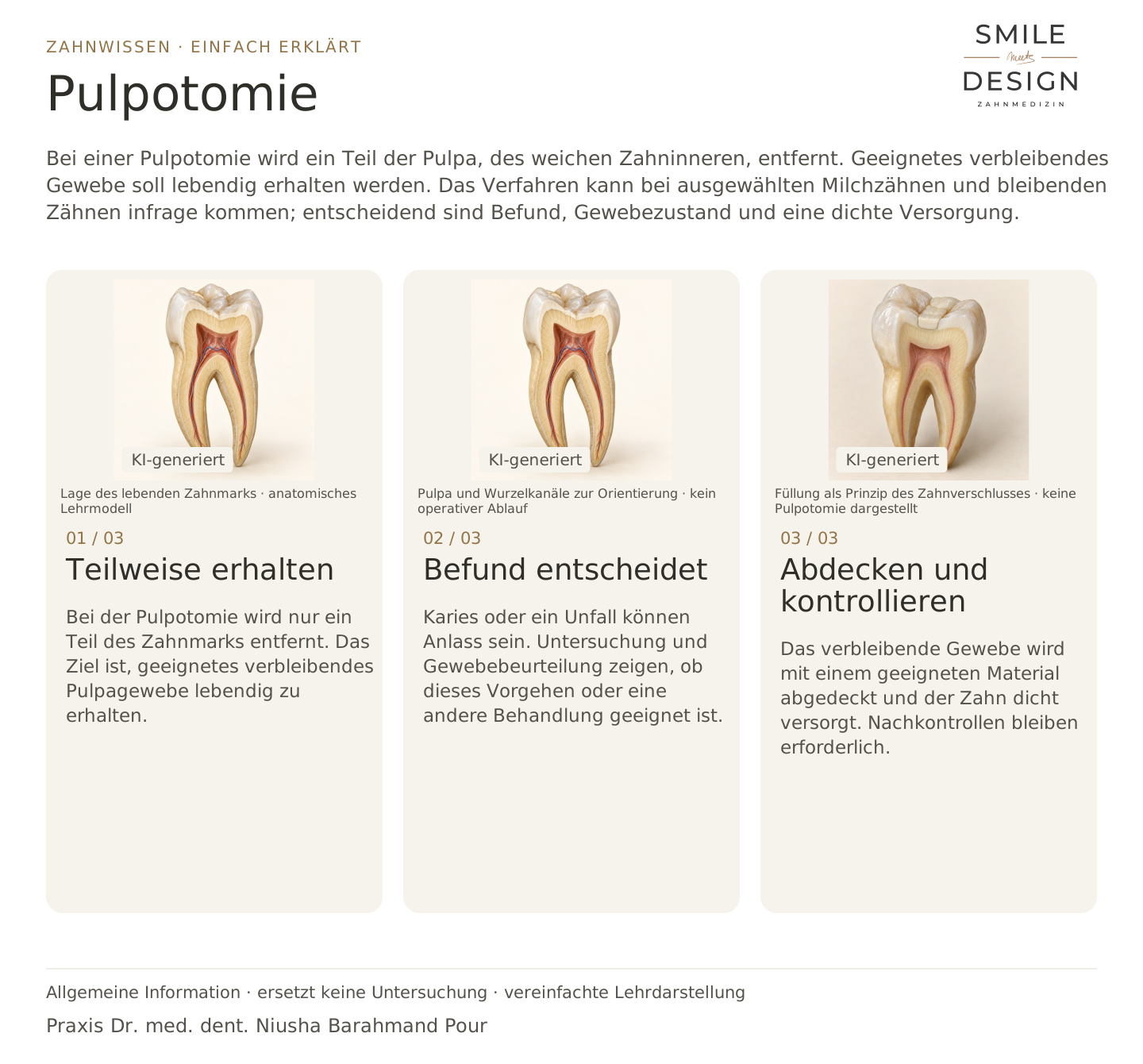
What does it include?
Assessment, targeted tissue removal, coverage and a sealed restoration.

A pulpotomy removes part of the pulp, the soft tissue inside a tooth. Suitable remaining tissue is intended to stay alive. It may be considered in selected primary and permanent teeth; findings, tissue condition and a sealed restoration are crucial.
For dental trainees & teams
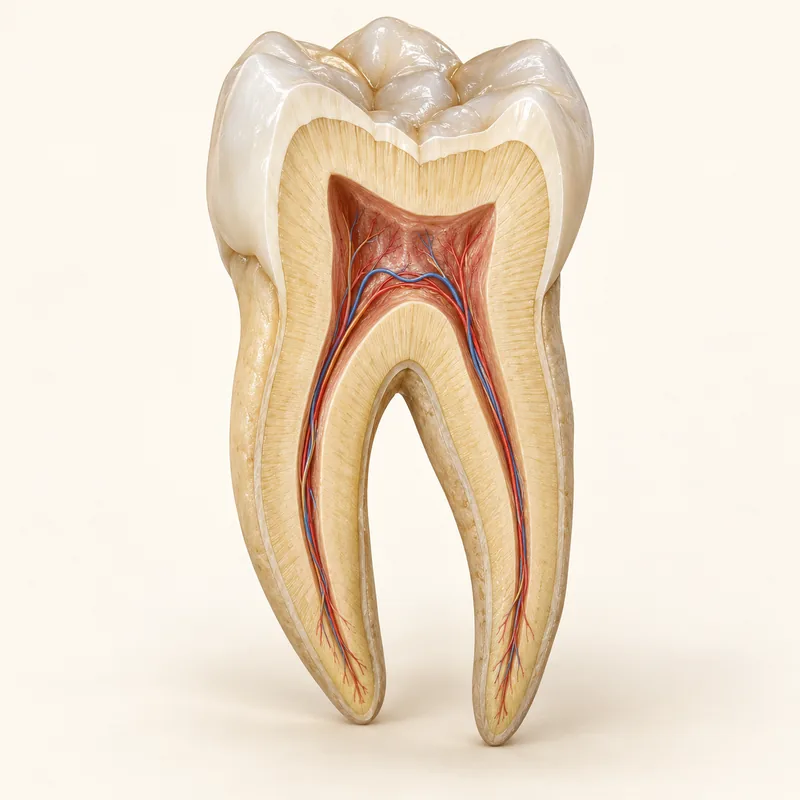
Pulpotomy removes only part of the dental pulp. The aim is to keep suitable remaining pulp tissue alive.
Decay or injury may be the reason. Examination and tissue assessment help determine whether this approach or another treatment is suitable.
The remaining tissue is covered with a suitable material and the tooth is sealed. Follow-up remains necessary.
Assessment, targeted tissue removal, coverage and a sealed restoration.
Selected teeth with remaining pulp tissue suitable for preservation.
Checks on symptoms, tooth function and the surrounding tissues.
Three steps. Straight to the point.
Explanations are also shown on screen.

Silent film in German · English explanations in the three views above
Pulpotomy removes part of the pulp. Pulpectomy removes pulp tissue from the crown and root canals.
No. In selected situations, vital pulp treatment can also be considered for adult permanent teeth.
Only a superficial part of the exposed pulp is removed. Full coronal pulpotomy removes the pulp in the crown.
Yes. Further treatment may be needed if vital pulp treatment fails or disease develops later.
A question to discuss with Dr. med. dent. Niusha Barahmand Pour:
Could vital pulp treatment be suitable here, and how would its progress be assessed?
At the practice, findings, personal wishes and possible next steps are discussed through a consultation and examination.
For deep damage, whether living tissue can be preserved is an important question.
Explore tooth preservationChoose an appointment on DoctolibBuild on the simple explanation with clinical terms, key distinctions and a knowledge question.
Direct pulp capping covers exposed pulp without deliberately removing pulp tissue first. Pulpotomy removes a portion of that tissue.
Editorial research: 23 October 2026. This explanation covers general principles and does not replace a personal examination. Suitable treatment is discussed following individual assessment.