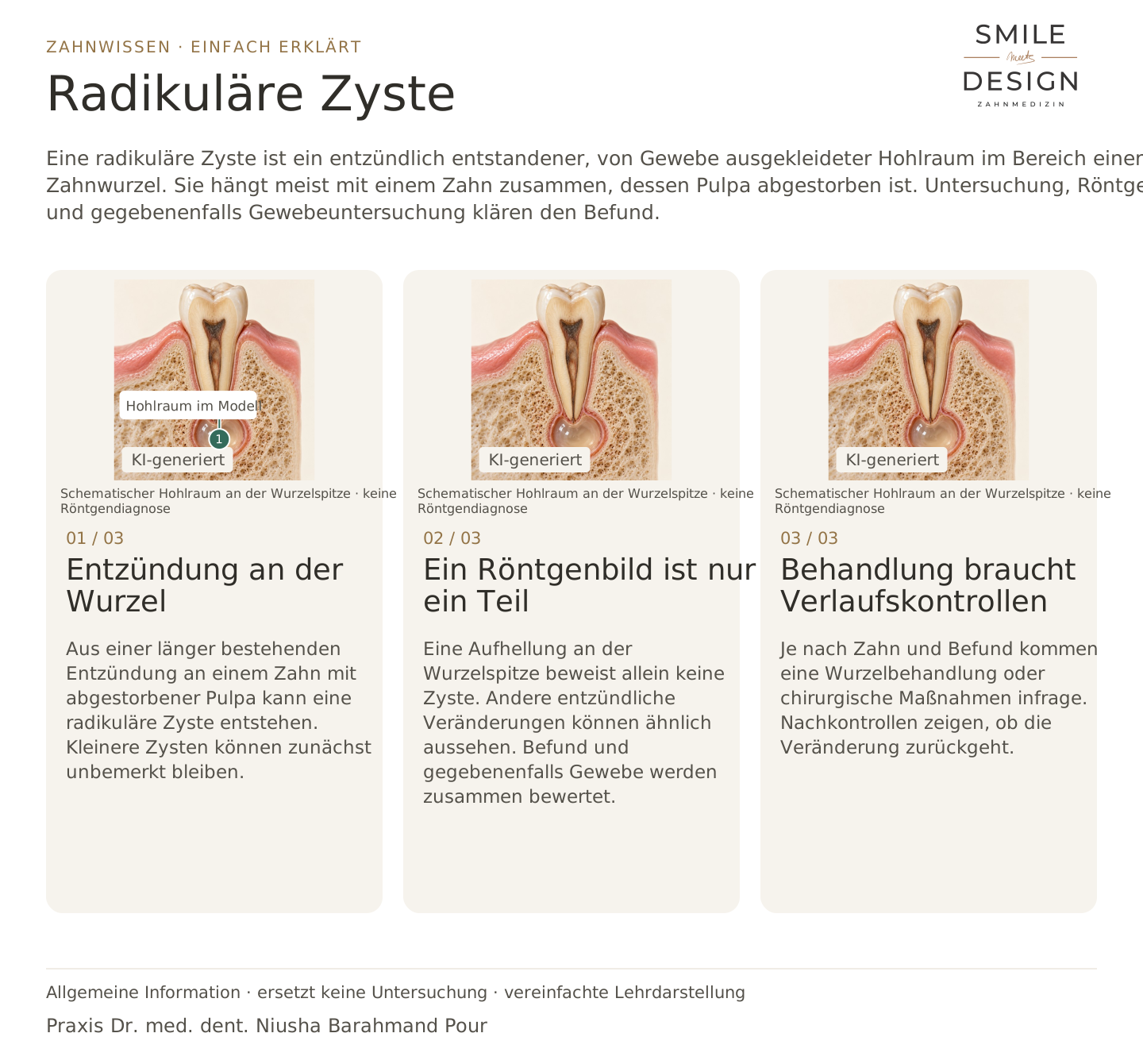
What is a radicular cyst?
An inflammatory cavity with a tissue lining near a tooth root.

A radicular cyst is an inflammatory, tissue-lined cavity near a tooth root. It is usually associated with a tooth whose pulp has died. Examination, X-rays and, when needed, examination of tissue help establish the diagnosis.
For dental trainees & teams
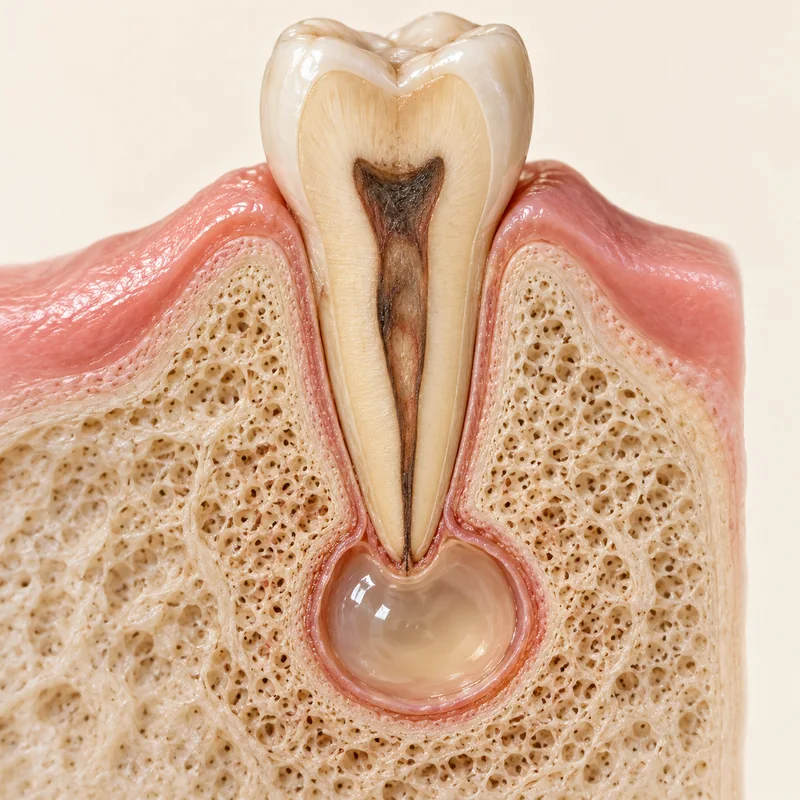
A radicular cyst may develop from longstanding inflammation around a tooth with dead pulp. Smaller cysts may initially go unnoticed.
A dark area at the root tip does not by itself prove a cyst. Other inflammatory changes can look similar. Clinical findings and, when needed, tissue are assessed together.
Root canal treatment or surgical measures may be appropriate, depending on the tooth and findings. Follow-up checks show whether the change is resolving.
An inflammatory cavity with a tissue lining near a tooth root.
By examination and imaging; tissue examination is sometimes needed.
Individually, treating the causative tooth and using surgery when needed, with follow-up.
Three steps. Straight to the point.
Explanations are also shown on screen.

Silent film in German · English explanations in the three views above
Radiolucency first describes an X-ray appearance. A cyst is a diagnosis; a similar-looking area may have other causes.
No. An abscess is a collection of pus. A cyst has a tissue-lined cavity and may also become infected.
Not automatically. The ability to preserve the tooth, and the size and nature of the lesion, determine the treatment approach.
Increasing swelling, pain or fever needs prompt dental assessment. Breathing difficulty or marked swallowing problems require immediate emergency medical help.
A question to discuss with Dr. med. dent. Niusha Barahmand Pour:
What is already known about the change at my tooth root, and what further examination is needed?
Symptoms, examination findings and personal wishes form the basis of individual treatment planning.
A finding at the root tip should be assessed together with the affected tooth.
Discuss a root-tip findingChoose an appointment on DoctolibBuild on the simple explanation with clinical terms, key distinctions and a knowledge question.
A radicular cyst is inflammatory and associated with pulp necrosis. Its X-ray shape alone cannot reliably distinguish it from a periapical granuloma.
Editorial research: 23 October 2026. This explanation covers general principles and does not replace a personal examination. Suitable treatment is discussed following individual assessment.