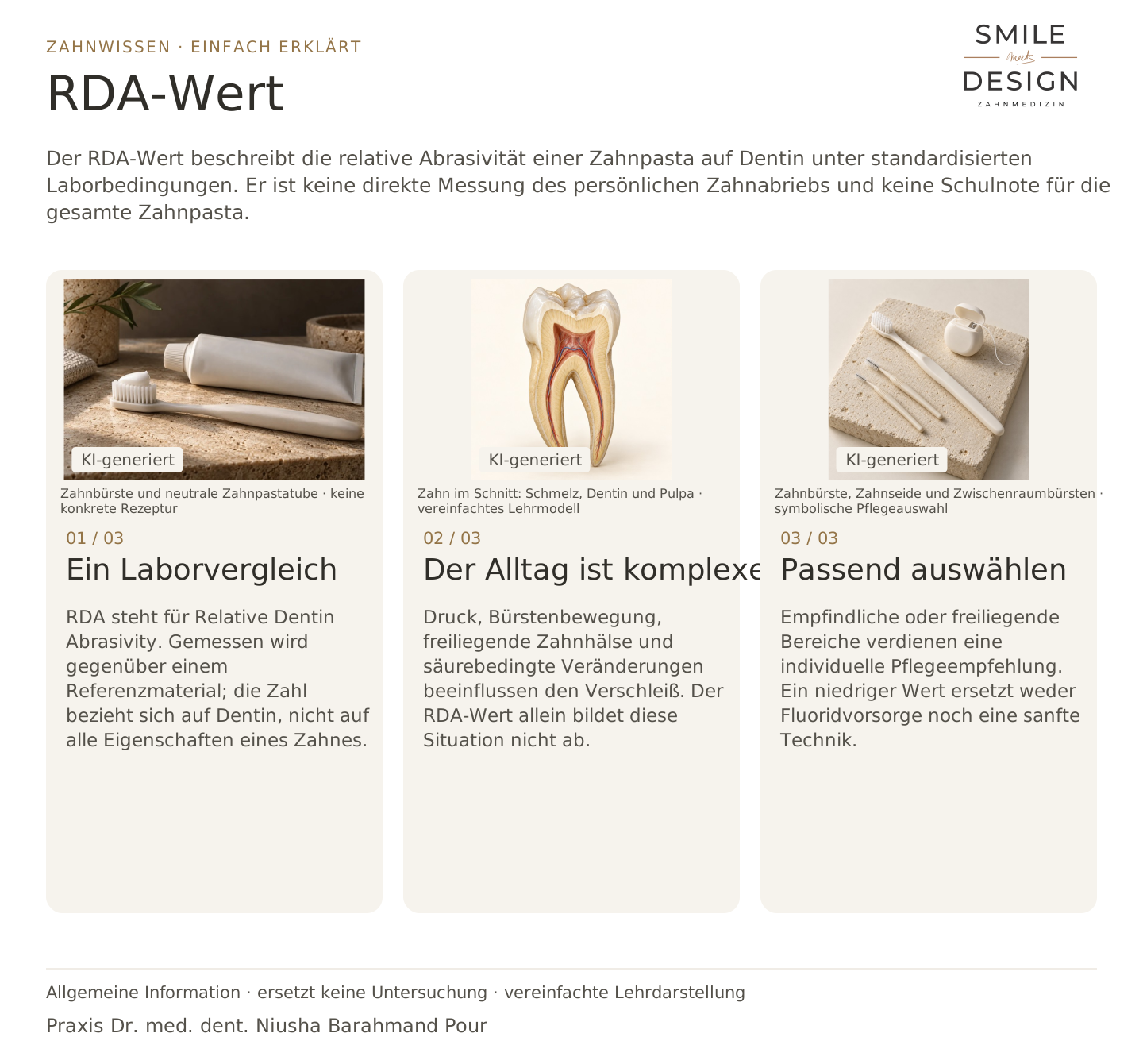
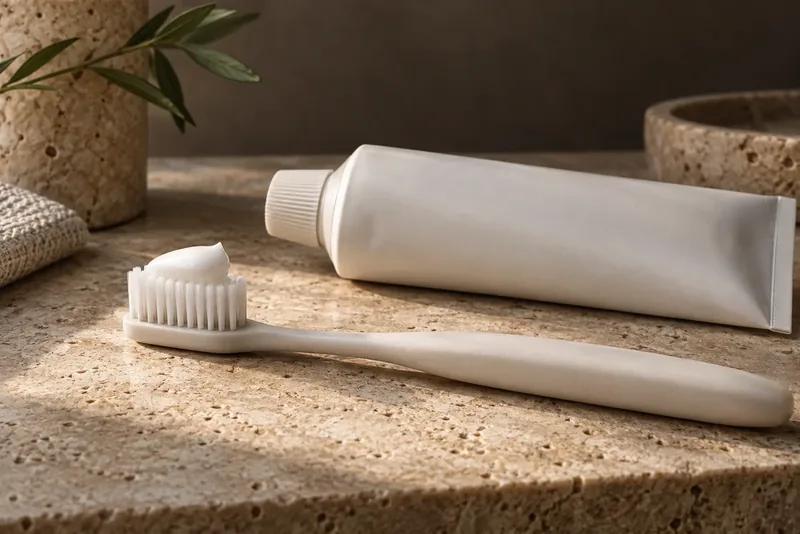
What is compared?
Dentine abrasion under defined test conditions.

The RDA value describes a toothpaste’s relative abrasiveness on dentine under standardised laboratory conditions. It is not a direct measurement of personal tooth wear or an overall grade for toothpaste.
For dental trainees & teams
RDA means Relative Dentin Abrasivity. It is measured against a reference material and concerns dentine, not every property of a tooth.
Pressure, brushing movements, exposed roots and acid-related changes influence wear. An RDA value alone does not capture that situation.
Sensitive or exposed areas deserve individual care advice. A low value replaces neither fluoride prevention nor gentle technique.
Dentine abrasion under defined test conditions.
Especially people with sensitivity, exposed roots or notable wear.
Clinical findings, pressure, technique and the complete formulation.
Three steps. Straight to the point.
Explanations are also shown on screen.

Silent film in German · English explanations in the three views above
Dentine and enamel are different tissues. A dentine laboratory value cannot be translated directly into an individual’s enamel loss.
Not automatically. RDA compares a material property; it is not an overall safety or effectiveness ranking.
It does not reliably predict whitening performance. External stains and internal tooth colour are also different.
No. Examination and suitable product advice are more useful for wear or sensitivity than home testing.
A question to discuss with Dr. med. dent. Niusha Barahmand Pour:
Do my toothpaste and brushing pressure suit the exposed areas of my teeth?
Individual findings are the basis for discussing appropriate next steps.
Sensitive exposed surfaces deserve more than comparing numbers on packaging.
Review sensitive surfaces and careChoose an appointment on DoctolibBuild on the simple explanation with clinical terms, key distinctions and a knowledge question.
RDA is a laboratory measure; clinical wear results from several interacting influences.
Editorial research: 23 October 2026. This explanation covers general principles and does not replace a personal examination. Suitable treatment is discussed following individual assessment.