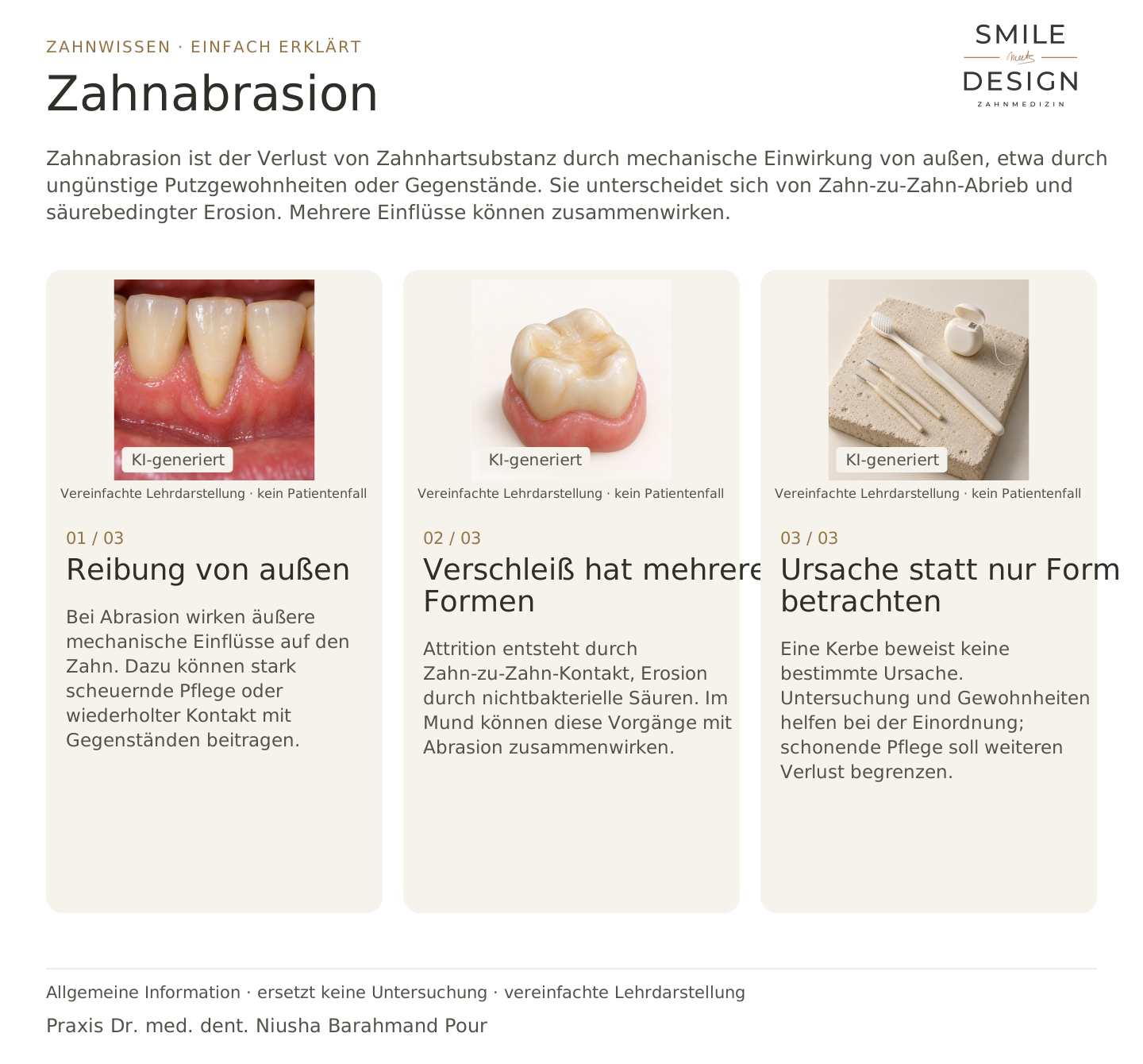
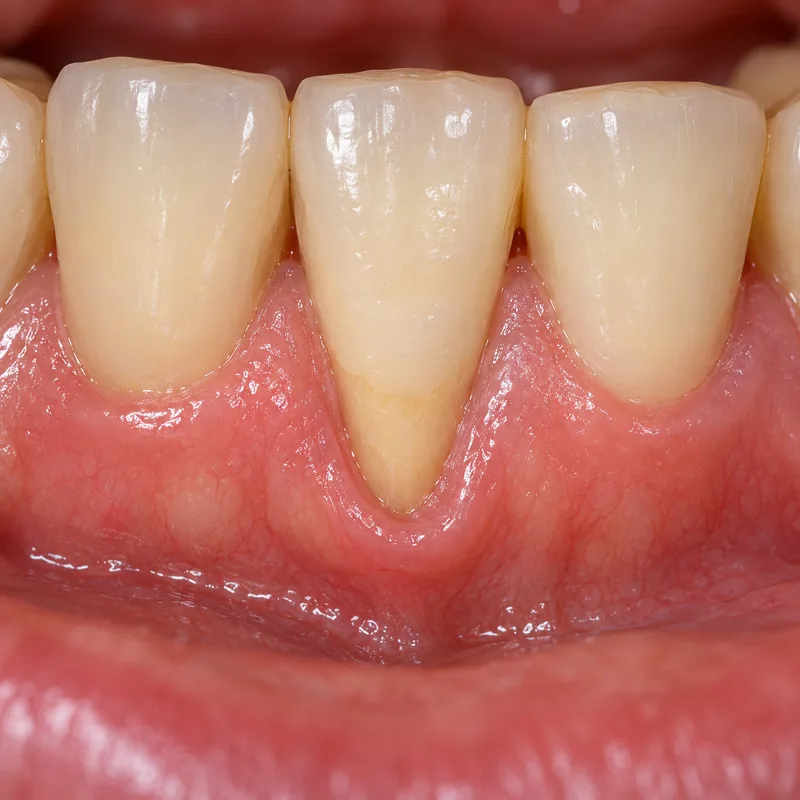
What is lost?
Hard tooth tissue through external mechanical action.

Dental abrasion is the loss of hard tooth tissue through external mechanical action, such as unfavourable brushing habits or objects. It differs from tooth-to-tooth wear and acid-related erosion. Several influences can act together.
For dental trainees & teams
Abrasion involves external mechanical action on the tooth. Highly abrasive care or repeated contact with objects can contribute.
Attrition results from tooth-to-tooth contact; erosion from non-bacterial acids. In the mouth, both processes may act alongside abrasion.
A notch does not prove a particular cause. Examination and habits help explain it; gentle care aims to limit further loss.
Hard tooth tissue through external mechanical action.
Unfavourable brushing habits or repeated object contact, for example, often together with other influences.
The location and extent of wear, symptoms, oral care and dietary habits. Protection against further loss follows these findings.
Three steps. Straight to the point.
Explanations are also shown on screen.

Silent film in German · English explanations in the three views above
Abrasion: external friction. Attrition: tooth-to-tooth contact. Erosion: non-bacterial acids. Several processes often act together.
No. Shape alone does not establish the cause; several mechanical and chemical influences can contribute.
Lost tooth shape does not simply grow back. How to protect or, if needed, restore it depends on the findings.
No. Cleaning remains important, but should be gentle and suited to the situation.
A question to discuss with Dr. med. dent. Niusha Barahmand Pour:
Which influences contribute to my tooth wear, and what can I change in daily life?
At the practice, the findings, personal wishes and possible next steps are discussed through a consultation and examination.
Visible notches or increasing sensitivity should be examined.
Discuss tooth wearChoose an appointment on DoctolibBuild on the simple explanation with clinical terms, key distinctions and a knowledge question.
The shape of a defect alone cannot establish a brushing technique or one particular cause.
Editorial research: 23 October 2026. This explanation covers general principles and does not replace a personal examination. Suitable treatment is discussed following individual assessment.