What is their advantage?
The body can break down the material, so routine removal is often unnecessary.

An absorbable suture is made from material that the body gradually breaks down. It can temporarily hold wound edges together after an operation. How long a stitch remains noticeable, and whether review or removal of irritating remnants is needed, depends on the material and procedure.
For training & practice ↓
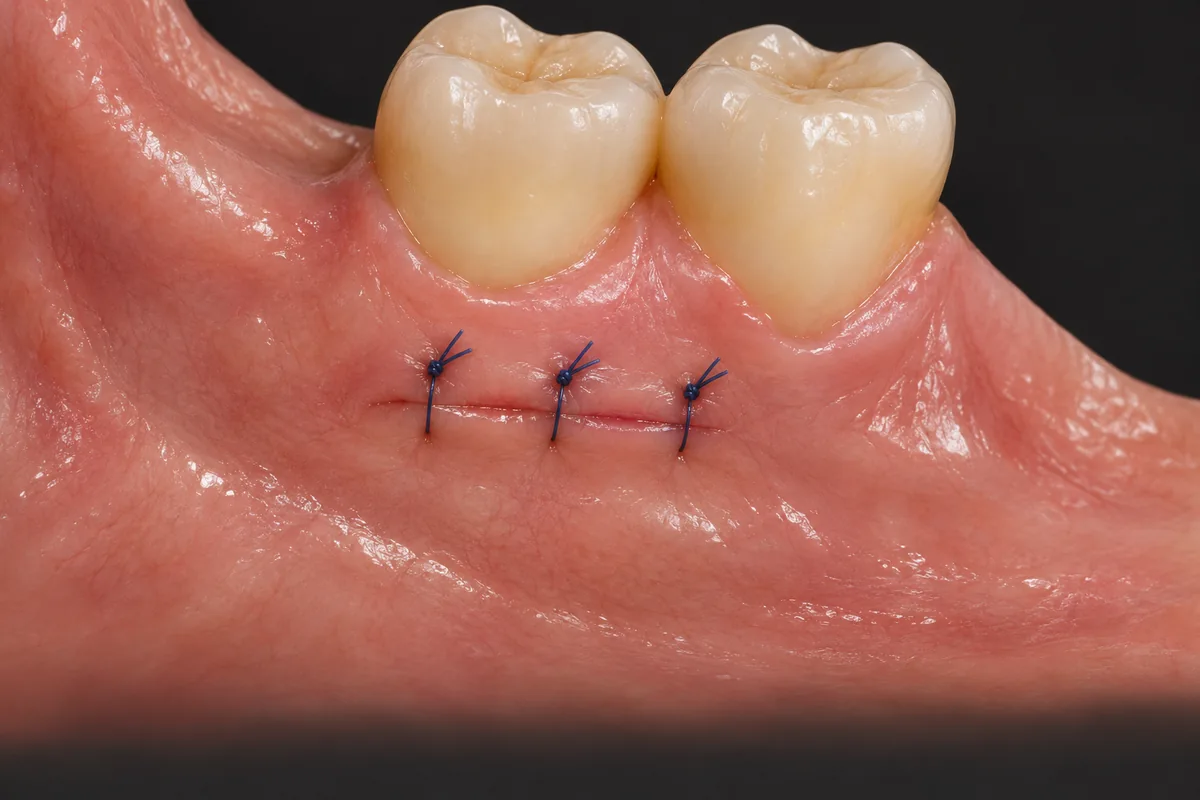
A suture helps position the wound edges during early healing. It does not replace other healing processes or make the wound immediately ready for normal loading.
Absorbable material gradually loses its supporting function and is broken down. Not all stitches change at the same time or within an identical number of days.
Follow the agreed review schedule even with dissolving stitches. Contact the treating team for an open wound, increasing pain, swelling or bleeding.
The body can break down the material, so routine removal is often unnecessary.
This depends on the material and local conditions; ask about your particular stitches.
Do not manipulate the stitches; contact the treating team.
Three steps. No audio.
Each scene can also be selected manually.

Silent educational film with German on-screen text and simplified teaching images. Not a patient case or a promised treatment outcome. The full English explanation is available as text.
Absorbable sutures are broken down in the body. Non-absorbable sutures are removed according to the planned schedule. Aftercare depends on the material actually used.
Routine removal is often unnecessary. The clinician may occasionally remove irritating or remaining pieces. The material and wound findings determine what is appropriate.
Do not pull or cut it yourself. Ask the treating practice, especially if it is uncomfortable or the wound appears to have opened.
Not automatically. The wound edges and symptoms matter more than the stitch alone. A review can clarify uncertainty.
You can bring this question to your appointment:
Are my stitches absorbable, and when is my wound review?
After surgery, ask for an explanation of the suture material, care and review plan.
Discuss your findingsAppointment selection at DoctolibAbsorbable sutures are broken down in the body. Non-absorbable sutures are removed according to the planned schedule. Aftercare depends on the material actually used.
Editorial research: . General information, not an individual diagnosis or treatment recommendation. Teaching illustrations are simplified and do not depict a patient case.