Pull a thread yourself?
No.

Wound dehiscence means that the edges of a previously closed surgical wound separate partly or completely. This can also occur in the mouth. A visible opening should be assessed by the treating team; do not glue, force together or re-suture it yourself.
For training & practice ↓
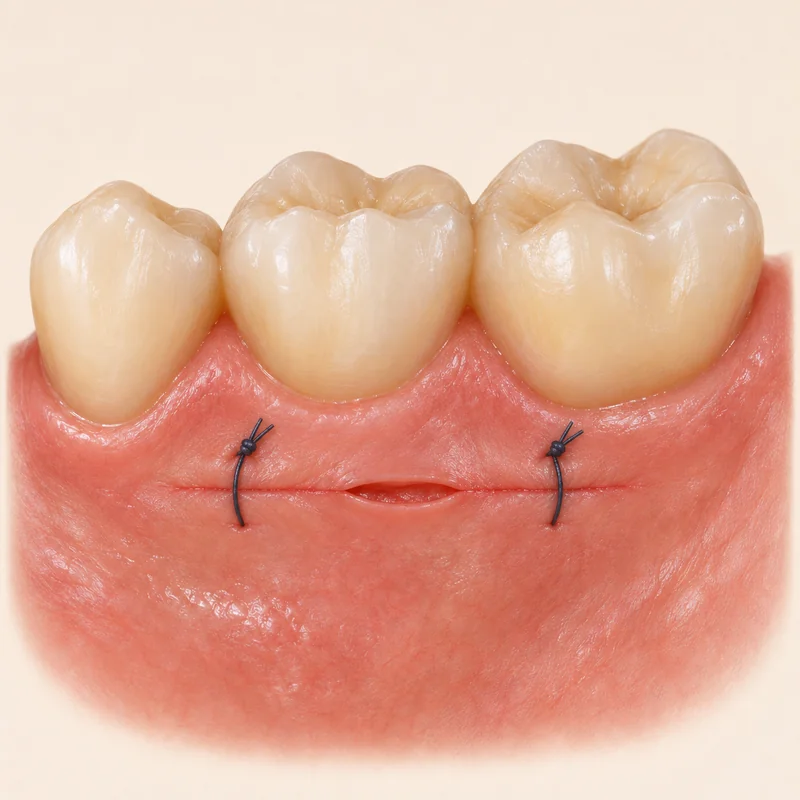
The wound itself matters, not just a loose thread. Dissolving oral sutures can come away during normal healing.
Size, depth and progress, together with pain, bleeding or signs of infection, guide care. Contact the team promptly for increasing swelling, pus, severe pain or persistent bleeding.
Not every opening is immediately re-sutured. The team decides whether wound care, delayed closure or supervised open healing is appropriate. Continue to follow your individual aftercare instructions.
No.
Ask the treating team to assess it.
Seek urgent dental or medical help.
Three steps. No audio.
Each scene can also be selected manually.

Silent educational film with German on-screen text and simplified teaching images. Not a patient case or a promised treatment outcome. The full English explanation is available as text.
Dry socket is a painful healing complication after extraction. It is not synonymous with an opened suture line; symptoms need assessment.
No. An extraction wound may be intended to heal open. Dehiscence means reopening of a previous closure.
Not necessarily. Absorbable stitches may come away early. Ask the team if a new gap appears or you are unsure.
No. Examination, evidence of infection and the healing situation guide the decision.
You can bring this question to your appointment:
Is the opening part of planned healing or dehiscence, and what care and follow-up are needed?
An examination can clarify the finding and any need for referral.
Arrange an assessmentAppointment selection at DoctolibDry socket is a painful healing complication after extraction. It is not synonymous with an opened suture line; symptoms need assessment.
Editorial research: . General information, not an individual diagnosis or treatment recommendation. Teaching illustrations are simplified and do not depict a patient case.