What is dental erosion?
An acid attack on tooth structure in which the acid does not come from bacterial biofilm.

Dental erosion occurs when acids not produced by bacteria dissolve tooth structure. These acids may come from drinks or the stomach, for example. Continued exposure can contribute to permanent tissue loss.
For dental trainees & teams
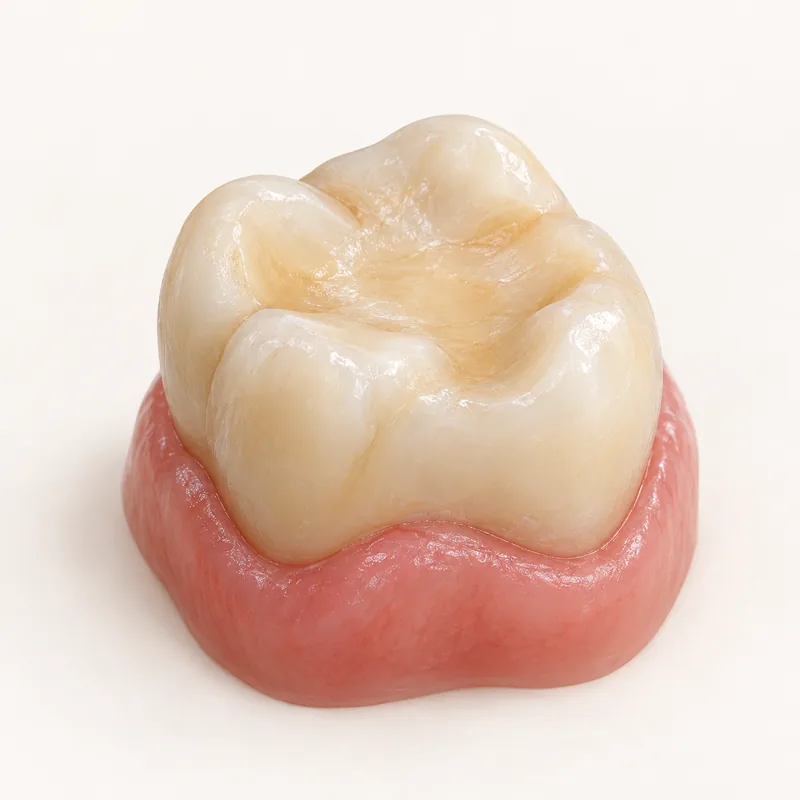
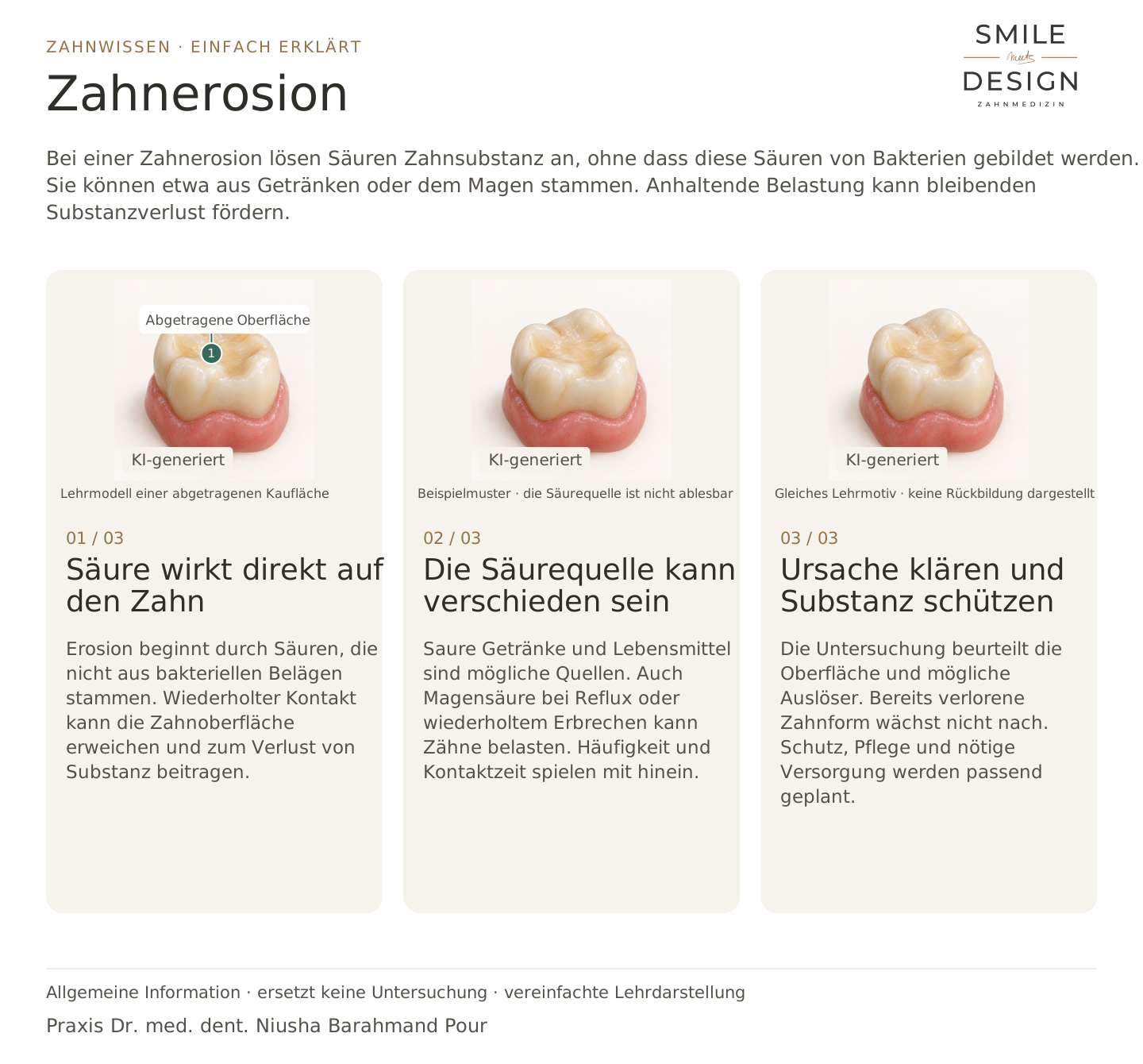
Erosion begins with acids that do not come from bacterial deposits. Repeated contact can soften the tooth surface and contribute to loss of tooth structure.
Acidic drinks and foods are possible sources. Stomach acid from reflux or repeated vomiting can also affect teeth. Frequency and contact time play a part.
An examination assesses the surface and possible causes. Lost tooth shape does not grow back. Protection, care and any necessary restoration are planned accordingly.
An acid attack on tooth structure in which the acid does not come from bacterial biofilm.
For example, from acidic drinks, foods or the stomach.
It helps determine how further loss of tooth structure can be limited.
Three steps. Straight to the point.
Explanations are also shown on screen.

Silent film in German · English explanations in the three views above
Both can damage tooth structure. The difference is the source of the acid: bacterial biofilm in decay, and sources outside that process in erosion.
Yes. Sugar-free does not mean acid-free. Acid contact is the key factor in erosion.
No. In decay, bacteria in the biofilm produce the acids that attack the tooth. Erosion involves acids from other sources.
Yes, for example with reflux or repeated vomiting. Signs of this should be assessed by a dentist and, if needed, a doctor.
A question to discuss with Dr. med. dent. Niusha Barahmand Pour:
Are there signs of acid exposure, and which possible sources should we discuss?
The practice combines preservation of natural tooth structure with planning that considers both function and appearance.
Changes to tooth surfaces and possible sources of acid can be assessed together at an appointment.
Have your tooth surfaces examinedChoose an appointment on DoctolibBuild on the simple explanation with clinical terms, key distinctions and a knowledge question.
Erosion is not bacterial tooth decay. Mechanical forces can increase the loss of a surface that has been altered by acid.
Editorial research: 23 October 2026. This explanation covers general principles and does not replace a personal examination. Suitable treatment is discussed following individual assessment.