Pause before a visit?
Follow your prescription and raise questions before the procedure.

Antiplatelet medicines make platelets less likely to stick together. Examples include low-dose aspirin and clopidogrel. If you take one after a heart attack or because you have a coronary stent, let the dental team know as soon as you are planning a procedure.
For training & practice ↓
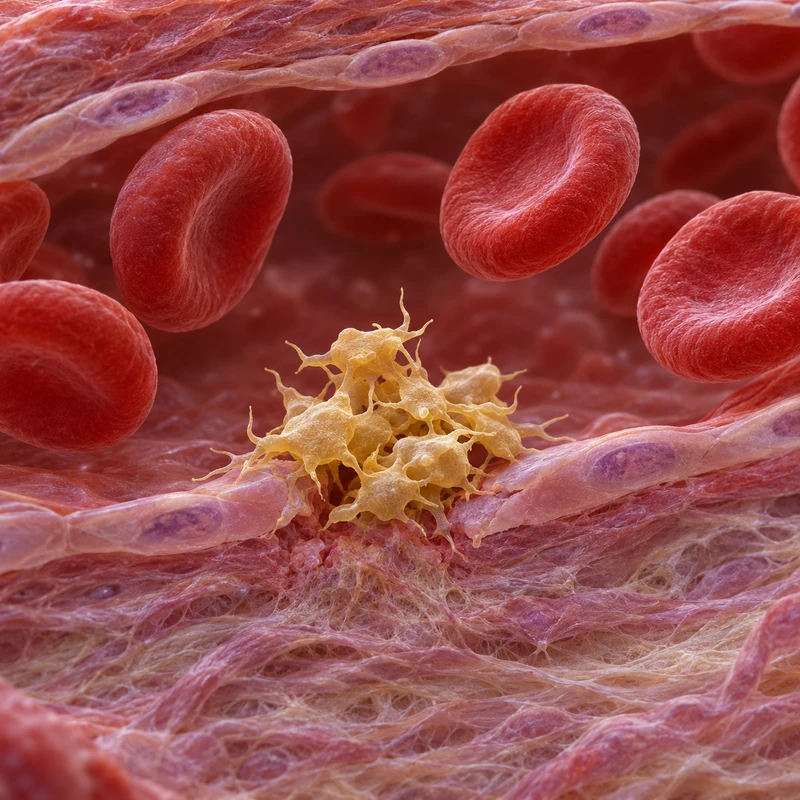
After a small vessel is injured, platelets attach to the damaged area and to one another. Antiplatelet medicines reduce this response. This protects against certain blocked blood vessels but can prolong bleeding from a wound.
Give the medicine name, dose and reason for taking it. Bring your medication list, especially if you take two antiplatelet medicines or an anticoagulant as well.
After an extraction the team may apply pressure, place a dressing that helps stop bleeding or use stitches. When bleeding risk is higher, several procedures may be spread across separate visits.
Follow your prescription and raise questions before the procedure.
Two different medicines reduce platelet activity. Give your dentist both names.
Before you leave, ask how to look after the wound and whom to contact for persistent bleeding.
Three steps. No audio.
Each scene can also be selected manually.

Silent film with English on-screen text and simplified teaching images.
Both are often called blood thinners. Anticoagulants act on clotting factors, while antiplatelet medicines act on platelets. That is why the actual medicine name matters.
Do not change or stop prescribed treatment on your own. Bleeding can be controlled locally for many dental procedures. If your circumstances need a coordinated plan, the dental team will contact your prescribing clinician.
Tell the team when the stent was placed and who provides your cardiac care. Stopping too early can put you at risk of a blocked vessel, particularly when two medicines have been prescribed together.
Follow the instructions you were given for applying pressure. If fresh bleeding continues despite pressure, contact the treating practice or urgent dental service promptly. In Germany call 112 for heavy bleeding with faintness or collapse.
A question to bring along
How will bleeding be controlled for my procedure, and whom can I call afterwards?
Mention your medicines when booking and bring your current list to the consultation.
Choose an appointmentAppointment selection at DoctolibPlanning takes two risks into account. Bleeding can often be managed at the site. Stopping treatment independently may remove protection against a blocked vessel.
Editorial research: . General information, not an individual diagnosis or treatment recommendation. Teaching illustrations are simplified and do not depict a patient case.
If you turn this on, this website stores which guides you open, separately from advertising preferences. The markers expire after a fixed 30-day period from activation. The list is not sent to us by this feature. You can turn it off here and delete the markers.
Other people using the same browser profile can also see the markers. German and English versions share one marker. Expired entries are removed the next time you open a page with this feature; deleting browser data may remove them earlier. “Viewed” means opened, not read or completed.