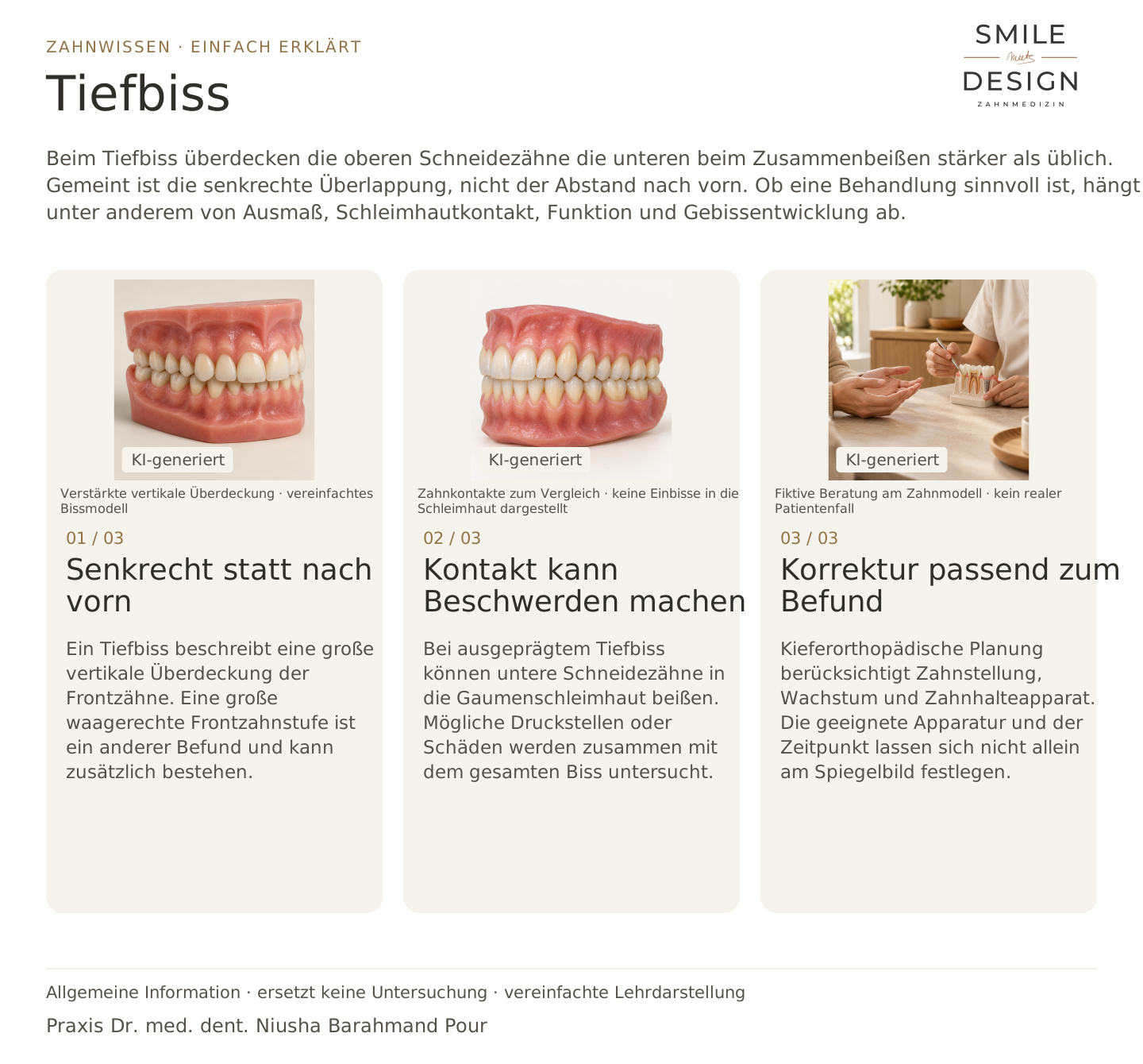
What is different?
The vertical overlap of the incisors.

In a deep bite, the upper incisors overlap the lower incisors more than usual when the teeth meet. This describes vertical overlap, not forward distance. Whether treatment is useful depends on severity, soft-tissue contact, function and dental development.
For dental trainees & teams
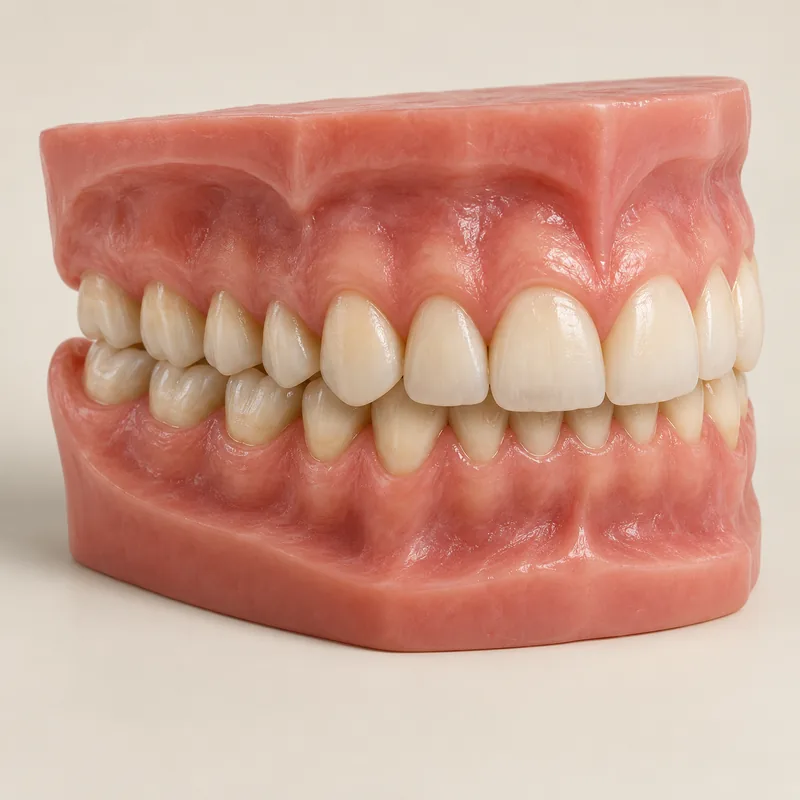
A deep bite describes excessive vertical overlap of the front teeth. A large horizontal overjet is a different finding that may also be present.
In a pronounced deep bite, lower incisors may bite into the palate. Soreness or damage is assessed together with the whole bite.
Orthodontic planning considers tooth position, growth and supporting tissues. The appropriate appliance and timing cannot be chosen from a mirror image alone.
The vertical overlap of the incisors.
With an unusual bite, sore areas or symptoms.
Using tooth position, growth, function and tissue health.
Three steps. Straight to the point.
Explanations are also shown on screen.

Silent film in German · English explanations in the three views above
Deep bite means excessive vertical overlap. Large overjet means an increased forward distance. Both can occur together.
No. Symptoms, damaging contact and development matter alongside the overlap. Examination distinguishes monitoring from treatment needs.
No. Overbite describes vertical overlap; overjet describes horizontal distance between the front teeth. Everyday use of “overbite” can be imprecise.
Orthodontic correction may also be possible in adults. Tooth position, jaw relationship, gums and bone determine and may limit the options.
A question to discuss with Dr. med. dent. Niusha Barahmand Pour:
Is my overlap simply noticeable or causing injury, and would orthodontic assessment help?
Symptoms, examination findings and personal wishes form the basis of individual treatment planning.
An unusual bite or soreness when closing can be assessed specifically.
Discuss your biteChoose an appointment on DoctolibBuild on the simple explanation with clinical terms, key distinctions and a knowledge question.
A deep bite concerns the vertical plane. A full diagnosis also assesses front-to-back and side-to-side relationships and function.
Editorial research: 23 October 2026. This explanation covers general principles and does not replace a personal examination. Suitable treatment is discussed following individual assessment.