Principle?
Light through tooth structure.

Transillumination passes light through tooth structure. Interrupted or altered transmission can reveal areas needing attention, for example during crack assessment. It complements other findings: a shadow alone establishes neither depth nor treatment need.
For training & practice ↓
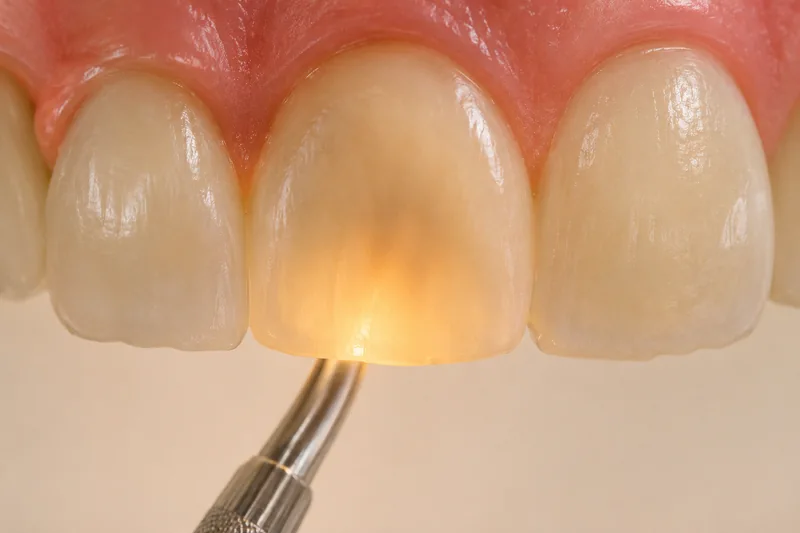
A suitable light source is placed against the tooth. The viewing angle and existing restorations affect the image.
Some changes transmit light differently. A visible contrast is initially a clue.
Symptoms, other tests and any indicated imaging also matter. A visible line does not automatically mean a serious fracture.
Light through tooth structure.
Correct.
Not a complete assessment of depth or cause.
Three steps. No audio.
Each scene can also be selected manually.

Silent educational film with German on-screen text and simplified teaching images. Not a patient case or a promised treatment outcome. The full English explanation is available as text.
A light contrast is an observation. Professional interpretation determines whether and which change is relevant.
No. It uses light rather than X-rays. The methods provide different information.
No. Location, access and restorations limit assessment. The extent cannot always be determined reliably.
No. Household light and a photograph do not provide a reliable diagnosis. New pain or damage needs examination.
Editorially suggested question to discuss with Dr Niusha Barahmand Pour:
What does transillumination show, and what remains uncertain?
A line in a tooth or pain when chewing? Examination can clarify its significance.
Discuss a tooth findingAppointment selection at DoctolibA light contrast is an observation. Professional interpretation determines whether and which change is relevant.
Editorial research: . General information, not an individual diagnosis or treatment recommendation. Teaching illustrations are simplified and do not depict a patient case.