Removable?
Yes, according to the personal wear plan.

A Twin Block is a removable functional orthodontic appliance with separate upper and lower components. Sloping bite blocks guide the lower jaw forwards when the teeth come together. It may be used for selected bite problems during growth.
For training & practice ↓
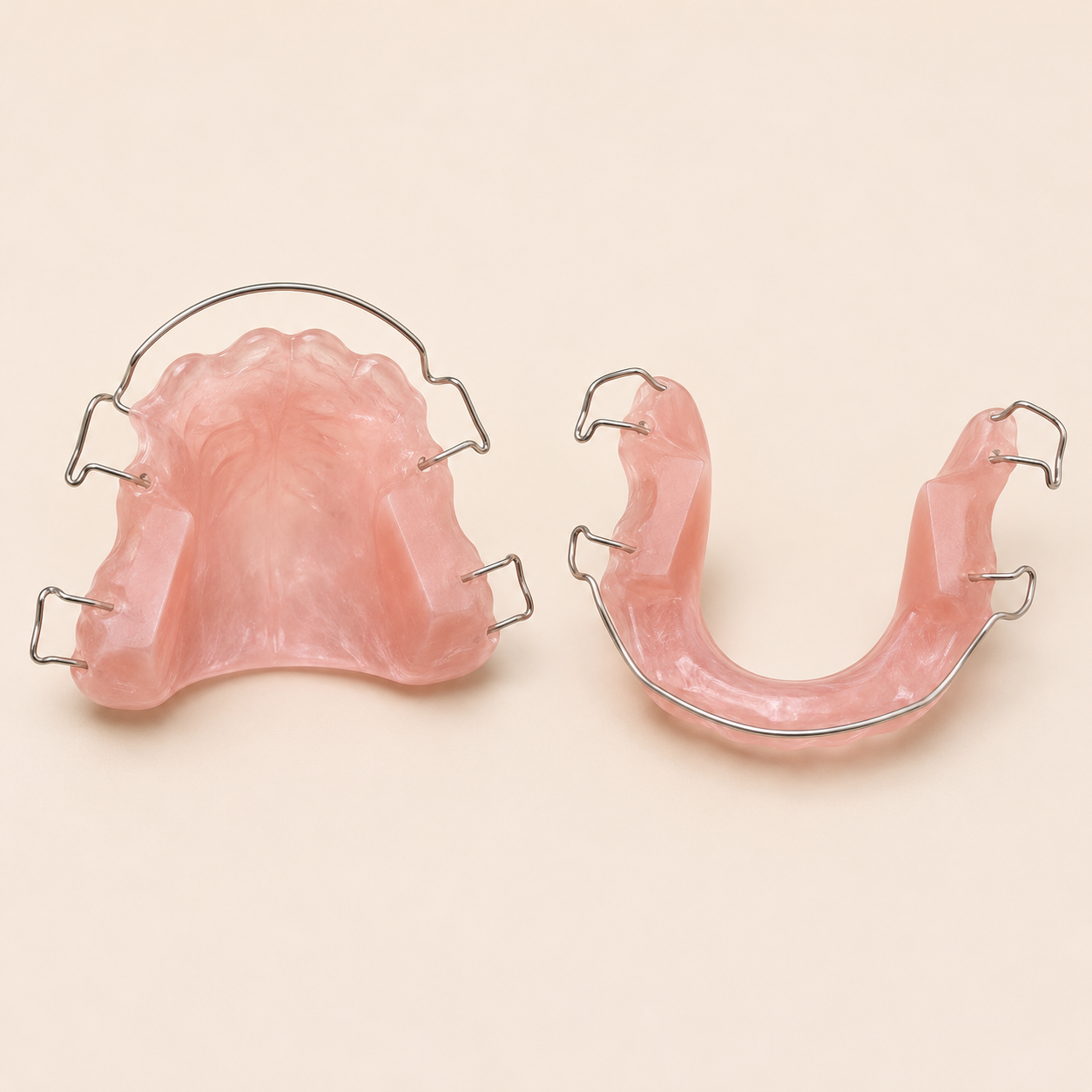
The plastic blocks on the upper and lower plates meet along sloping surfaces. This supports a forward lower-jaw posture; the appliance is different from a clear dental tray.
Treatment can change tooth positions and the horizontal gap between front teeth. The contribution of jaw growth varies. A permanently larger lower jaw cannot be promised.
Wear time, eating with the appliance and cleaning are explained individually. Sore areas, breakage or poor fit should be reported to the treating practice, which should make any adjustments.
Yes, according to the personal wear plan.
No; selection follows an orthodontic assessment.
Contact the treating practice; do not bend it yourself.
Three steps. No audio.
Each scene can also be selected manually.

Silent educational film with German on-screen text and simplified teaching images. Not a patient case or a promised treatment outcome. The full English explanation is available as text.
A Twin Block uses bite blocks to guide jaw posture. Aligners are thin trays used for planned tooth movement. These are different treatment approaches.
No. Both components can be removed. Fixed braces may be planned before, after or alongside this phase.
Follow your individual wear plan. Reducing the hours yourself can compromise treatment; discuss difficulties with your orthodontic team.
No. Tooth movement contributes substantially to correction. The result depends on the starting bite, growth and cooperation.
You can bring this question to your appointment:
What change is the Twin Block intended to achieve in my bite?
Discuss your individual findings and whether a referral is appropriate.
Discuss your findingsAppointment selection at DoctolibA Twin Block uses bite blocks to guide jaw posture. Aligners are thin trays used for planned tooth movement. These are different treatment approaches.
Editorial research: . General information, not an individual diagnosis or treatment recommendation. Teaching illustrations are simplified and do not depict a patient case.