
What is it?
A surgical procedure in which a limited part of the root tip is removed.

An apicectomy is surgery at the end of a tooth root. The tip and inflamed tissue are removed. The aim is to preserve the tooth; suitability must be assessed.
For dental trainees & teams
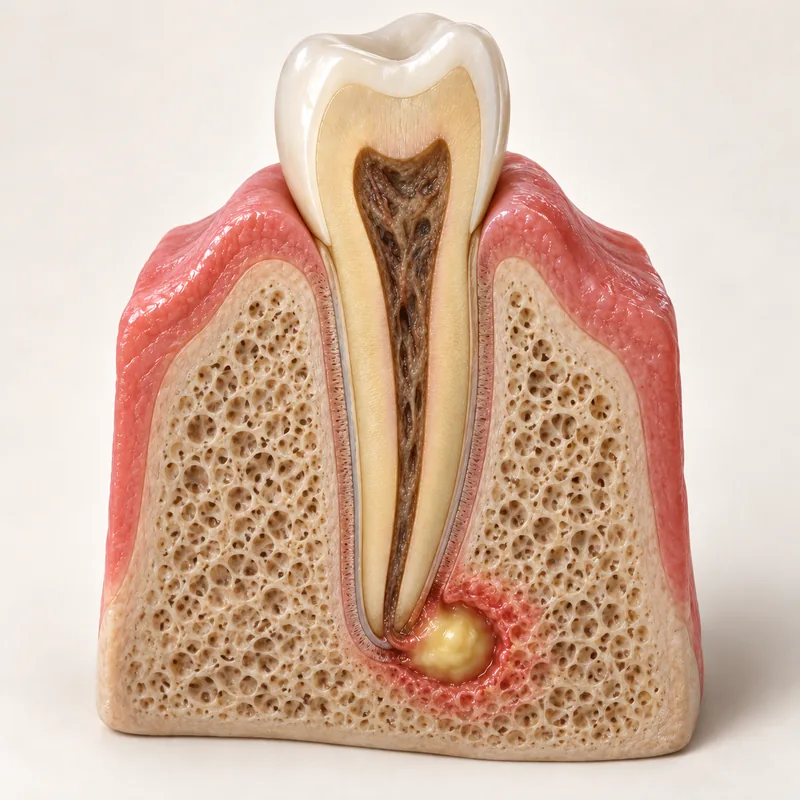
If inflammation persists at the root end, surgery may be considered. Its suitability is weighed against other options.
The area is reached through the gum and bone. The root tip and inflamed tissue are removed. The rest of the root is retained.
The end of the canal can be sealed from the root-tip side. Wound care and follow-up checks then follow. Successful tooth preservation cannot be guaranteed.
A surgical procedure in which a limited part of the root tip is removed.
For example, when findings persist at the root end and a surgical approach appears suitable.
The tip area is accessed surgically, inflamed tissue is removed and the canal end sealed if needed. Healing is then monitored.
Three steps. Straight to the point.
Explanations are also shown on screen.

Silent film in German · English explanations in the three views above
An apicectomy reaches the root end surgically. Retreatment cleans the canal system again through the crown of the tooth. The procedures are not interchangeable.
No. The operation aims to preserve the tooth. Only a limited area at the root tip is removed.
That option is assessed first. Access to the canal system, the existing restoration and the cause of the findings influence the choice.
Checks are still needed. Wound healing and subsequent findings must be monitored. Progress varies individually.
A question to discuss with Dr. med. dent. Niusha Barahmand Pour:
What options are there to preserve my tooth, and why would surgical access to the root tip be appropriate or inappropriate?
The practice begins planning with a personal conversation and an assessment of the dental conditions.
Options for preserving your tooth can be discussed in person on the basis of the findings.
Discuss preserving your toothChoose an appointment on DoctolibBuild on the simple explanation with clinical terms, key distinctions and a knowledge question.
Retrograde access is from the root end. Orthograde access proceeds from the crown into the canals.
Editorial research: 23 October 2026. This explanation covers general principles and does not replace a personal examination. Suitable treatment is discussed following individual assessment.