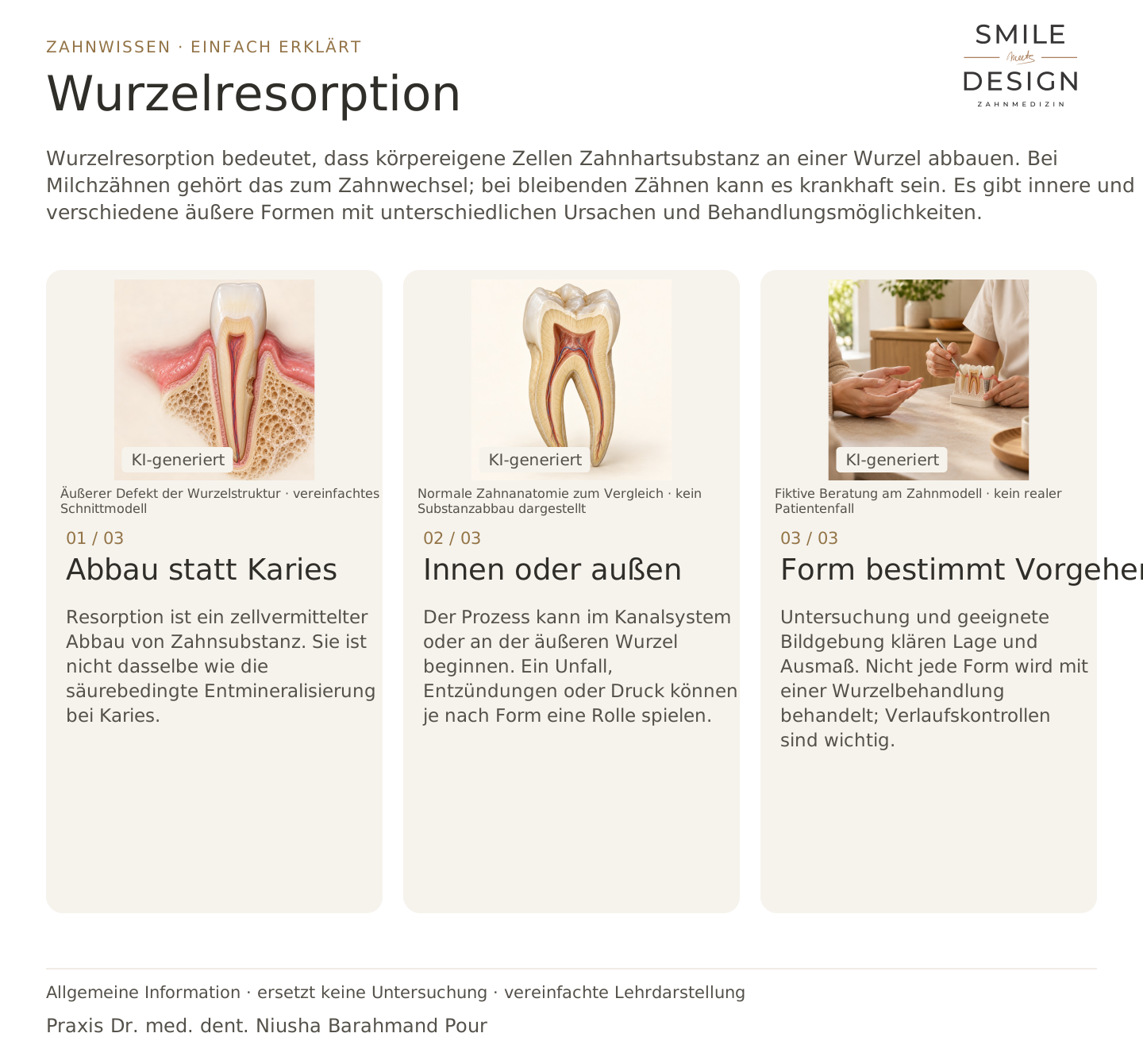
What is lost?
Hard root tissue broken down by the body’s cells.

Root resorption is the breakdown of hard root tissue by the body’s cells. In primary teeth it is part of normal tooth replacement; in permanent teeth it may be pathological. Internal and several external forms have different causes and management options.
For dental trainees & teams
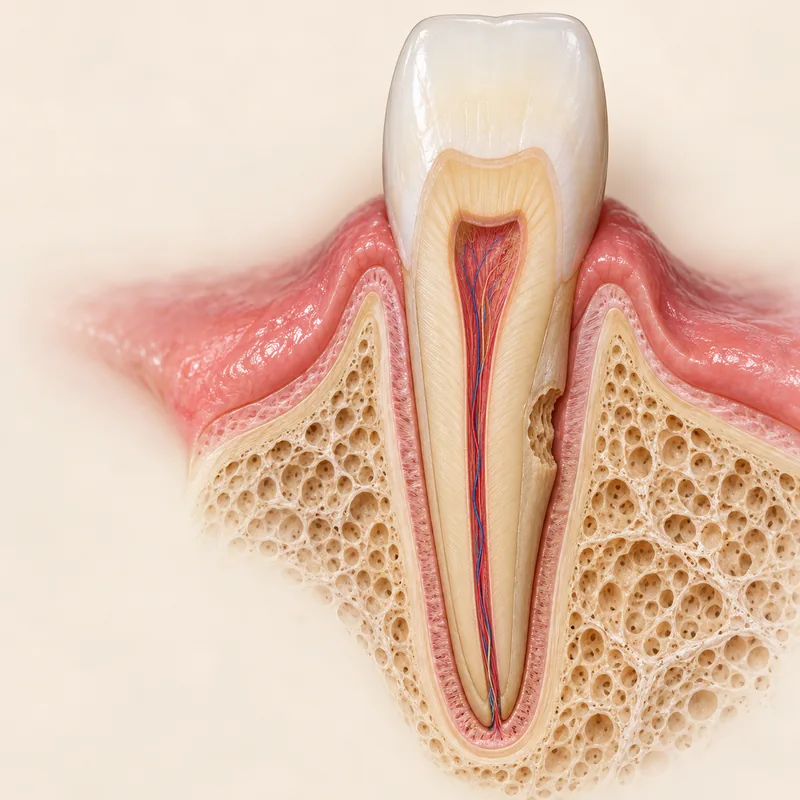
Resorption is cell-mediated breakdown of tooth tissue. It differs from acid-related demineralisation in caries.
The process can begin within the canal system or at the external root surface. Injury, inflammation or pressure may play a role depending on the type.
Examination and appropriate imaging assess location and extent. Not every form is treated with root canal therapy; review is important.
Hard root tissue broken down by the body’s cells.
People with a corresponding permanent-tooth finding, including after injury.
By location, extent, cause and progression, with specialist assessment where appropriate.
Three steps. Straight to the point.
Explanations are also shown on screen.

Silent film in German · English explanations in the three views above
Resorption is mediated by resorbing cells. Root caries involves mineral loss at accessible root surfaces through carious processes.
No. Some changes are first noticed during examination or imaging.
Lost root structure cannot simply be restored. Depending on the type, care aims to limit progression and preserve the tooth where possible.
Resorption of primary roots allows those teeth to be shed. A finding in permanent teeth needs separate assessment.
A question to discuss with Dr. med. dent. Niusha Barahmand Pour:
Which resorption type is present, and what review or treatment suits it?
At the practice, findings, personal wishes and possible next steps are discussed through a consultation and examination.
Existing images and an examination can help clarify an unusual root finding.
Discuss a root findingChoose an appointment on DoctolibBuild on the simple explanation with clinical terms, key distinctions and a knowledge question.
Replacement, inflammatory and pressure-related resorption are different. Cause and remaining pulp tissue affect management.
Editorial research: 23 October 2026. This explanation covers general principles and does not replace a personal examination. Suitable treatment is discussed following individual assessment.