What does the term mean?
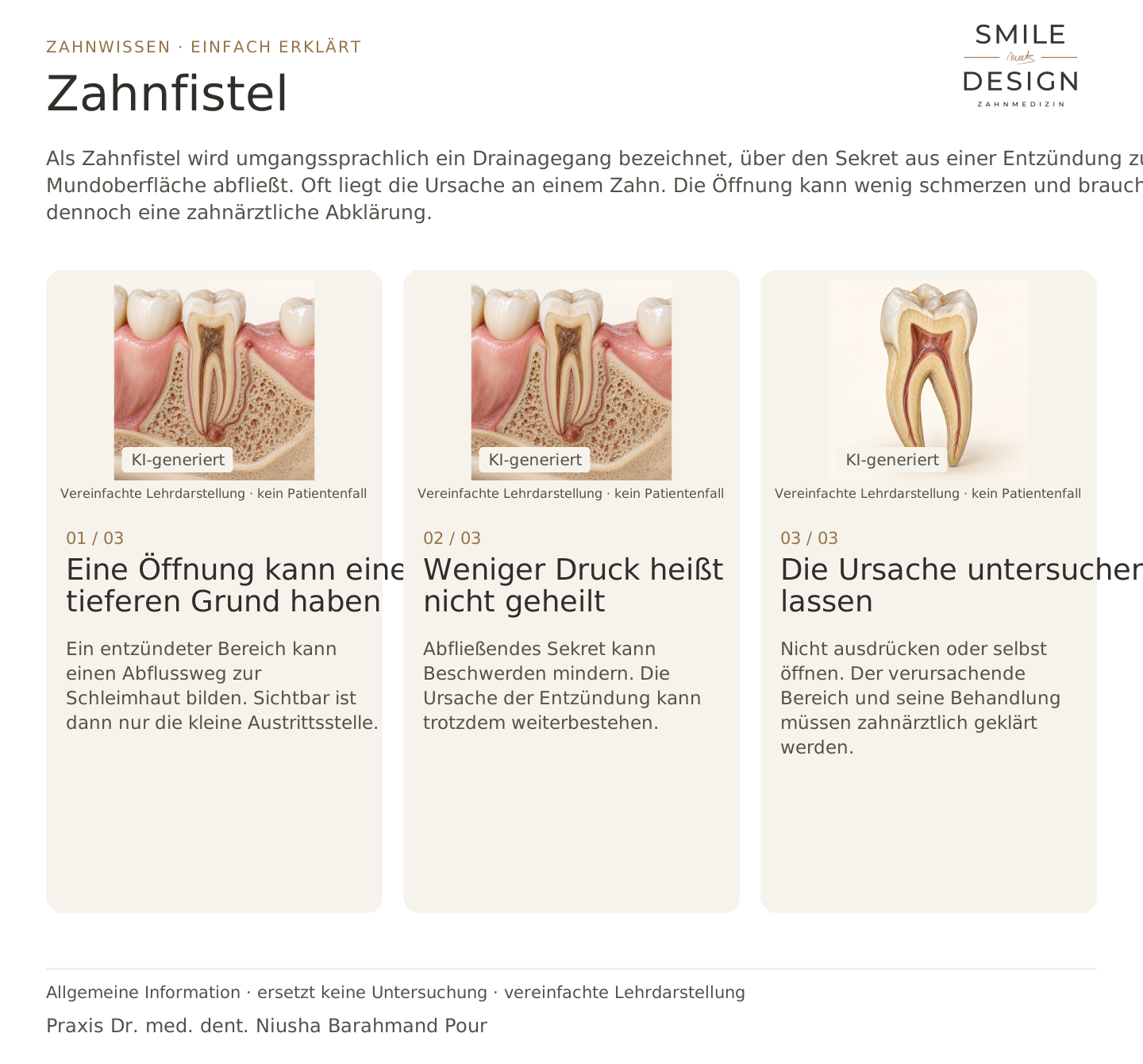
A possible drainage pathway from an inflamed area to an oral surface.

A dental sinus tract, often called a dental fistula, is a drainage pathway from an inflamed area to an oral surface. A tooth is often the source. The opening may cause little pain but still needs dental assessment.
For dental trainees & teams
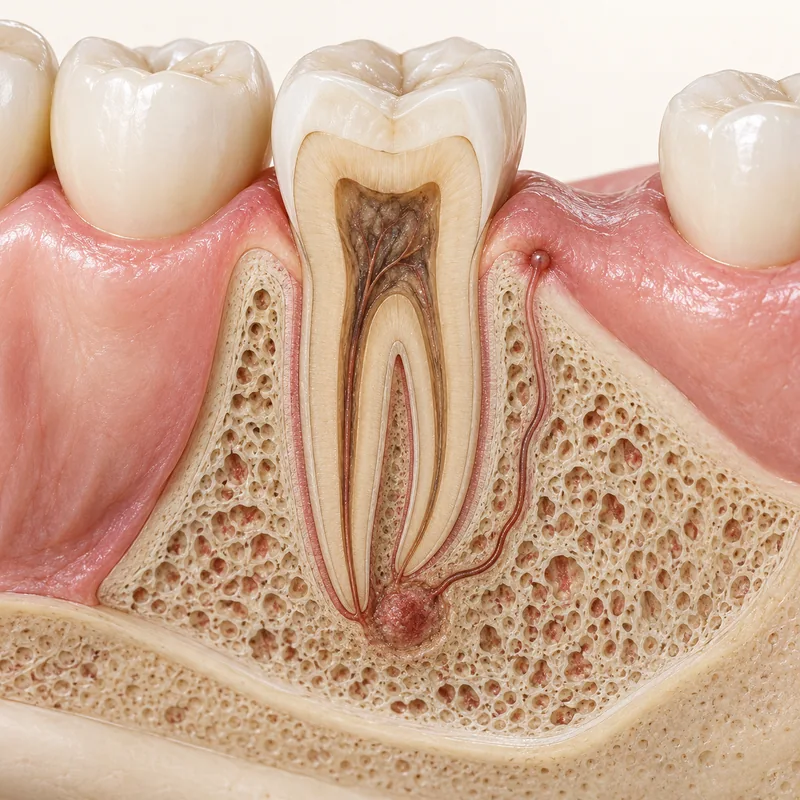
An inflamed area can develop a drainage pathway to the oral lining. Only the small exit point may be visible.
Draining fluid can reduce symptoms. The underlying cause of inflammation may remain.
Do not squeeze or open it yourself. The source and appropriate treatment need dental assessment.
A possible drainage pathway from an inflamed area to an oral surface.
Drainage can reduce pressure without removing the cause of inflammation.
Prompt dental assessment; immediate medical help for breathing or significant swallowing difficulty.
Three steps. Straight to the point.
Explanations are also shown on screen.

Silent film in German · English explanations in the three views above
An abscess is a collection of pus. A sinus tract is a possible drainage pathway from it; the terms are not interchangeable.
No. Different changes can look similar. A photograph alone cannot establish the cause.
A possible drainage tract should be assessed promptly. Lack of pain does not exclude ongoing infection.
Seek immediate medical help for breathing or significant swallowing difficulty, or rapidly increasing swelling.
A question to discuss with Dr. med. dent. Niusha Barahmand Pour:
What is causing the opening, and what treatment does the cause need?
The practice profile links tooth preservation with assessment of individual circumstances.
A possible sinus tract needs prompt assessment; please explain the reason when contacting the practice.
Contact the practice promptlyArrange an appointment with the practiceBuild on the simple explanation with clinical terms, key distinctions and a knowledge question.
An exit opening does not automatically identify the precise cause or responsible tooth.
Editorial research: 23 October 2026. This explanation covers general principles and does not replace a personal examination. Suitable treatment is discussed following individual assessment.