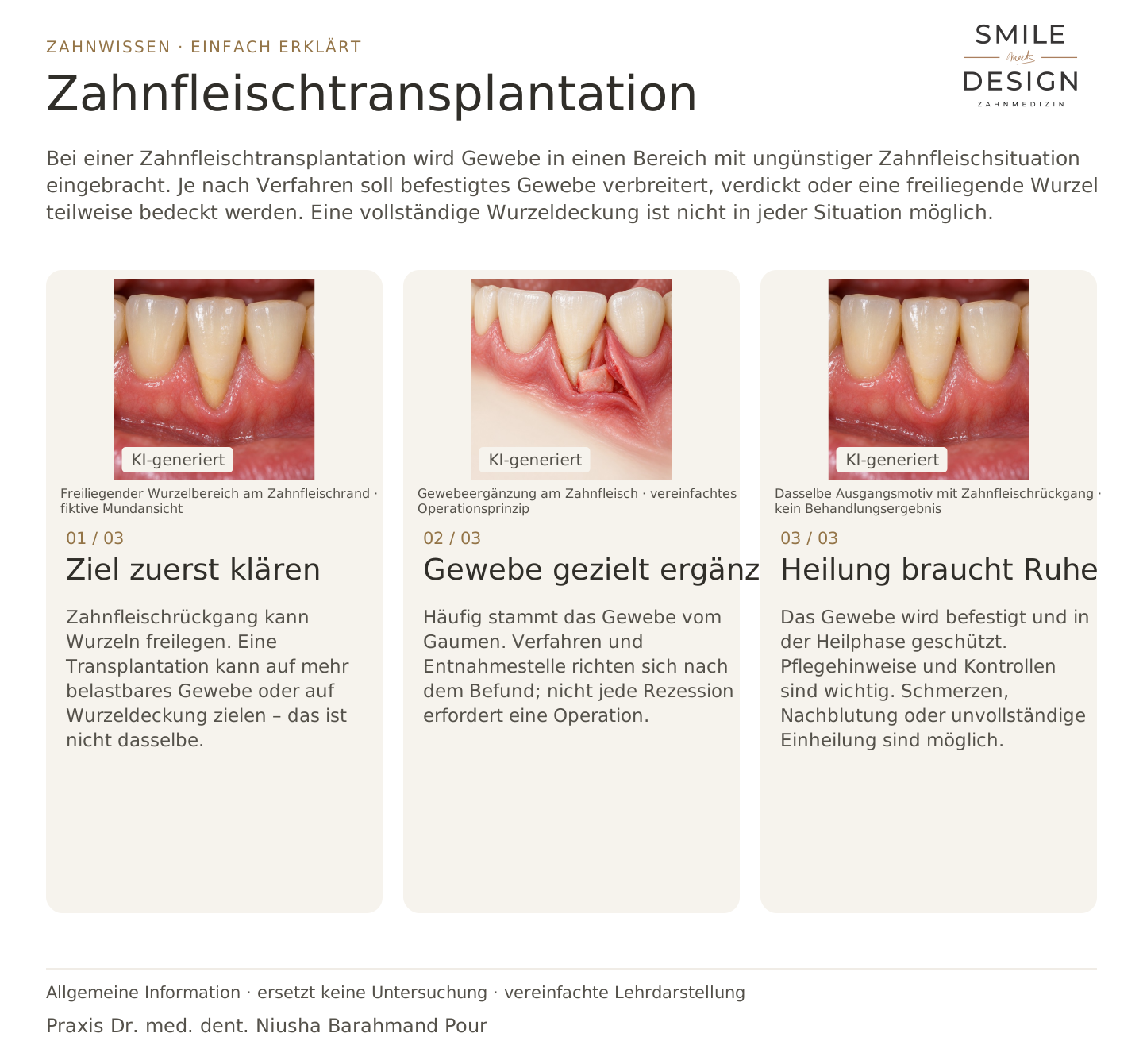
What is involved?
Targeted addition of soft tissue around a tooth or implant.

A gum graft places tissue where the gum situation is unfavourable. Depending on the procedure, the aim may be to widen or thicken attached tissue or cover part of an exposed root. Complete root coverage is not possible in every situation.
For dental trainees & teams
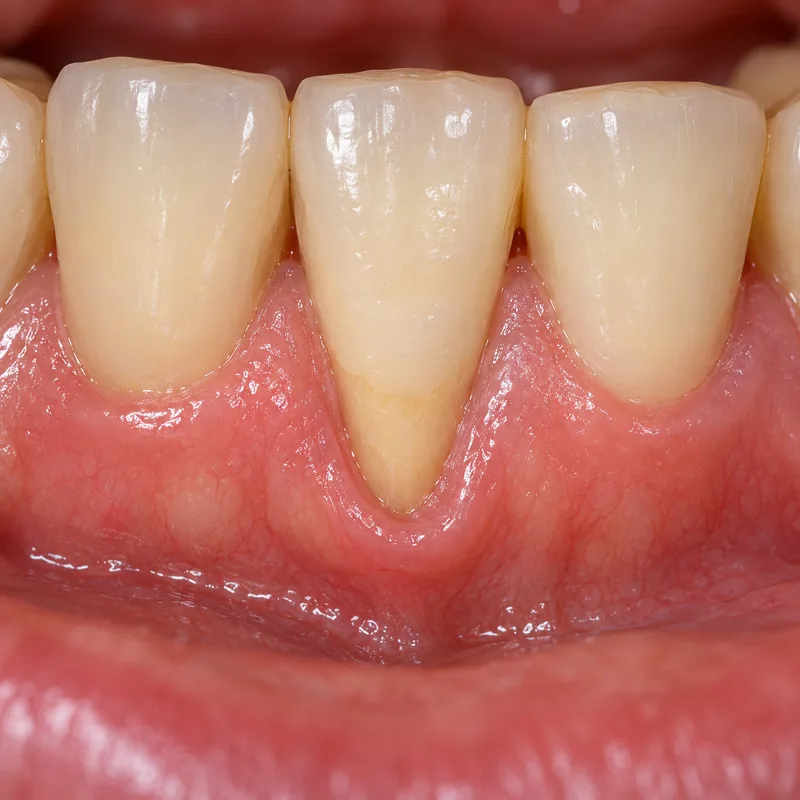
Recession can expose roots. A graft may aim for more resilient tissue or root coverage; these are different objectives.
Tissue often comes from the palate. The technique and donor site depend on the findings; not every recession needs surgery.
The graft is secured and protected during healing. Care instructions and review matter. Pain, bleeding or incomplete healing can occur.
Targeted addition of soft tissue around a tooth or implant.
In selected tissue deficiencies, symptoms or cleaning difficulties.
Cause assessment, technique, risks, healing care and follow-up.
Three steps. Straight to the point.
Explanations are also shown on screen.

Silent film in German · English explanations in the three views above
A free gingival graft can widen attached gum. Connective tissue beneath repositioned gum can increase thickness and contribute to root coverage.
Soft tissue grafting is not bone grafting. It primarily concerns gum or connective tissue.
No. Coverage depends on factors including tissue between the teeth, defect shape and healing.
No. Causes, symptoms, cleanability and progression are assessed first.
A question to discuss with Dr. med. dent. Niusha Barahmand Pour:
Is the aim in my case more stable tissue, fewer symptoms or root coverage?
At the practice, findings, personal wishes and possible next steps are discussed through a consultation and examination.
With gum recession, discussing both the cause and an achievable goal is useful.
Have your gums assessedChoose an appointment on DoctolibBuild on the simple explanation with clinical terms, key distinctions and a knowledge question.
More attached gum and complete root coverage are different treatment goals. The intended aim should be explained before surgery.
Editorial research: 23 October 2026. This explanation covers general principles and does not replace a personal examination. Suitable treatment is discussed following individual assessment.