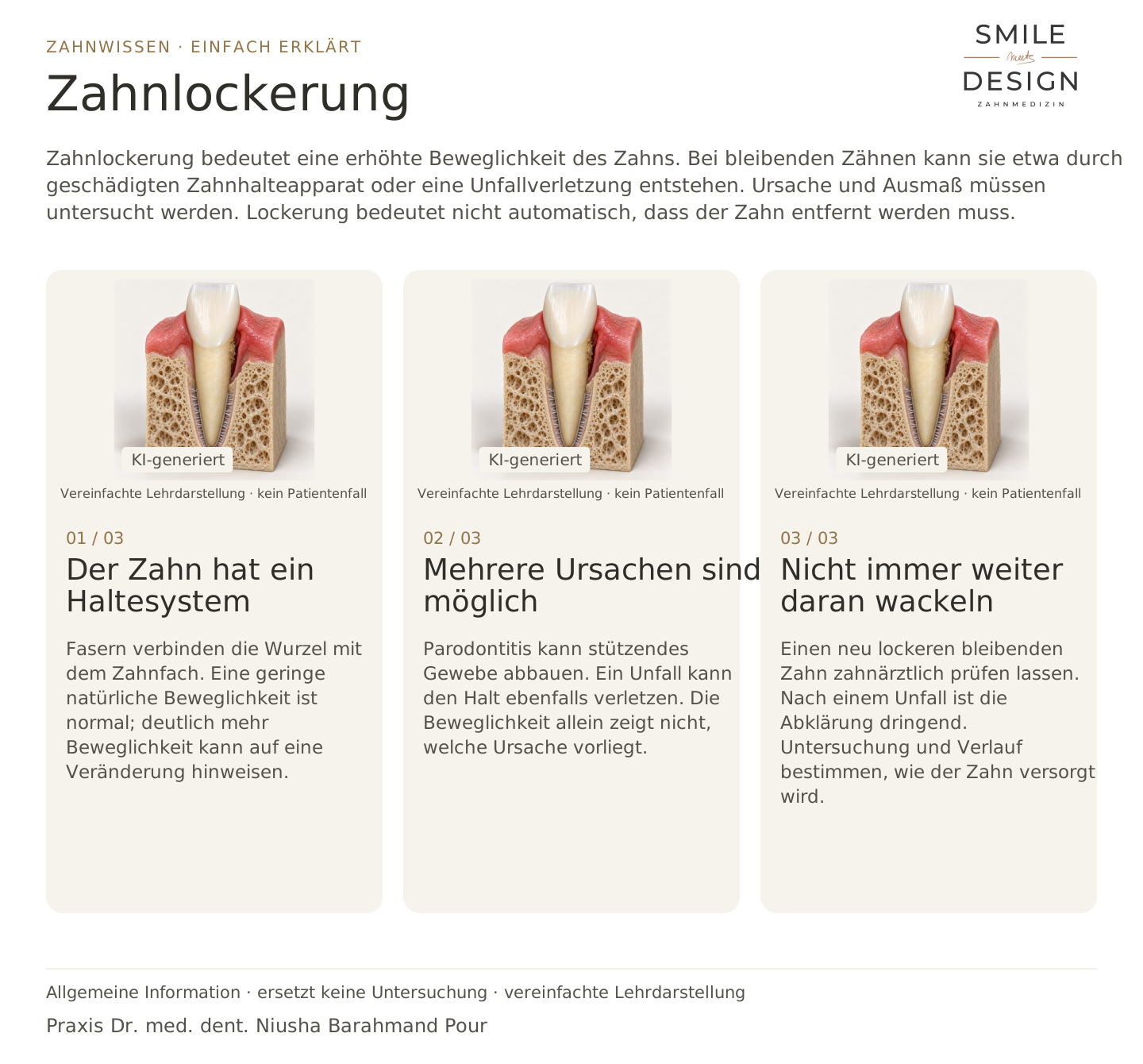
What does looseness mean?
A tooth moves more than usual.

Tooth mobility means a tooth moves more than usual. In permanent teeth, this may be caused by damage to the supporting tissues or an accidental injury. The cause and extent need examination. Looseness does not automatically mean the tooth must be removed.
For dental trainees & teams
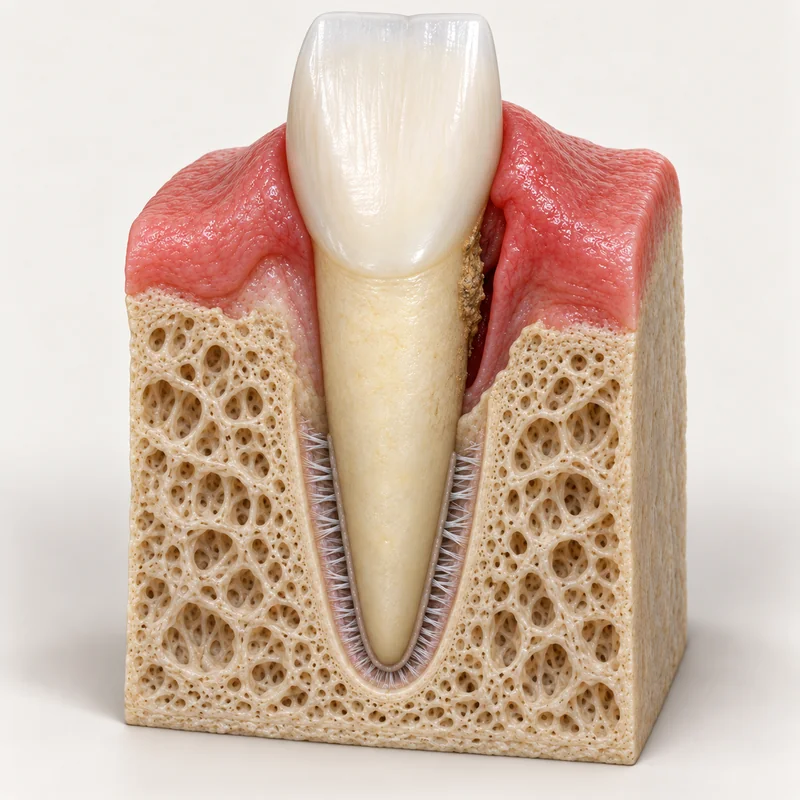
Fibres connect the root to its socket. A little natural movement is normal; a noticeable increase may indicate a change.
Periodontitis can destroy supporting tissues. An accident can also injure the support. Mobility alone does not reveal which cause is present.
Have a newly loose permanent tooth checked by a dentist. After an accident, assessment is urgent. Examination and follow-up guide appropriate care.
A tooth moves more than usual.
For example, loss of supporting tissues or an accidental injury.
A dental examination; immediately after an accident.
Three steps. Straight to the point.
Explanations are also shown on screen.

Silent film in German · English explanations in the three views above
Mobility is a finding. Luxation is an accidental injury that may also involve displacement.
Yes. Looseness during tooth replacement is often part of natural shedding. Accidental or unexpected looseness should still be examined.
A splint can provide stability in certain situations. It does not automatically treat the cause, such as active periodontitis.
No. A permanent tooth that becomes loose without pain still needs examination. Repeatedly wobbling it yourself is not a substitute for assessment.
A question to discuss with Dr. med. dent. Niusha Barahmand Pour:
What explains the mobility, and which measures address its cause?
Symptoms, examination findings and personal wishes form the basis of individual treatment planning.
A newly loose tooth should be examined. After an accident, please call directly.
Call about a loose toothFor acute symptoms, call for prompt assessmentBuild on the simple explanation with clinical terms, key distinctions and a knowledge question.
Mobility alone does not establish the cause or whether a tooth can be preserved. Inflammation, supporting tissues and possible injury must be assessed.
Editorial research: 23 October 2026. This explanation covers general principles and does not replace a personal examination. Suitable treatment is discussed following individual assessment.