When may it be appropriate?
For suitable surfaces and deposits within an individually planned cleaning session.

Tooth polishing uses suitable instruments and polishing materials to clean and smooth selected surfaces. It may reduce surface stains. Polishing can be one part of professional cleaning; it is not the whole treatment.
For training & practice ↓
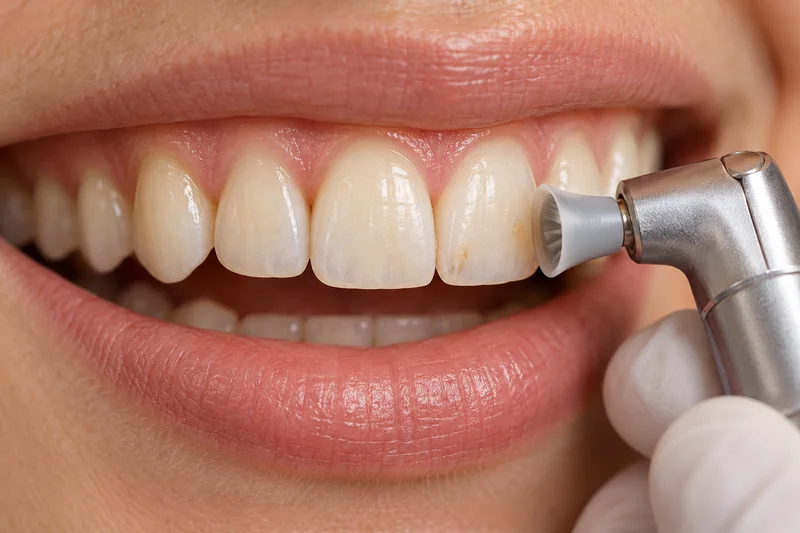
Polishing acts on the outside. A darker tooth is not always caused by surface staining; internal discolouration cannot simply be polished away.
The findings determine which surfaces and materials are polished. Natural tooth surfaces and existing restorations need appropriate treatment.
A smooth feeling replaces neither home cleaning nor an examination. Hardened deposits and disease need the appropriate treatment.
For suitable surfaces and deposits within an individually planned cleaning session.
By examination and assessment of tooth surfaces and restorations.
Thorough, gentle daily cleaning, including an appropriate interdental method.
Three steps. No audio.
Each scene can also be selected manually.

Silent educational film with German on-screen text and simplified teaching images. Not a patient case or a promised treatment outcome. The full English explanation is available below.
Polishing acts on the outside. A darker tooth is not always caused by surface staining; internal discolouration cannot simply be polished away.
The findings determine which surfaces and materials are polished. Natural tooth surfaces and existing restorations need appropriate treatment.
A smooth feeling replaces neither home cleaning nor an examination. Hardened deposits and disease need the appropriate treatment.
Polishing acts mechanically on the surface. Bleaching changes coloured compounds chemically. They are different processes.
No. Tartar is a hardened deposit removed using suitable instruments. Polishing is a different step.
That cannot be promised. It may reduce surface deposits but does not deliberately change internal tooth colour as bleaching does.
Aggressive scrubbing is not professional polishing. A dental visit can clarify the cause of unwanted deposits and appropriate cleaning.
An editorially suggested question for a discussion with Dr med dent Niusha Barahmand Pour:
What kind of deposits are present, and which cleaning method fits my teeth and fillings?
An appointment can help explain rough areas or recurring stains.
Discuss cleaning and preventionAppointment selection at DoctolibPolishing acts mechanically on the surface. Bleaching changes coloured compounds chemically. They are different processes.
Editorial research: . General information, not an individual diagnosis or treatment recommendation. Teaching illustrations are simplified and do not depict a patient case.