
What about severe symptoms?
Arrange dental help by phone promptly, especially with swelling or fever.

Toothache is a symptom, not a diagnosis. Possible causes include decay, inflammation, a crack or exposed dentine. Pain intensity or a photograph alone cannot reliably identify the cause.
For dental trainees & teams
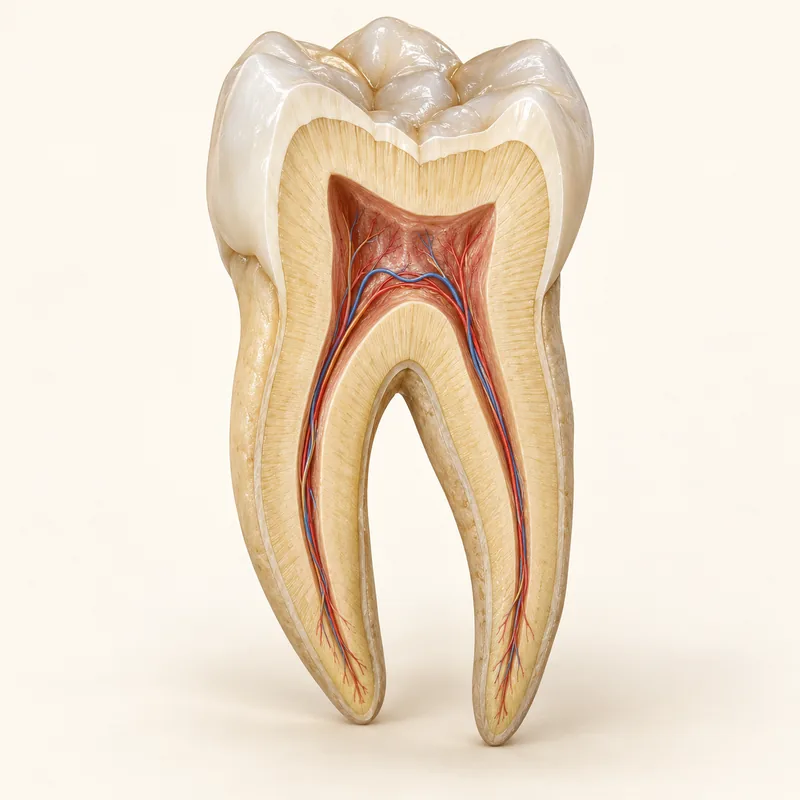
When did it begin? Is it spontaneous, triggered by biting, or brought on by cold? Such details support the examination but cannot replace it.
Teeth, gums and further findings are assessed as needed. Pain relief may bridge the wait, but does not remove an underlying problem requiring treatment.
Severe pain, fever or increasing swelling needs prompt dental help. Breathing difficulty or swelling with swallowing problems requires 112 in Germany, not waiting for online booking.
Arrange dental help by phone promptly, especially with swelling or fever.
Onset, triggers, swelling, fever and medicines already taken.
For breathing difficulty or swelling that markedly impairs swallowing or speaking.
Three steps. Straight to the point.
Explanations are also shown on screen.

Silent film in German · English explanations in the three views above
Severe pain does not establish a particular diagnosis; conversely, disease may initially cause little pain.
No. Pain can spread; examination and appropriate tests help locate the cause.
No. Improvement does not prove that the cause has gone. Have recurring or previously severe symptoms assessed.
Avoid irritating foods and keep the area gently clean. Ask a pharmacist or clinician about suitable pain relief; do not place tablets on the tooth or gums.
A question to discuss with Dr. med. dent. Niusha Barahmand Pour:
What cause do the findings suggest, and what is needed now?
Acute symptoms require prompt assessment; subsequent discussion depends on the findings.
Acute pain deserves direct telephone assessment of urgency.
Contact us about toothacheFor acute symptoms, call for prompt assessmentBuild on the simple explanation with clinical terms, key distinctions and a knowledge question.
A description of symptoms guides an examination but is not itself a diagnosis.
Editorial research: 23 October 2026. This explanation covers general principles and does not replace a personal examination. Suitable treatment is discussed following individual assessment.