
Dental insights · Did you know?
Anti-snoring appliances: why assessment comes first
When snoring makes nights unsettled, a small appliance may sound like an obvious solution. Before discussing a particular model, however, another question matters: what happens during sleep? Snoring alone and obstructive sleep apnoea are not the same. The appropriate help depends on the cause and findings.
Editorial review date:
 AI-generated
01 Gather observations and have them assessed
In obstructive sleep apnoea, breathing repeatedly stops during sleep because the upper airways narrow or close. People affected may feel unusually tired during the day despite spending enough time in bed. Anyone with these symptoms or observed pauses in breathing should seek medical assessment. Snoring volume alone does not allow a reliable diagnosis. IQWiG: Obstructive sleep apnoea and treatment
You do not need to collect night-time measurements for the first conversation. Simple observations help: how long has the snoring been present? Has anyone noticed pauses in breathing? How do you feel during the day? Have you already had an examination or treatment? Bring any existing findings to the consultation. This helps build on the assessment already carried out.
02 Understand what a mandibular advancement device does
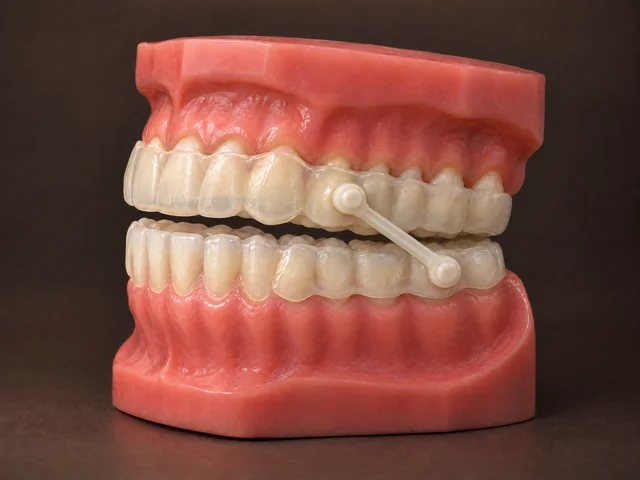
This type of appliance consists of two custom-fitted splints for the upper and lower jaws. Connectors link them and hold the lower jaw in an adjusted, more forward position during sleep. This can create more space in the throat. The precise setting is tailored to the individual. DGZS: Treatment with dental appliances
A mandibular advancement device may be an option for suitable people with mild or moderate sleep apnoea. It may also be an alternative if CPAP therapy cannot be used adequately. This does not mean that everyone who snores needs such a device, or that it treats every case of sleep apnoea sufficiently. IQWiG: When a mandibular advancement device may be an option
03 Plan dental assessment and follow-up together
The conditions in the mouth must also be suitable before treatment. These include the condition and support of the teeth and jaw function. In treating sleep apnoea, medical and dental care work together: one assesses the sleep-related breathing disorder, the other the suitability and fitting of the appliance. Subsequent reviews are also part of the treatment pathway. G-BA patient representatives: Mandibular advancement device
Before the appliance is made, therefore, ask:
- What is the diagnosis, and what is the appliance intended to achieve?
- Who fits the appliance, and who checks breathing during sleep?
- When are the next reviews planned?
- Whom should I contact if the appliance does not fit well?
An appliance is therefore part of coordinated care. The next step need not be making one immediately. Sometimes an examination is appropriate first; sometimes the next step is discussing existing results. This sequence helps identify suitable care and assess its effects clearly.
Further information is available on our page about Snoring splints.
Sources and further information
General information based on the professional sources listed below. Your individual situation is assessed during an examination.