
Dental knowledge · Everyday tips
Living with a snoring appliance: getting used to it, cleaning and follow-up
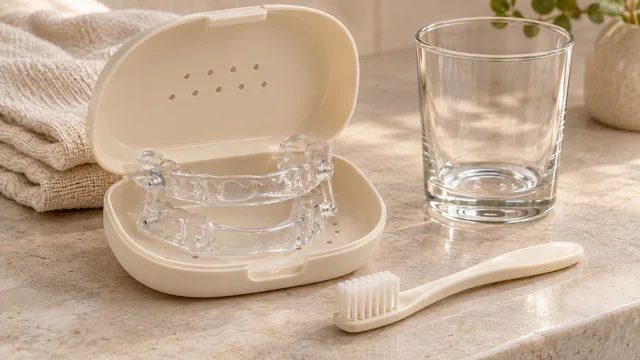
A snoring appliance needs an appropriate setting, regular care and follow-up. For cleaning, start with the instructions for the specific device: materials, connectors and storage requirements vary. General internet advice about vinegar, toothpaste or cleaning tablets is therefore not automatically suitable. Pain, a damaged part or a changed bite calls for professional advice, not a do-it-yourself repair.
Published on
 AI-generated
In this guide
At the start: learn how to use it and watch for discomfort
A new device in the mouth may feel unfamiliar at first. You should understand the intended insertion and removal technique and how to recognise a correct fit. A brief daytime practice period may form part of your individual instructions. Following the agreed wear and adjustment plan matters more than trying to get used to greater advancement as quickly as possible.
Extra saliva, dry mouth or pressure sensations can occur. Describe these at follow-up. Severe pain, sore areas or persistent difficulties are not signs that you simply need to push through. Ask for advice before changing the setting or continuing to wear a device that causes significant pain.
Optimal Sleep Pathway, February 2025, Appendices D/E: Mandibular Advancement Devices / Managing your Mandibular Advancement Device · AADSM: Oral Appliance Therapy – Patient Resources · AADSM: Dental Sleep Medicine Standards for Screening, Treatment, and Management of Sleep-Related Breathing Disorders in Adults Using Oral Appliance Therapy, 2025
A simple morning and evening routine
It helps to have each step demonstrated when the appliance is supplied and then practise it yourself. Written instructions are useful, especially when several parts or settings are involved. The following overview does not replace instructions for the specific device.
- In the evening: clean teeth and interdental spaces as advised, then insert the appliance using the demonstrated technique.
- In the morning: remove it carefully and look for visible cracks, loose connectors or sharp areas.
- Cleaning: where specified for the device, gently clean it with cool to lukewarm water and a suitable soft brush.
- Storage: follow instructions on dryness, moisture, ventilation and a protective container; protect it from heat and damage.
- Record uncertainties: report new discomfort, changes in fit or renewed breathing concerns to the treating team.
Optimal Sleep Pathway, February 2025, Appendices D/E: Mandibular Advancement Devices / Managing your Mandibular Advancement Device · Veterans Health Library: Mouthpieces for Sleep Apnea, reviewed May 1, 2025
Which cleaning products are suitable?
The right choice depends on the material and design. Abrasive toothpaste, hot water, household disinfectants or other unapproved chemicals are not universal solutions. With cleaning tablets, compatibility, concentration and application time must be confirmed for the device. “For dentures” does not automatically mean “for every snoring appliance”.
Deposits or odour despite regular care are reasons for a review. Cleaning technique, hard-to-reach areas or the material’s condition may be involved. More aggressive brushing does not address every cause and can alter the surface. If hand movements are limited, ask for a cleaning method you can realistically manage.
Optimal Sleep Pathway, February 2025, Appendices D/E: Mandibular Advancement Devices / Managing your Mandibular Advancement Device · National Heart, Lung, and Blood Institute: Living With Sleep Apnea · AADSM: Dental Sleep Medicine Standards for Screening, Treatment, and Management of Sleep-Related Breathing Disorders in Adults Using Oral Appliance Therapy, 2025
Pressure, jaw symptoms or a changed bite: what next?
Note where the discomfort occurs, when it starts and whether it eases after removal. These details help the examination. Jaw exercises or a different setting may form part of care depending on the findings, but should not be copied from a general video. A persistently different-feeling bite also needs review.
If pain is severe or persistent, promptly discuss further use with the treating team. Do not simply keep wearing a broken or sharp-edged device. If you have treated sleep apnoea, also discuss how breathing will be managed adequately until the problem is resolved. Do not change prescribed breathing treatment on your own.
AADSM: Oral Appliance Therapy – Patient Resources · Optimal Sleep Pathway, February 2025, Appendices D/E: Mandibular Advancement Devices / Managing your Mandibular Advancement Device · National Heart, Lung, and Blood Institute: Living With Sleep Apnea
Why follow-up matters even when sleep feels good
Dental reviews assess the appliance, teeth, gums, jaw function and bite, among other things. New fillings, crowns or other restorations can affect the fit. Bring the appliance to relevant appointments and mention its use before new dental work is planned.
With sleep apnoea, the effect on breathing also needs medical follow-up. Returning snoring, new daytime sleepiness, observed pauses in breathing or substantial weight changes are reasons to contact the team again. Arrange regular follow-up appointments. The treating team sets the intervals according to adaptation, effectiveness and possible side effects. Also record whom to contact if something changes.
AADSM: Dental Sleep Medicine Standards for Screening, Treatment, and Management of Sleep-Related Breathing Disorders in Adults Using Oral Appliance Therapy, 2025 · Optimal Sleep Pathway, February 2025, Appendices D/E: Mandibular Advancement Devices / Managing your Mandibular Advancement Device · National Heart, Lung, and Blood Institute: Living With Sleep Apnea
Common questions
Can I clean my snoring appliance with toothpaste?
Not as a general rule. Abrasives may be unsuitable for some materials. Use the cleaning product and brush recommended for your device.
Optimal Sleep Pathway, February 2025, Appendices D/E: Mandibular Advancement Devices / Managing your Mandibular Advancement Device · National Heart, Lung, and Blood Institute: Living With Sleep Apnea
Should the appliance be stored dry or in water?
This depends on the device. Follow its material and storage instructions; one recommendation for every appliance is not reliable.
National Heart, Lung, and Blood Institute: Living With Sleep Apnea · Veterans Health Library: Mouthpieces for Sleep Apnea, reviewed May 1, 2025
May I file down an irritating edge myself?
No, not without explicit device-specific instructions from the treating team. Filing, heating or gluing it yourself can change fit and function. Have the area checked.
AADSM: Dental Sleep Medicine Standards for Screening, Treatment, and Management of Sleep-Related Breathing Disorders in Adults Using Oral Appliance Therapy, 2025 · Optimal Sleep Pathway, February 2025, Appendices D/E: Mandibular Advancement Devices / Managing your Mandibular Advancement Device
Can I wear the appliance only occasionally?
An appliance acts while it is being worn as intended, not permanently after removal. Particularly with sleep apnoea, wear times and interruptions should be coordinated with the treating team.
Veterans Health Library: Mouthpieces for Sleep Apnea, reviewed May 1, 2025 · National Heart, Lung, and Blood Institute: Living With Sleep Apnea
Related reading
Sources and further reading
Research and editorial date: 7 November 2026. General information; individual findings and recommendations require an examination.
- Optimal Sleep Pathway, February 2025, Appendices D/E: Mandibular Advancement Devices / Managing your Mandibular Advancement Device
- AADSM: Oral Appliance Therapy – Patient Resources
- AADSM: Dental Sleep Medicine Standards for Screening, Treatment, and Management of Sleep-Related Breathing Disorders in Adults Using Oral Appliance Therapy, 2025
- Veterans Health Library: Mouthpieces for Sleep Apnea, reviewed May 1, 2025
- National Heart, Lung, and Blood Institute: Living With Sleep Apnea