Dental insights · Aesthetic dentistry
Veneers: five points to consider before deciding.
When thinking about veneers, many people first think of colour and shape. Equally important is what would need to change about your own teeth. A good consultation therefore begins with your specific concern: is it a chipped corner, discolouration, a gap or tooth alignment? These wishes can look similar but do not automatically require the same treatment.
Editorial review date:
 AI-generated
Understand what a veneer does
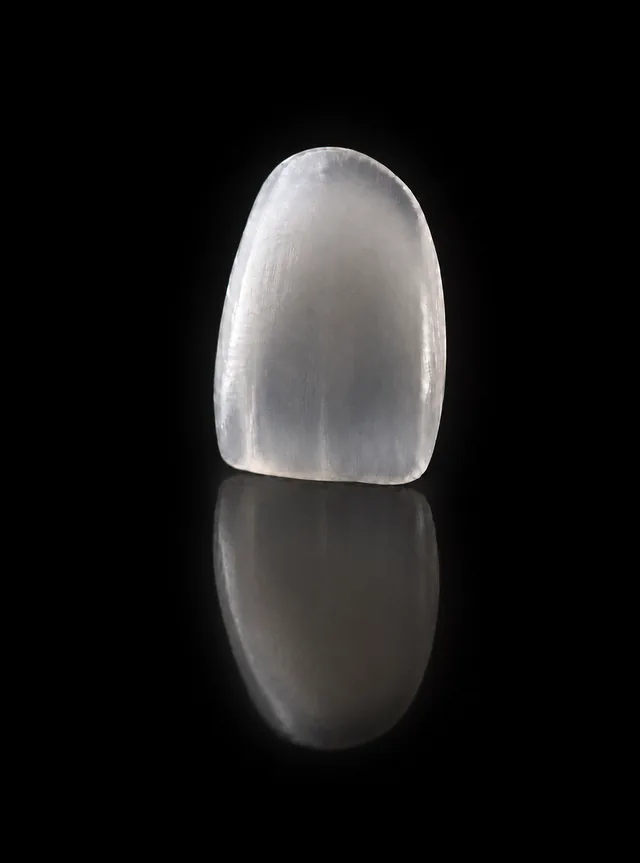
A veneer is a thin facing attached to the front surface of a tooth. It can, for example, change the visible shape or colour. A crown, by contrast, covers considerably more of the tooth. Veneers can be made from ceramic or composite; the materials and how they are used differ. ADA: Veneers
Ask for the aim for each tooth to be explained. “A more harmonious smile” sounds pleasant but is still too vague for a decision. Which corner, width or colour difference is to change? And which individual features do you deliberately want to keep? Your wishes can be specific without becoming a firm promise of results.
Clarify how your own tooth structure will be affected
Some veneers require a small amount to be removed from the front of the tooth; not every restoration needs the same preparation. The British NHS expressly notes that not every veneer requires tooth preparation by grinding. This does not, however, establish whether a version without such removal is suitable for an individual tooth. NHS: Dental veneers
If enamel is removed, that change cannot be reversed. Before treatment begins, therefore, ask what preparation is planned and why. Terms such as “minimal” or “non-prep” do not replace that explanation. ADA: What to consider before a veneer
Discuss alternatives suited to your concern
An aesthetic wish does not yet determine the treatment. One example from restorative dentistry is building up an unusual tooth shape with composite; in other situations, a veneer may be an option. University College London Hospital describes these different possibilities in the care of people with missing or differently shaped teeth. This is not a recommendation to choose the same solution for every patient. UCLH: Options for changing tooth shape
Ask openly: “Which option would address my concern, and what would it involve?” Choosing not to change anything for now is also a decision you can take time over after the conversation.
Consider health and forces on the teeth
Decay and gum disease need to be considered or treated before a restoration. Clenching, grinding and the bite can also affect suitability. A veneer also does not prevent decay in the tooth or at its margins. Regular cleaning and dental reviews remain important. ADA: Requirements and care for veneers
Plan beyond the first photographs
Veneers may wear, become damaged or come loose over time. Further treatment may then be needed. A lifelong lifespan cannot be promised. ADA: Possible changes over time
An informed decision therefore also includes care, reviews and possible future costs. Ideally, bring a short list: what do I want to change? What should stay the same? Which procedures and follow-up costs might be involved? Once you understand these points, you can calmly weigh up the proposed restoration against your own priorities.
The decision starts with your questions.
On our veneers page you can learn more about the options and process. We discuss your wishes, findings and possible alternatives personally.
Get in touchProfessional sources
Research and editorial review: 23 September 2026. This information provides general guidance. An individual examination and consultation establish which treatment suits your situation.