What does the term describe?
A facing without planned tooth reduction.

A no-prep veneer is a thin facing placed without planned removal of tooth structure. It is bonded onto the existing surface. The extra layer must fit the tooth shape, position and bite.
For training & practice ↓
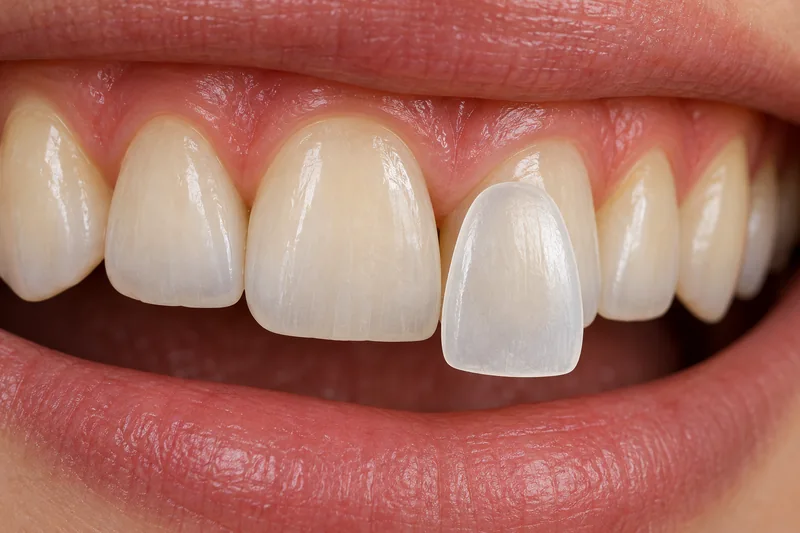
Even a thin facing adds volume. The proposed outer contour matters more than the label “no-prep”.
Position, colour, enamel, gums and bite are assessed together. Adding material cannot move a projecting tooth surface backwards.
The facing is adhesively attached. Even without planned enamel reduction, later removal without any effect on the tooth cannot be guaranteed. Cleaning and review remain important.
A facing without planned tooth reduction.
The original shape, position, colour, bite and dental health.
Cleaning and review of the margins and loading.
Three steps. No audio.
Each scene can also be selected manually.

Silent educational film with German on-screen text and simplified teaching images. Not a patient case or a promised treatment outcome. The full English explanation is available below.
Even a thin facing adds volume. The proposed outer contour matters more than the label “no-prep”.
Position, colour, enamel, gums and bite are assessed together. Adding material cannot move a projecting tooth surface backwards.
The facing is adhesively attached. Even without planned enamel reduction, later removal without any effect on the tooth cannot be guaranteed. Cleaning and review remain important.
These terms describe the planned extent of tooth preparation. They are not quality grades or promises of a particular outcome.
No. Added thickness, the intended shape, colour and loading can make this approach unsuitable.
No. Minimal preparation removes a small amount of tooth structure. No-prep describes a plan without that reduction.
No. A photograph cannot reveal all bite contacts, the health of the tooth or its available structure.
An editorially suggested question for a discussion with Dr med dent Niusha Barahmand Pour:
Is there enough space for my intended tooth shape without creating unnecessary bulk?
A personal assessment can clarify whether a tooth-preserving veneer approach fits your teeth.
Choose a veneer consultationAppointment selection at DoctolibThese terms describe the planned extent of tooth preparation. They are not quality grades or promises of a particular outcome.
Editorial research: . General information, not an individual diagnosis or treatment recommendation. Teaching illustrations are simplified and do not depict a patient case.