
Dental insights · Aesthetics
What determines the cost of veneers?
How many teeth would you like to change, and what work is planned for each one? Both affect the cost of veneers. Shaping a composite veneer directly on a tooth involves different steps from making a custom ceramic shell. If you have two estimates, look at the proposed treatment first, then compare the totals.
Published on
 AI-generated
In this guide
What am I paying for when I get a veneer?
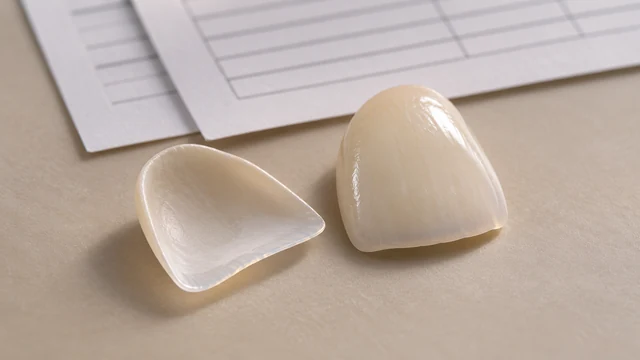
A veneer covers the front of a tooth. For a ceramic veneer, the dental team takes an impression or scans the tooth. A shell is made to fit that shape. The dentist checks the fit and shade before bonding it to the tooth. Depending on how the tooth is prepared, a temporary covering may be useful until the veneer is fitted.
For a direct composite veneer, the dentist applies tooth-coloured material, shapes it, hardens it with a light and polishes it. A laboratory does not need to make a ceramic shell. If only a small part of the biting edge is missing, ask whether rebuilding that edge alone would be enough. This repair and a veneer covering the front surface involve different amounts of work.
How do I compare two estimates?
Consider two estimates for the same two front teeth. One proposes rebuilding their edges directly, the other proposes two ceramic veneers. They may address the same concern, but involve different procedures and costs. Work through each estimate one tooth at a time.
- Treatment goal and teeth. Which teeth are listed? What change is planned for each of them?
- Material and extent. Is the proposal for a ceramic shell, a direct composite veneer or a small addition? How much enamel would need to be removed?
- Planning and interim steps. Is a trial preview on the teeth, a temporary covering or any preliminary treatment planned? For each item, ask whether the total includes it.
- Laboratory work and follow-up. Is the laboratory estimate included in the total? Which check-ups are planned, and what later work could cost extra?
How do I read the dental fees and laboratory costs?
A German private dental estimate may list codes and fee multipliers beside individual services. The code identifies a service in the German dental fee schedule (GOZ). Within its fee range, the multiplier reflects factors such as difficulty, time and the circumstances of that particular service. If two estimates use different multipliers, ask which service is involved and what accounts for the difference in your case.
One example is code 2220 for placing a veneer on a tooth. The fee schedule says this service includes trying the veneer in, fitting it and the associated follow-up check and adjustments. If a follow-up appointment appears on your estimate, ask whether it is this check or a separate treatment planned for later.
Reasonable costs actually incurred for dental laboratory work can be charged separately if the service fee does not already include them. If the laboratory estimate is on a separate sheet, ask whether the total on the treatment plan already includes it. This avoids counting the same work twice.
What will insurance cover in Germany?
People who choose veneers solely for cosmetic reasons generally pay for them themselves. In Germany, services requested beyond what is medically necessary and the fees for them must be agreed in a written treatment and cost plan before treatment. The plan also states that reimbursement may be unavailable.
If the plan also addresses a dental health need, ask your dentist to explain the findings and treatment options. Before deciding, send the estimate to your statutory or private insurer and ask which items it will cover in your case. A written reply can help you work out your likely out-of-pocket costs.
What might I need to pay for later?
A tooth with a veneer can still develop decay or gum problems. A veneer may loosen, chip or wear. The dentist needs to examine the tooth to decide whether the veneer can be reattached or repaired, or whether it needs replacing. One question worth asking before treatment is what the estimate covers at the first review and how any later repairs would be discussed if you need them.
Related reading
Sources and further information
- German dental fee schedule, section 2 on written agreements
- German dental fee schedule, section 5 on fees for individual services
- German dental fee schedule, item 2220 on veneers
- German dental fee schedule, section 9 on laboratory work
- Bavarian Dental Association on insurance cover for veneers
- American Dental Association on porcelain, composite and repairs