
Dental insights · Dental restorations
A missing tooth: bridge or implant – what determines the choice?
When a tooth is missing, many people want to regain a firm bite and a carefree smile. Two options are often compared when looking for a solution: a bridge and an implant. The right choice cannot be determined by the name or price alone. The starting point is the situation in your mouth – including the teeth beside the gap.
Editorial review:
 AI-generated
01 A bridge uses existing supports
A conventional tooth-supported bridge connects one or more replacement teeth to the neighbouring teeth. These act as supporting abutments and are usually prepared and crowned for this purpose. A bridge may be a natural option, particularly if those teeth already have large fillings or crowns. The supporting teeth must be suitable for the task. KZBV: Zahnersatz
For the consultation, this means assessing the gap together with its neighbours. Ask not only how the missing tooth will be replaced, but also what the planned restoration means for adjacent teeth. Different bridge designs exist; not every design is suitable for every position in the mouth.
02 An implant creates a new anchor
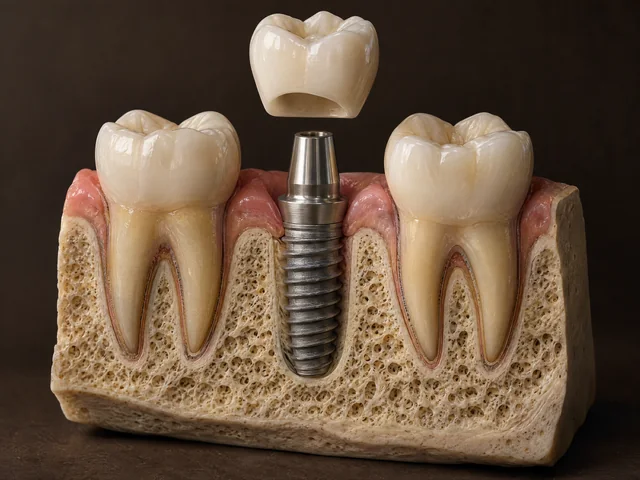
An implant is surgically anchored in the jawbone as an artificial tooth root. The visible replacement tooth, such as a crown, is later placed on it. General health and the conditions for healing are among the factors that determine suitability. Smoking can affect healing and longer-term treatment success. Integration can take several months. FDA: Dental Implants – What You Should Know
When a single gap is restored with an implant, neighbouring teeth do not need to be prepared as bridge supports. Nevertheless, this does not amount to a blanket recommendation for every missing tooth. Available bone and health conditions must be considered in individual planning. DGI: Patientenbroschüre Zahnimplantate
03 Three points belong in the comparison
The neighbouring teeth: Are they largely intact or do they need treatment anyway? Ask to be shown the findings and how they influence the recommendation.
The overall process: Which treatment steps are planned? Are there healing periods, extra appointments or a temporary restoration? What matters is the plan for your case, not a general timescale from the internet.
Everyday life afterwards: How is the restoration cleaned, and which check-ups are planned? Implants also need careful cleaning and regular dental care. FDA: Information for patients
04 A good decision leaves room for questions
Take your wishes seriously: perhaps comfortable chewing is your priority, or perhaps the visible gap when speaking. Also say if you would like to avoid surgery or have limited time for treatment. These details do not replace the clinical findings, but they belong in the discussion of a suitable approach.
A comparison of the options that are actually suitable, with a clear process and individual costs, can help. You do not need to choose “bridge” or “implant” beforehand. First ask for a reasoned recommendation and an explanation of the alternative. This helps you make a decision you understand and can live with day to day.
Further information is available under Restorative dentistry and Dental implants.
Sources and further information
General information based on the professional sources listed below. A personal assessment is made during an examination.