Cause?
Genetically altered enamel formation.

Amelogenesis imperfecta comprises genetic disorders of enamel formation. Depending on the type, enamel may be too thin, insufficiently mineralized or less resistant. Primary and permanent teeth can be affected. The changes arise during tooth development rather than from inadequate brushing.
For training & practice ↓
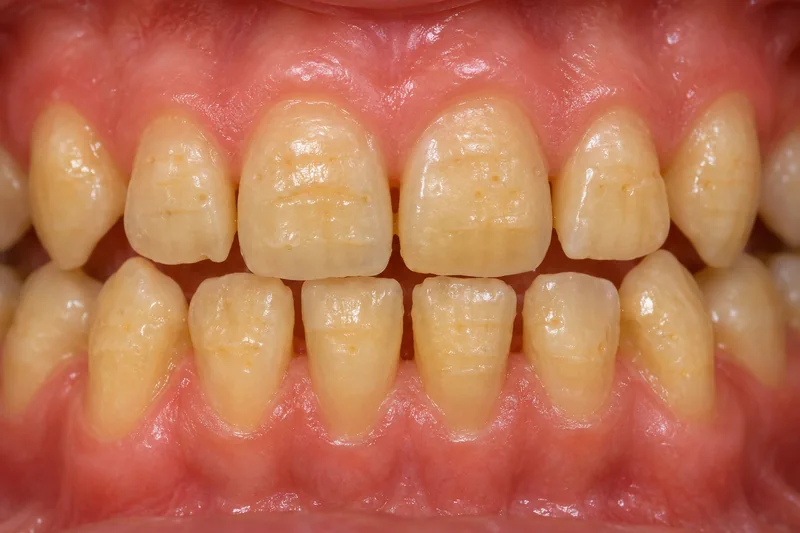
The outer tooth layer does not form normally during development. Thickness, hardness and appearance vary between types.
Sensitivity, wear and colour changes can occur. Examination, developmental history and sometimes specialist assessment distinguish other enamel disorders.
Age, symptoms and remaining tissue guide care. Protection, suitable cleaning and restorations where needed are planned through development.
Genetically altered enamel formation.
Primary and permanent teeth may be affected.
Individual and age-appropriate planning.
Three steps. No audio.
Each scene can also be selected manually.

Silent educational film with German on-screen text and simplified teaching images. Not a patient case or a promised treatment outcome. The full English explanation is available below.
The outer tooth layer does not form normally during development. Thickness, hardness and appearance vary between types.
Sensitivity, wear and colour changes can occur. Examination, developmental history and sometimes specialist assessment distinguish other enamel disorders.
Age, symptoms and remaining tissue guide care. Protection, suitable cleaning and restorations where needed are planned through development.
Both can alter enamel. Amelogenesis imperfecta is a genetic group of conditions; molar-incisor hypomineralisation typically affects particular permanent molars, sometimes incisors, and is classified differently.
No. The underlying formation disorder is genetic. Good cleaning nevertheless remains important.
No. Many conditions cause colour or enamel changes, so examination is needed.
Not as a general rule. Age, tooth development, sensitivity and remaining tissue guide staged care.
Editorially suggested question to discuss with Dr Niusha Barahmand Pour:
Which enamel condition is present, and how can the teeth be protected appropriately for age?
An examination of unusual enamel or sensitive teeth can clarify whether specialist assessment is appropriate.
Discuss enamel changesAppointment selection at DoctolibBoth can alter enamel. Amelogenesis imperfecta is a genetic group of conditions; molar-incisor hypomineralisation typically affects particular permanent molars, sometimes incisors, and is classified differently.
Editorial research: . General information, not an individual diagnosis or treatment recommendation. Teaching illustrations are simplified and do not depict a patient case.