Purpose?
Describing a bite systematically.

Angle classes mainly describe how the first permanent upper and lower molars meet. They help describe a bite. The class alone cannot establish whether treatment is needed or which treatment is appropriate.
For training & practice ↓
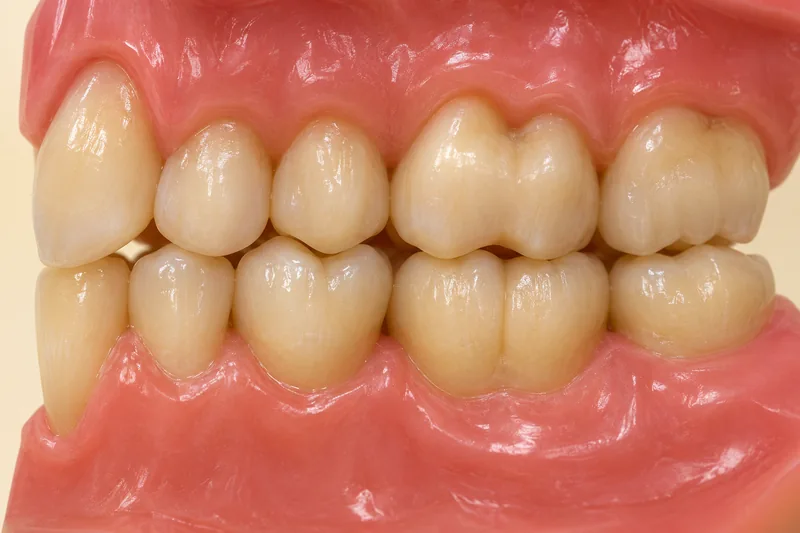
The molars have the usual relationship. Individual teeth may nevertheless be crowded, rotated or spaced.
The lower molars sit further back relative to the upper molars. Incisor position needs a separate description.
The lower molars sit relatively further forwards. Tooth position, jaw relationship and growth are assessed together.
Describing a bite systematically.
Individual tooth position, function and jaw assessment.
Discuss the findings and any treatment need.
Three steps. No audio.
Each scene can also be selected manually.

Silent educational film with German on-screen text and simplified teaching images. Not a patient case or a promised treatment outcome. The full English explanation is available as text.
An Angle class is a description, not a complete diagnosis or a severity score.
No. It does not describe every tooth position or every bite problem.
No. The dental relationship alone does not establish a particular jaw size.
Not reliably. Tooth contacts need examination, with further records guided by the findings.
Editorially suggested question to discuss with Dr Niusha Barahmand Pour:
What does the bite class mean for my particular concern?
A bite class appears in your records? Ask what it means in your situation.
Discuss a bite assessmentAppointment selection at DoctolibAn Angle class is a description, not a complete diagnosis or a severity score.
Editorial research: . General information, not an individual diagnosis or treatment recommendation. Teaching illustrations are simplified and do not depict a patient case.