Source?
The patient’s own body.

Autologous means from the same person. Bone harvested from the patient is used to build up a deficient area. This can suit some defects, but harvesting adds another consideration and is not the best option in every case.
For training & practice ↓
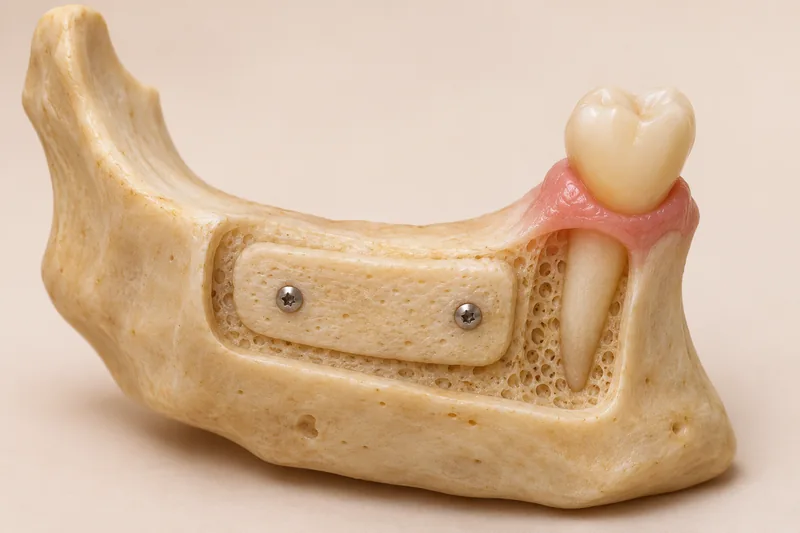
The material comes from the patient. The donor site and amount depend on the planned repair.
The donor site as well as the grafted area must heal. Pain, infection and other local complications are possible.
Healing and follow-up are required. Using your own bone cannot guarantee a particular volume or later implant treatment.
The patient’s own body.
Harvesting and healing.
Individual assessment.
Three steps. No audio.
Each scene can also be selected manually.

Silent educational film with German on-screen text and simplified teaching images. Not a patient case or a promised treatment outcome. The full English explanation is available as text.
They have different origins and may also be combined in a treatment plan.
No. Autologous tissue comes from the same person; allogeneic material comes from another human donor and is processed accordingly.
This depends on the amount and plan. Possible donor sites and their risks are explained beforehand.
There is no universal ranking. The defect, procedure, material and individual circumstances must be considered together.
Editorially suggested question to discuss with Dr Niusha Barahmand Pour:
Which donor site and other options fit this defect?
A proposed graft can be discussed in terms of benefit, burden and risk.
Discuss bone graftingAppointment selection at DoctolibThey have different origins and may also be combined in a treatment plan.
Editorial research: . General information, not an individual diagnosis or treatment recommendation. Teaching illustrations are simplified and do not depict a patient case.