Which direction?
Towards the cheek.

Buccal means towards or relating to the cheek. On posterior teeth it identifies the outer surface facing the cheek. The lip-facing surface of front teeth is more precisely called labial. Buccal is a location term and can also describe soft tissue or roots; it does not establish whether the area is healthy or diseased.
For training & practice ↓
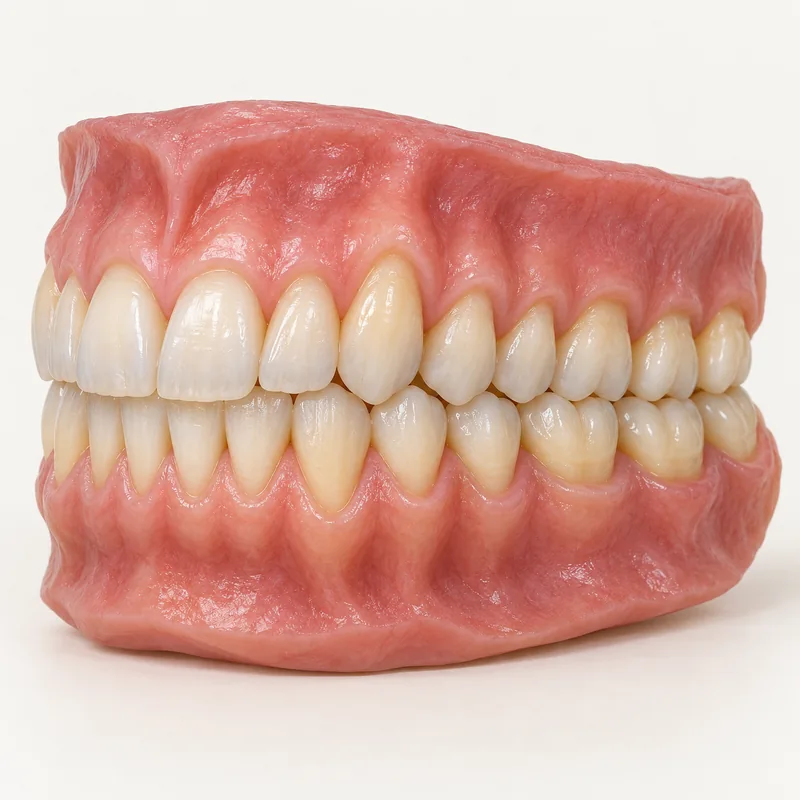
The outer surface of a back tooth facing the cheek is buccal. It differs from the chewing surface and the surfaces facing neighbouring teeth.
The lip-facing surface of front teeth is labial. Facial can be used as an umbrella term for outer surfaces facing either cheek or lip.
A mesiobuccal area lies towards both the dental midline and the cheek. Combining two directions defines the location more precisely.
Towards the cheek.
Usually more precisely called labial.
Commonly B.
Three steps. No audio.
Each scene can also be selected manually.

Silent educational film with German on-screen text and simplified teaching images. Not a patient case or a promised treatment outcome. The full English explanation is available as text.
Buccal specifically refers to the cheek. Vestibular refers more broadly to the oral vestibule between the tooth rows and the lips or cheeks.
No. A posterior tooth’s chewing surface is occlusal. Buccal is the side facing the cheek.
No. Posterior teeth in both upper and lower jaws have a cheek-facing side.
Both concern outer tooth surfaces. Buccal refers to the cheek and labial to the lip; labial is more precise for front teeth.
It combines mesial, towards the dental midline, with buccal, towards the cheek. This can locate a cusp or another area more precisely.
B commonly stands for buccal. Whether it describes a filling surface, an observation or something else depends on the rest of the entry.
You can bring this question to your appointment:
Could you show me the buccal area and distinguish it from the chewing surface?
A dental examination can clarify how this relates to your findings and treatment planning.
Discuss your dental findingsAppointment selection at DoctolibBuccal specifically refers to the cheek. Vestibular refers more broadly to the oral vestibule between the tooth rows and the lips or cheeks.
Editorial research: . General information, not an individual diagnosis or treatment recommendation. Teaching illustrations are simplified and do not depict a patient case.
If you turn this on, this website stores which guides you open, separately from advertising preferences. The markers expire after a fixed 30-day period from activation. The list is not sent to us by this feature. You can turn it off here and delete the markers.
Other people using the same browser profile can also see the markers. German and English versions share one marker. Expired entries are removed the next time you open a page with this feature; deleting browser data may remove them earlier. “Viewed” means opened, not read or completed.