Which surface?
The chewing surface of a posterior tooth.

Occlusal refers to the chewing surface or its relationship to teeth in the opposing jaw. In tooth-surface terminology it primarily identifies the chewing surfaces of premolars and molars. An occlusal filling involves that surface. The term initially locates an area; whether contacts are appropriate or a problem is present requires a separate assessment.
For training & practice ↓
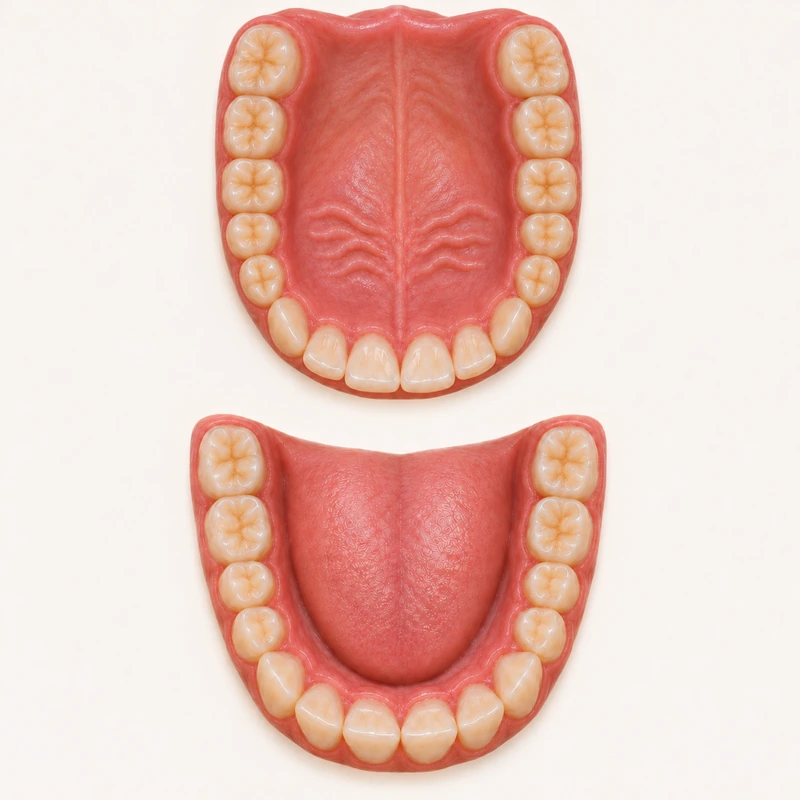
Occlusal identifies the chewing surface of premolars and molars. Cusps and grooves form part of it, rather than the cheek-facing or tongue-facing side wall.
Occlusal identifies a surface or a relationship to the bite. Occlusion describes contact between upper and lower teeth.
O commonly means occlusal. MOD also includes mesial and distal surfaces. The abbreviation establishes neither contact force nor defect depth.
The chewing surface of a posterior tooth.
Commonly O.
No; that requires separate assessment.
Three steps. No audio.
Each scene can also be selected manually.

Silent educational film with German on-screen text and simplified teaching images. Not a patient case or a promised treatment outcome. The full English explanation is available as text.
In surface terminology, occlusal identifies the chewing surface of posterior teeth. Incisal identifies the cutting edge or biting region of front teeth.
No. Occlusal describes a location or relationship. Occlusion means the meeting or contact of upper and lower tooth rows.
It may be used more broadly when discussing contacts. In precise surface terminology, however, the cutting edge of a front tooth is incisal.
It involves the chewing surface of a posterior tooth. The term alone does not establish the original defect’s size or depth.
O commonly stands for occlusal. Combinations such as MO or MOD add other tooth surfaces.
No. A location term or a highlighted surface alone does not diagnose excessive loading. Actual contacts and other clinical findings need assessment.
You can bring this question to your appointment:
Does the finding concern only the occlusal surface, or also the contacts when I bite together?
A dental examination can clarify how this relates to your findings and treatment planning.
Discuss your dental findingsAppointment selection at DoctolibIn surface terminology, occlusal identifies the chewing surface of posterior teeth. Incisal identifies the cutting edge or biting region of front teeth.
Editorial research: . General information, not an individual diagnosis or treatment recommendation. Teaching illustrations are simplified and do not depict a patient case.
If you turn this on, this website stores which guides you open, separately from advertising preferences. The markers expire after a fixed 30-day period from activation. The list is not sent to us by this feature. You can turn it off here and delete the markers.
Other people using the same browser profile can also see the markers. German and English versions share one marker. Expired entries are removed the next time you open a page with this feature; deleting browser data may remove them earlier. “Viewed” means opened, not read or completed.