What is it?
An extra projection from the crown.

Dens evaginatus is a developmental variation with an additional cusp on the tooth crown. A fine extension of the dental pulp may lie within it. An unusual cusp therefore needs dental assessment before anyone considers reducing it.
For training & practice ↓
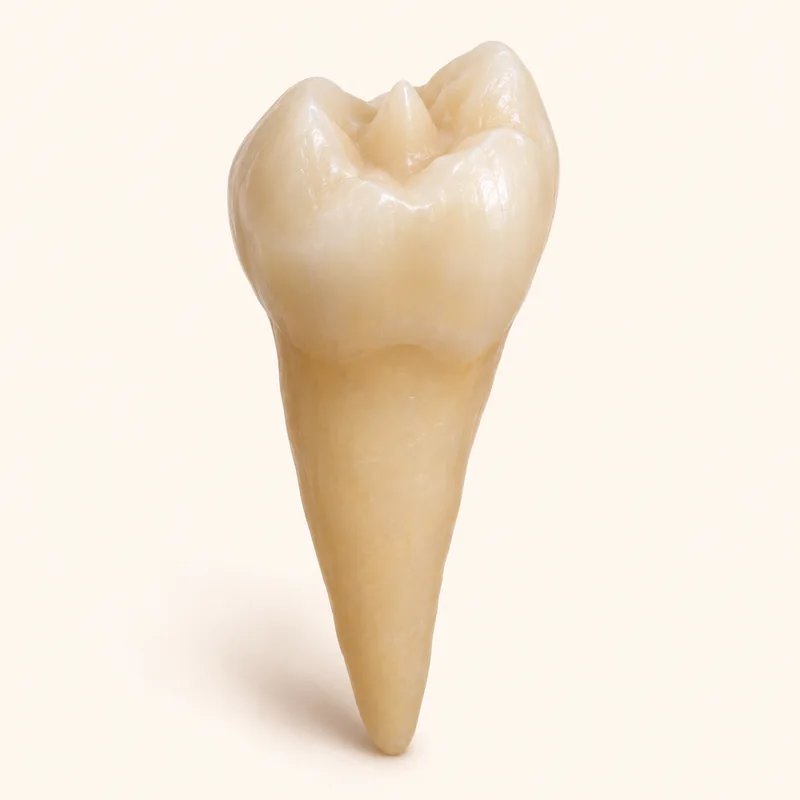
The shape formed during tooth development. It is not a deposit of tartar that grew afterwards.
The cusp may contain enamel, dentine and a pulp extension. Wear or fracture can put the pulp at risk.
Depending on shape, contact and findings, monitoring, protection of grooves or treatment may be appropriate. Pain or a fractured cusp needs prompt assessment.
An extra projection from the crown.
Contact, fracture, pain and pulp condition.
Do not file or break it off.
Three steps. No audio.
Each scene can also be selected manually.

Silent educational film with German on-screen text and simplified teaching images. Not a patient case or a promised treatment outcome. The full English explanation is available as text.
Dens evaginatus projects outwards. Dens invaginatus involves an inward fold.
No. This could expose the pulp.
No. The pulp condition and examination findings determine treatment.
No. It is an additional part of one tooth crown.
Editorially suggested question to discuss with Dr Niusha Barahmand Pour:
Does this cusp need protection, and how close is the pulp?
An examination can assess an unusual cusp or broken tip. Contact a dental service promptly if it hurts.
Have the tooth shape assessedAppointment selection at DoctolibDens evaginatus projects outwards. Dens invaginatus involves an inward fold.
Editorial research: . General information, not an individual diagnosis or treatment recommendation. Teaching illustrations are simplified and do not depict a patient case.