Contagious?
No, it is an inherited developmental disorder.

Dentinogenesis imperfecta is an inherited disorder of dentine formation. Teeth may appear blue-grey or yellow-brown and lose tooth tissue more easily. Primary and permanent teeth may be affected; colour alone is not enough for diagnosis.
For training & practice ↓
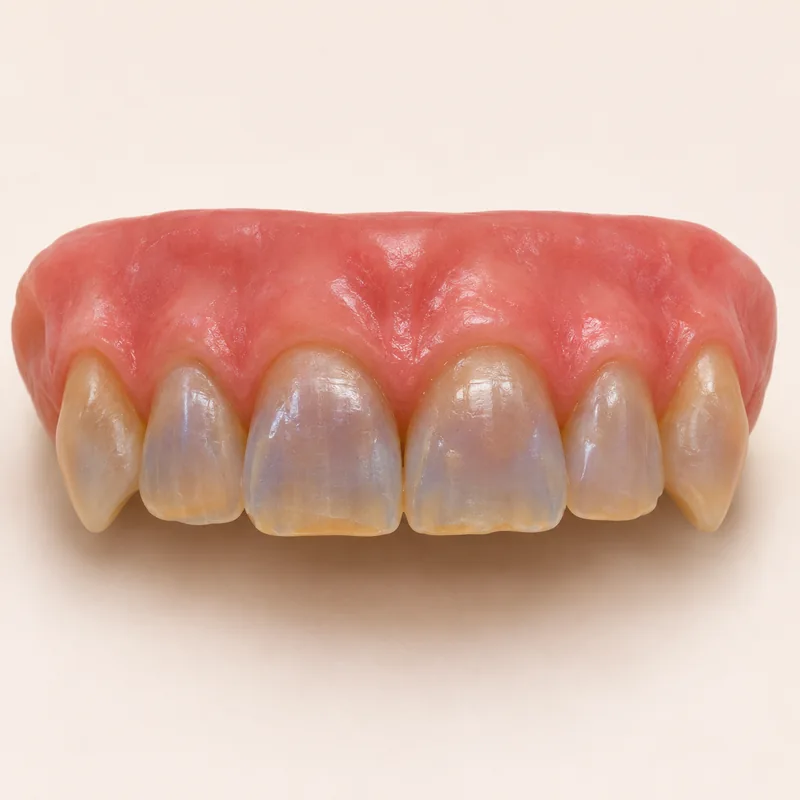
Dentine lies beneath enamel. Changes in its structure can reduce support for the overlying enamel.
Severity, tooth shape and wear vary. Family history and other findings help with assessment.
Care aims include preserving tooth tissue and function where possible. Protection and restoration are planned according to age and findings.
No, it is an inherited developmental disorder.
Primary and permanent teeth can be affected.
Early assessment and protection of tooth tissue.
Three steps. No audio.
Each scene can also be selected manually.

Silent educational film with German on-screen text and simplified teaching images. Not a patient case or a promised treatment outcome. The full English explanation is available as text.
Dentinogenesis imperfecta affects dentine; amelogenesis imperfecta affects enamel formation. Both need individual assessment.
No. Dentinogenesis imperfecta mainly affects dentine formation; molar-incisor hypomineralisation is a different enamel disorder.
No. Similar dental changes may occur in isolation or with osteogenesis imperfecta. Assessment must distinguish these situations.
No. Whitening does not correct an inherited structural disorder. Assessing the tooth tissue comes first.
Editorially suggested question to discuss with Dr Niusha Barahmand Pour:
What structural change is present, and would specialist assessment help?
Unusual colour together with early tissue loss warrants assessment, particularly early in children.
Have tooth structure assessedAppointment selection at DoctolibDentinogenesis imperfecta affects dentine; amelogenesis imperfecta affects enamel formation. Both need individual assessment.
Editorial research: . General information, not an individual diagnosis or treatment recommendation. Teaching illustrations are simplified and do not depict a patient case.