What is its purpose?
To discuss wishes and possible shape changes visually.

Digital smile planning combines records of teeth, lips and face with design on a screen. Photographs, short videos and sometimes a scan help discuss wishes and possible changes. The image is a planning aid. Examination is needed to establish whether a proposal is appropriate and achievable; it is not a promised treatment result.
For training & practice ↓
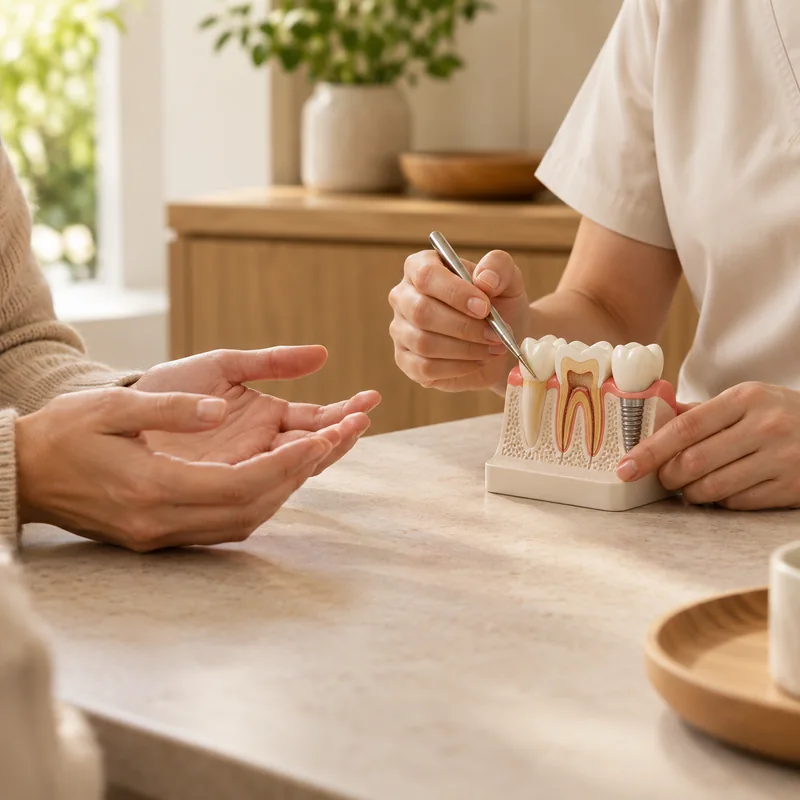
Wishes, dental health, remaining tissue and bite form the starting point. An attractive screen image cannot replace an examination.
Lips move during speech and smiling. Different views and movement recordings may therefore add information beyond a single posed photograph.
A design may make shape and proportions easier to discuss. Limits, required treatment and, where useful, a trial shape in the mouth are considered separately.
To discuss wishes and possible shape changes visually.
Individual suitability, complexity, function and the actual outcome.
Which parts are illustrative and which have been clinically assessed?
Three steps. No audio.
Each scene can also be selected manually.

Silent educational film with German on-screen text and simplified teaching images. Not a patient case or a promised treatment outcome. The full English explanation is available below.
Wishes, dental health, remaining tissue and bite form the starting point. An attractive screen image cannot replace an examination.
Lips move during speech and smiling. Different views and movement recordings may therefore add information beyond a single posed photograph.
A design may make shape and proportions easier to discuss. Limits, required treatment and, where useful, a trial shape in the mouth are considered separately.
A simulation shows a planned possibility. A result follows an individually appropriate treatment that has actually been carried out.
No. It can illustrate possible changes but cannot promise how biological limits, materials and actual treatment will combine.
No. Digital planning begins on a screen. A mock-up is a temporary trial shape on the teeth. Whether that is useful depends on the proposed treatment.
No. The information gained should suit the question. Examination and understandable planning matter more than a particular software or brand.
An editorially suggested question for a conversation with Dr. med. dent. Niusha Barahmand Pour:
What is achievable for my teeth, and which parts of the design are only illustrative?
An image can express a wish. Examination establishes the possibilities.
Discuss an aesthetic concernAppointment selection at DoctolibA simulation shows a planned possibility. A result follows an individually appropriate treatment that has actually been carried out.
Editorial research: . General information, not an individual diagnosis or treatment recommendation. Teaching illustrations are simplified and do not depict a patient case.