What may become restricted?
Joint gliding and mouth opening.

A TMJ disc adhesion is sticking or fibrous attachment that restricts the movement of the disc within the jaw joint. It can impede movement of the disc-condyle complex and limit mouth opening. Restricted opening alone does not prove an adhesion; other joint and muscle causes need to be distinguished.
For training & practice ↓
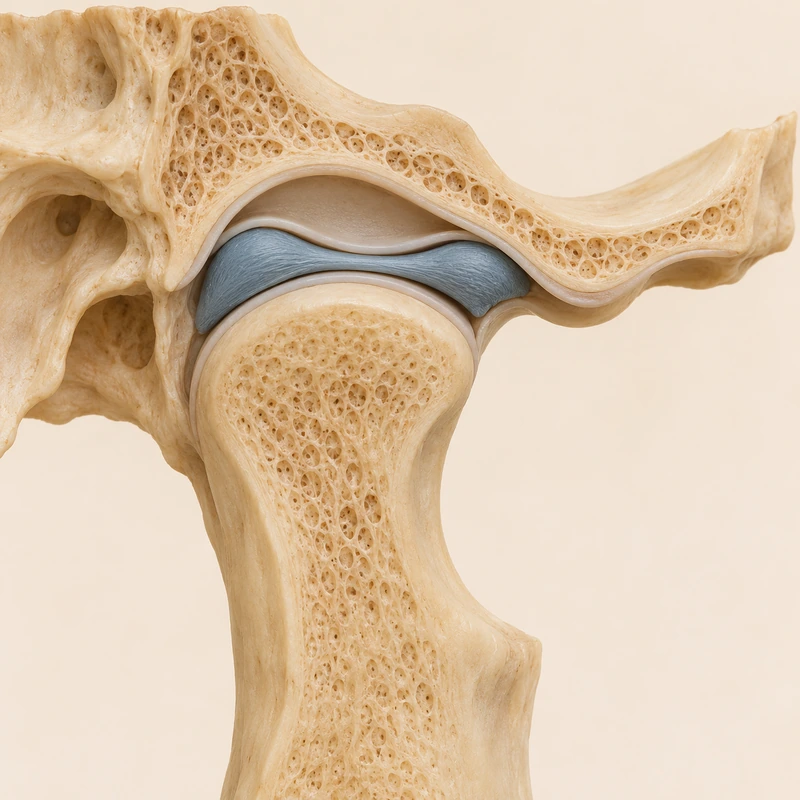
The disc lies between the mandibular condyle and temporal bone. The joint system needs to glide during normal movement. Adhesions can restrict this mobility.
A displaced disc, muscle problems and adhesions may cause similar symptoms. The history and examination of jaw movement help distinguish the possibilities.
MRI or specialised joint investigations may help answer a particular question. Arthroscopy is an invasive procedure requiring its own indication; it is not needed for every limitation in opening.
Joint gliding and mouth opening.
No.
No. It requires a specific indication.
Three steps. No audio.
Each scene can also be selected manually.

Silent educational film with German on-screen text and simplified teaching images. Not a patient case or a promised treatment outcome. The full English explanation is available as text.
Adhesions involve sticking or fibrous connections within the joint. Bony ankylosis joins joint structures through bone. Their causes, extent and management differ.
No. Displacement describes the disc’s position; adhesion describes sticking or fibrous attachment that restricts movement. They can coexist.
No. Neither the presence nor absence of noise proves the diagnosis. Opening distance alone is also insufficient; the complete assessment matters.
No. Diagnostic value and the appropriate method depend on the clinical question. The specialist determines whether imaging is sufficient or further investigation is useful.
An unexplained restriction needs assessment first. Avoid forceful self-manipulation; suitable movement exercises and other measures should be guided by the findings.
You can bring this question to your appointment:
What explains my restricted opening, and what additional information would the proposed investigation provide?
An individual examination can clarify the findings and suitable next steps.
Arrange an assessmentAppointment selection at DoctolibAdhesions involve sticking or fibrous connections within the joint. Bony ankylosis joins joint structures through bone. Their causes, extent and management differ.
Editorial research: . General information, not an individual diagnosis or treatment recommendation. Teaching illustrations are simplified and do not depict a patient case.
If you turn this on, this website stores which guides you open, separately from advertising preferences. The markers expire after a fixed 30-day period from activation. The list is not sent to us by this feature. You can turn it off here and delete the markers.
Other people using the same browser profile can also see the markers. German and English versions share one marker. Expired entries are removed the next time you open a page with this feature; deleting browser data may remove them earlier. “Viewed” means opened, not read or completed.