Aim?
Change space or bite relationships within a plan.

Distalisation is planned tooth movement towards the back of the dental arch. In selected treatment plans it can create space or change the bite relationship. Available space, anchorage and the limits of bone and gums must first be assessed.
For training & practice ↓
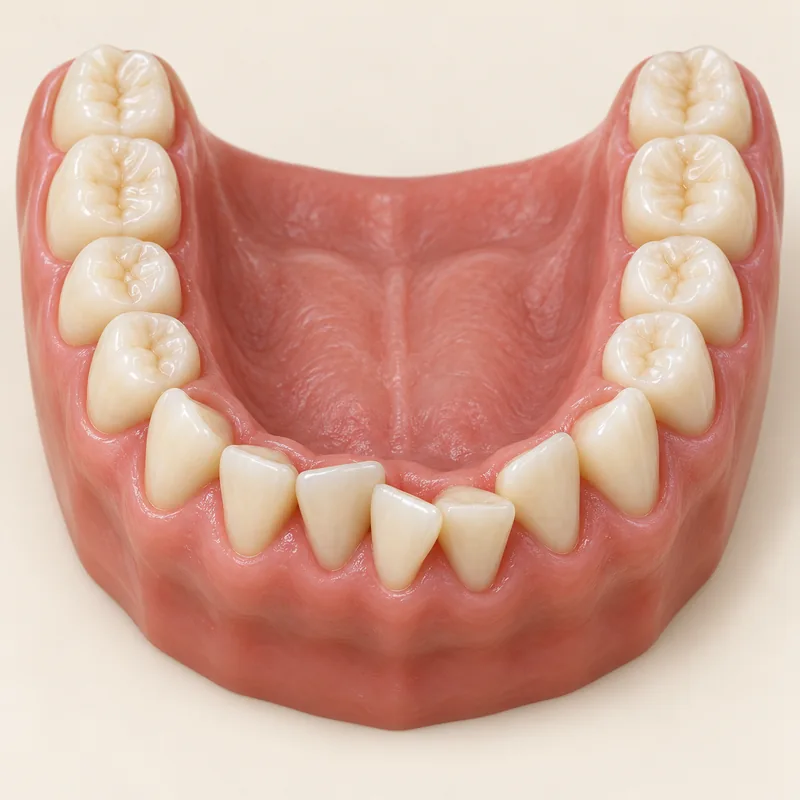
The tooth moves backwards along the arch. Rotation or simple tipping is a different movement.
Movement needs anchorage. Depending on the plan, this can involve other teeth, appliances or temporary anchorage screws.
Not every arch provides enough space. Reviews monitor tooth position and tissues; movement cannot be extended without limits.
Change space or bite relationships within a plan.
Adequate space and controlled anchorage.
Not a guaranteed alternative to extraction for everyone.
Three steps. No audio.
Each scene can also be selected manually.

Silent educational film with German on-screen text and simplified teaching images. Not a patient case or a promised treatment outcome. The full English explanation is available as text.
Distalisation is not an aligner brand and does not automatically mean enlargement of the jawbone.
No. The type and extent of movement and the anchorage needed determine the appliance.
No. It is one planning option, not a guarantee against extraction.
No. Use trays, elastics and screws only according to your individual treatment instructions.
Editorially suggested question to discuss with Dr Niusha Barahmand Pour:
What space and anchorage limits apply to my tooth movement?
With crowding, the useful question is where space can actually be gained. An examination can assess the options.
Discuss available spaceAppointment selection at DoctolibDistalisation is not an aligner brand and does not automatically mean enlargement of the jawbone.
Editorial research: . General information, not an individual diagnosis or treatment recommendation. Teaching illustrations are simplified and do not depict a patient case.