The principle?
Controlled separation with bone formation in the gap.

Distraction osteogenesis is a surgical technique that gradually and controllably moves previously divided bone segments apart. New bone can form in the developing gap. A distractor guides movement and then stabilises the segments during consolidation. In the jaws, it is used for selected deformities or bone deficiencies and requires an experienced specialist surgical team.
For training & practice ↓
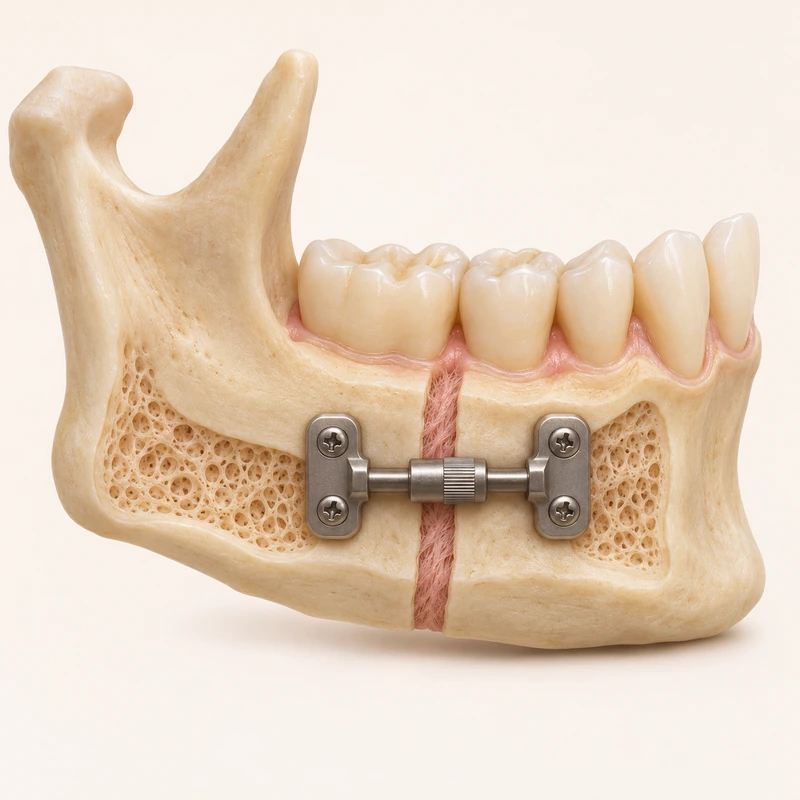
After a planned osteotomy, a distractor gradually separates the bone segments. New tissue forms between them. This is different from ordinary orthodontic tooth movement.
After active movement stops, the position remains stabilised while the new bone gains strength. The treating team decides when and how to remove the device.
Direction, healing and device function need regular checks. Device problems or signs of infection require prompt contact with the team. Unplanned adjustments may jeopardise treatment.
Controlled separation with bone formation in the gap.
No; only the treating team’s individual plan applies.
Contact the treating team promptly.
Three steps. No audio.
Each scene can also be selected manually.

Silent educational film with German on-screen text and simplified teaching images. Not a patient case or a promised treatment outcome. The full English explanation is available as text.
Distraction uses new bone formed between moved segments of the patient’s own bone. A graft introduces bone from another site. Each method has different requirements and risks.
No. Available height, width, nearby structures and the treatment goal limit suitability. Living with the device and possible further procedures must also be considered.
Possible problems include infection, altered sensation, dental injury, device problems or an unwanted direction of movement. Some of the achieved bone gain or correction may relapse.
There is no general activation guide here. Adjustments and reviews must follow the specialist team’s individual plan. Do not change the device settings yourself.
You can bring this question to your appointment:
Why does this technique suit my defect, what alternatives exist and who will provide close follow-up?
An individual assessment can clarify the findings and whether referral is needed.
Arrange an assessmentAppointment selection at DoctolibDistraction uses new bone formed between moved segments of the patient’s own bone. A graft introduces bone from another site. Each method has different requirements and risks.
Editorial research: . General information, not an individual diagnosis or treatment recommendation. Teaching illustrations are simplified and do not depict a patient case.
If you turn this on, this website stores which guides you open, separately from advertising preferences. The markers expire after a fixed 30-day period from activation. The list is not sent to us by this feature. You can turn it off here and delete the markers.
Other people using the same browser profile can also see the markers. German and English versions share one marker. Expired entries are removed the next time you open a page with this feature; deleting browser data may remove them earlier. “Viewed” means opened, not read or completed.