What is it for?
Allowing a collection of fluid or pus to drain.

Drainage provides a way for collected fluid or pus to escape. A dental abscess may need treatment through the tooth, an incision into the swelling or removal of the tooth causing the infection. Treating the cause remains essential; drainage alone does not solve every problem.
For training & practice ↓
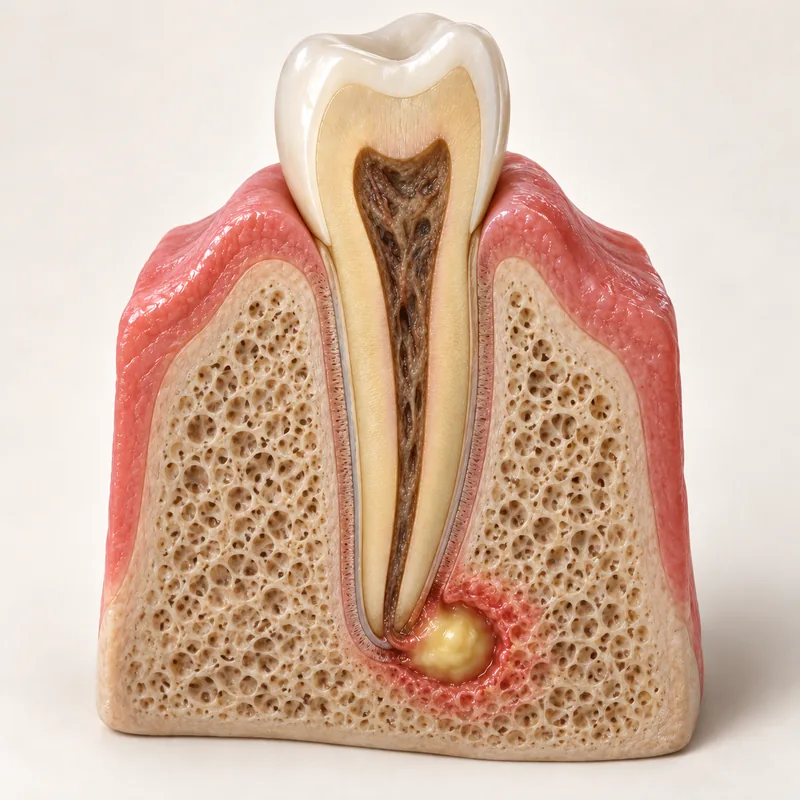
An abscess is a local collection of pus. Not every swelling is an abscess, and its appearance does not reliably show how far infection has spread.
The clinician decides whether and how to drain it. Depending on the findings, drainage may be achieved through the tooth or a small opening in the affected soft tissue.
Treatment of the affected tooth and follow-up may still be needed. Antibiotics are added only in particular circumstances and do not replace local treatment.
Allowing a collection of fluid or pus to drain.
The treating dental or medical clinician after assessment.
Follow the agreed advice and do not manipulate the wound or drain yourself.
Three steps. No audio.
Each scene can also be selected manually.

Silent educational film with German on-screen text and simplified teaching images. Not a patient case or a promised treatment outcome. The full English explanation is available as text.
Drainage is a local measure that allows fluid to escape. An antibiotic is a medicine and does not replace treatment of the infection source.
No. Do not squeeze, pierce or insert material into a wound. A painful swelling needs dental assessment.
No. Treatment depends on the findings. Local measures are central for a localised infection; spread or systemic symptoms may require additional treatment.
Breathing or significant swallowing problems, swelling in the floor of the mouth or rapidly spreading swelling require immediate medical help; for breathing difficulty in Germany, call 112. Fever or increasing swelling also needs urgent assessment.
You can bring this question to your appointment:
How will the cause be treated, and when should the area be checked after drainage?
A painful swelling needs prompt examination; seek immediate medical help for warning signs.
Discuss your findingsAppointment selection at DoctolibDrainage is a local measure that allows fluid to escape. An antibiotic is a medicine and does not replace treatment of the infection source.
Editorial research: . General information, not an individual diagnosis or treatment recommendation. Teaching illustrations are simplified and do not depict a patient case.