Umbrella term?
Discrepancies involving teeth and jaws.

Dysgnathia is an umbrella term for discrepancies in tooth or jaw positions and how they fit together. Jaw size, position and the relationship between the dental arches may be involved. Function, symptoms, growth and individual findings determine whether and how treatment is considered.
For training & practice ↓
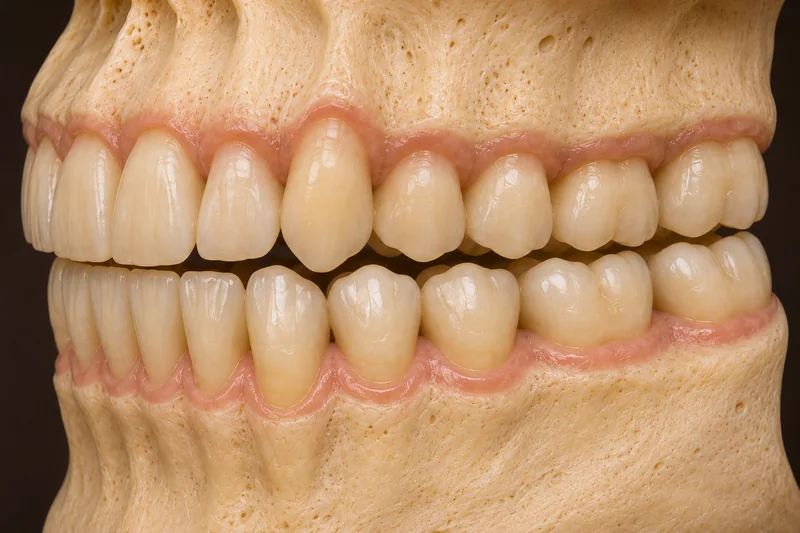
A dental discrepancy concerns tooth position. A skeletal discrepancy concerns the jaw bases. Both may contribute.
Assessment includes the bite, chewing and growth. A profile photograph alone does not establish medical treatment need.
Some findings can be managed orthodontically; others require consideration of combined orthodontic and surgical care. Surgery is not automatic.
Discrepancies involving teeth and jaws.
Individual assessment determines this.
Dental and, when appropriate, orthodontic assessment.
Three steps. No audio.
Each scene can also be selected manually.

Silent educational film with German on-screen text and simplified teaching images. Not a patient case or a promised treatment outcome. The full English explanation is available below.
A dental discrepancy concerns tooth position. A skeletal discrepancy concerns the jaw bases. Both may contribute.
Assessment includes the bite, chewing and growth. A profile photograph alone does not establish medical treatment need.
Some findings can be managed orthodontically; others require consideration of combined orthodontic and surgical care. Surgery is not automatic.
Dysgnathia describes dental or jaw discrepancies. TMD concerns disorders and symptoms of the masticatory system. One term does not establish the other.
No. It includes a wide range of findings and does not alone establish symptoms or treatment need.
No. Surgical involvement depends on the type and extent of the discrepancy.
No. Jaw symptoms can have several causes. A bite discrepancy alone does not establish TMD.
Editorially suggested question to discuss with Dr Niusha Barahmand Pour:
Does the discrepancy involve the teeth, the jaw bases or both?
Questions about the bite or jaw positions can be assessed and referred for specialist review where needed.
Discuss jaw relationshipsAppointment selection at DoctolibDysgnathia describes dental or jaw discrepancies. TMD concerns disorders and symptoms of the masticatory system. One term does not establish the other.
Editorial research: . General information, not an individual diagnosis or treatment recommendation. Teaching illustrations are simplified and do not depict a patient case.