Drilling needed?
No.

An electric pulp test checks whether a tooth responds to a controlled electrical stimulus. It assesses pulp sensibility, meaning a neural response. It does not directly measure blood supply or establish the exact health of the tissue inside the tooth.
For training & practice ↓
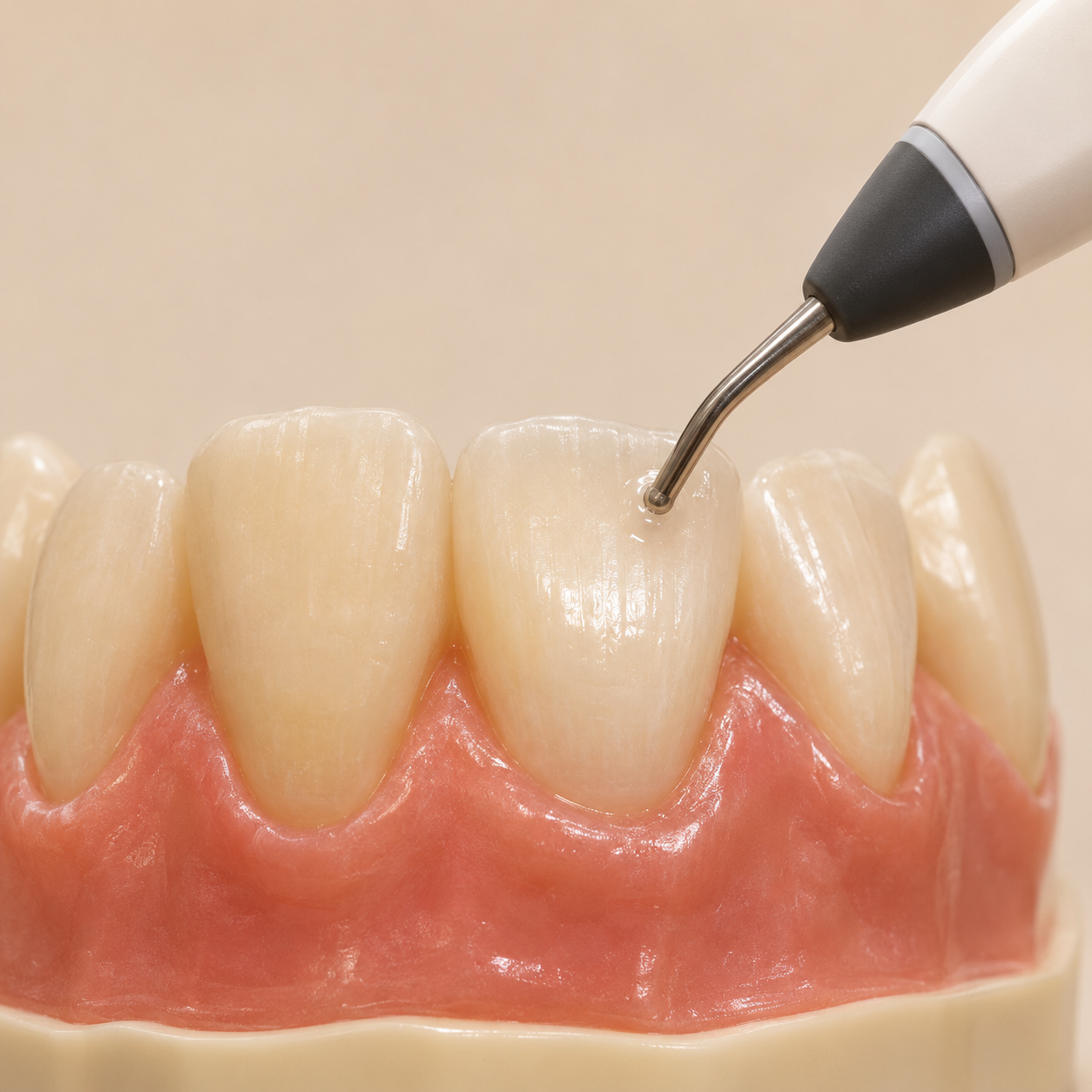
A testing tip touches the prepared tooth. The person reports the first sensation. The tooth is not drilled for this test.
A response does not prove that the entire pulp is healthy. Equally, an absent response alone does not establish that the pulp is dead.
Symptoms, examination, other sensibility tests and justified imaging where appropriate complement the result. Conflicting findings may require reassessment.
No.
No.
No; clinical interpretation matters.
Three steps. No audio.
Each scene can also be selected manually.

Silent educational film with German on-screen text and simplified teaching images. Not a patient case or a promised treatment outcome. The full English explanation is available as text.
Sensibility means the ability to perceive a stimulus. Vitality concerns living, supplied tissue. Electrical and thermal tests provide indirect information rather than measuring blood flow.
No. It records a response to a stimulus. Neural response and blood supply are different properties.
Not directly. Values depend on the device, contact and individual perception. They are not a universal disease scale.
No. A single test is insufficient. Its result must be considered alongside the other findings.
You can bring this question to your appointment:
How does this test result fit my symptoms and the other findings?
Discuss your individual findings and whether a referral is appropriate.
Discuss your findingsAppointment selection at DoctolibSensibility means the ability to perceive a stimulus. Vitality concerns living, supplied tissue. Electrical and thermal tests provide indirect information rather than measuring blood flow.
Editorial research: . General information, not an individual diagnosis or treatment recommendation. Teaching illustrations are simplified and do not depict a patient case.