Who goes first?
The child can practise first.

A parent or carer takes a turn with the brush after the child has practised. Inside surfaces, the gumline and the furthest back teeth are easily missed. The amount of help depends on which surfaces the child can consistently reach.
For training & practice ↓
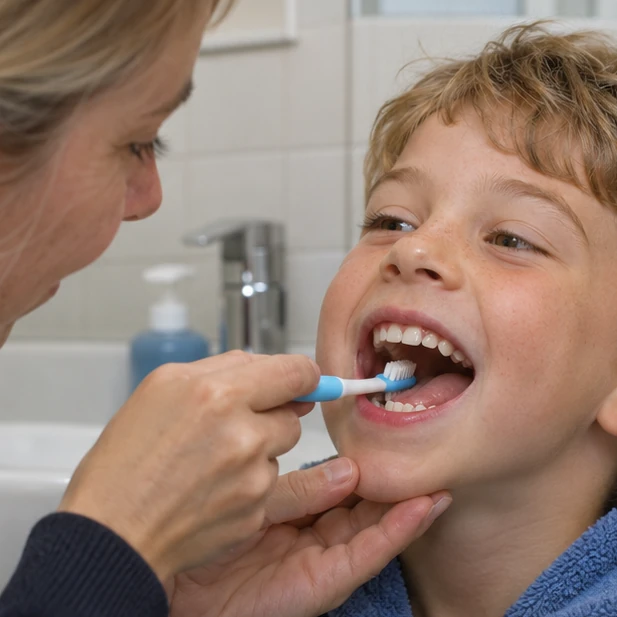
When brushing together, a carer can guide the brush to surfaces the child finds hard to reach.
The first cusp tips appear behind the baby molars. This tooth has no primary predecessor.
The bristles approach the teeth from the cheek side on this model. The inside surfaces need attention too.
When brushing together, a carer can guide the brush to surfaces the child finds hard to reach.
The first cusp tips appear behind the baby molars. This tooth has no primary predecessor.
The bristles approach the teeth from the cheek side on this model. The inside surfaces need attention too.
The child can practise first.
Behind the last baby molars and along the inside surfaces.
When the child consistently reaches all surfaces.
Three steps. No audio.
Each scene can also be selected manually.

Silent film with English on-screen text and simplified teaching images.
Both fit into the same routine. The child practises the movements and the adult follows up on missed areas.
German guidance suggests that many children have sufficient dexterity around age eight. This varies. Ask your child to demonstrate brushing at a dental visit and find out which spots still need adult help.
The first permanent molars appear behind the baby teeth. While a molar is erupting, its chewing surface can sit lower than the adjacent teeth. Place the brush directly on the visible surface.
Let your child brush first. Then work together through the chewing, outside and inside surfaces in a consistent order. A mirror helps show where the last tooth is.
A question to ask
Which surface should we make a point of cleaning together at home?
Ask the dental team to show you the hard-to-reach surfaces at a check-up.
Choose an appointmentAppointment selection at DoctolibAssess which surfaces the child can reach and clean. Age alone does not measure manual dexterity.
Editorial research: . General information, not an individual diagnosis or treatment recommendation. Teaching illustrations are simplified and do not depict a patient case.
If you turn this on, this website stores which guides you open, separately from advertising preferences. The markers expire after a fixed 30-day period from activation. The list is not sent to us by this feature. You can turn it off here and delete the markers.
Other people using the same browser profile can also see the markers. German and English versions share one marker. Expired entries are removed the next time you open a page with this feature; deleting browser data may remove them earlier. “Viewed” means opened, not read or completed.