Generally suitable?
Yes, when you can clean reliably with it.

A manual toothbrush cleans through bristle movements guided by the hand. It can form part of effective oral care when all tooth surfaces and the gum margin are reached thoroughly. Whether it suits daily use also depends on dexterity, grip, brush head and individual needs.
For training & practice ↓
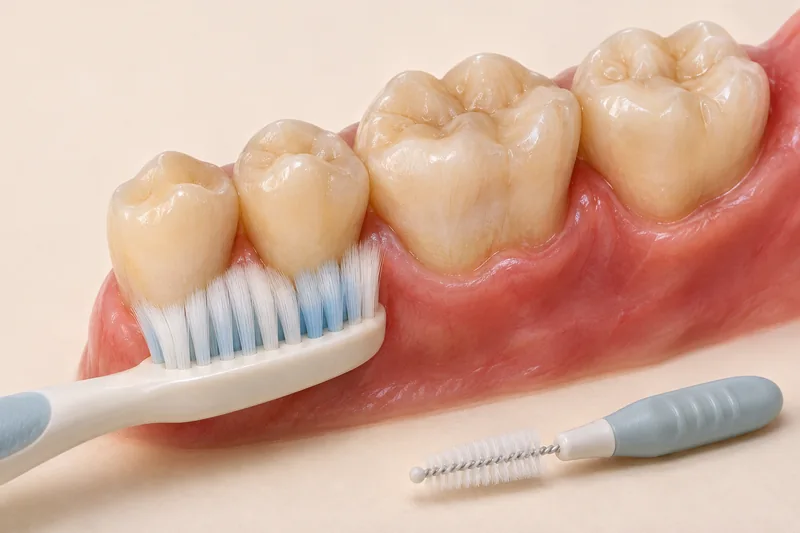
Outer, inner and biting surfaces all need attention. A systematic order helps avoid missed areas; brushing only the visible front teeth is not enough.
The head and handle should be easy to use. Controlled movements at the gum margin matter more than forceful scrubbing. A dental team can demonstrate an approach suited to your teeth.
A toothbrush does not adequately reach every part of narrow spaces between teeth. Suitable interdental brushes or floss can complement brushing. Selection depends on the available spaces.
Yes, when you can clean reliably with it.
No. Every surface needs to be reached.
Yes, used appropriately for age.
Three steps. No audio.
Each scene can also be selected manually.

Silent educational film with German on-screen text and simplified teaching images. Not a patient case or a promised treatment outcome. The full English explanation is available as text.
Time offers a guide, but it does not replace reaching every surface. Fluoride toothpaste and mechanical plaque removal perform complementary functions.
Either can be useful. Electric brushes show average advantages in plaque removal in studies; a manual brush can also clean well with suitable technique. What matters is whether you reliably reach the relevant areas.
For many adults, around two minutes twice a day is a useful guide. Additional cleaning needs may require more time. The clock alone cannot show whether cleaning is complete.
Greater hardness does not automatically mean better cleaning. Pressure and overly hard bristles can affect the gums. Choose a manageable brush and seek advice if your gums are sensitive.
Clearly bent or frayed bristles indicate that replacement is due. Early wear is also a reason to check how much pressure you apply.
You can bring this question to your appointment:
Which areas am I missing with my brush, and which interdental aids suit me?
At a preventive or oral-hygiene appointment, we can review your technique and suitable cleaning aids.
Arrange an assessmentAppointment selection at DoctolibTime offers a guide, but it does not replace reaching every surface. Fluoride toothpaste and mechanical plaque removal perform complementary functions.
Editorial research: . General information, not an individual diagnosis or treatment recommendation. Teaching illustrations are simplified and do not depict a patient case.