Where?
In chewing-surface grooves.

Fissure caries starts around the pits and grooves of a chewing surface, where biofilm can remain. A dark groove alone does not prove decay needing treatment; the surface and surrounding enamel need assessment.
For training & practice ↓
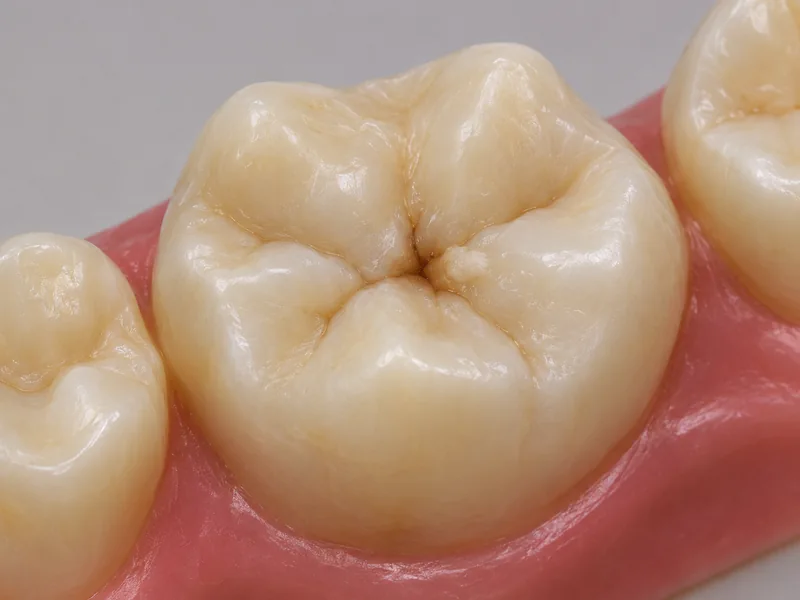
Fissures are part of normal chewing-surface anatomy. Their depth and accessibility vary.
The clean, dry tooth is examined. Additional methods may help when indicated; a photograph alone is insufficient.
Prevention, sealing or a filling may be appropriate depending on the findings. Sealed surfaces still need reviews.
In chewing-surface grooves.
No.
Surface integrity, activity and protection.
Three steps. No audio.
Each scene can also be selected manually.

Silent educational film with German on-screen text and simplified teaching images. Not a patient case or a promised treatment outcome. The full English explanation is available below.
Fissures are part of normal chewing-surface anatomy. Their depth and accessibility vary.
The clean, dry tooth is examined. Additional methods may help when indicated; a photograph alone is insufficient.
Prevention, sealing or a filling may be appropriate depending on the findings. Sealed surfaces still need reviews.
A fissure is a normal groove; a carious change there is fissure caries.
No. Colour alone does not show lesion activity or depth.
A thin material covers suitable grooves. This can aid cleaning and reduce decay risk at that site.
No. Sharp objects can damage the surface. Have a concerning area examined.
Editorially suggested question to discuss with Dr Niusha Barahmand Pour:
Is this groove only stained, or does it need treatment?
A concerning chewing surface can be assessed during a dental examination.
Have chewing surfaces assessedAppointment selection at DoctolibA fissure is a normal groove; a carious change there is fissure caries.
Editorial research: . General information, not an individual diagnosis or treatment recommendation. Teaching illustrations are simplified and do not depict a patient case.