Where are fissures found?
Especially on the shaped chewing surfaces of back teeth.

A tooth fissure is a natural groove between the cusps of a tooth crown, especially on the chewing surfaces of back teeth. Some grooves are narrow and deep. The term describes surface anatomy, not decay or a fracture.
For training & practice ↓
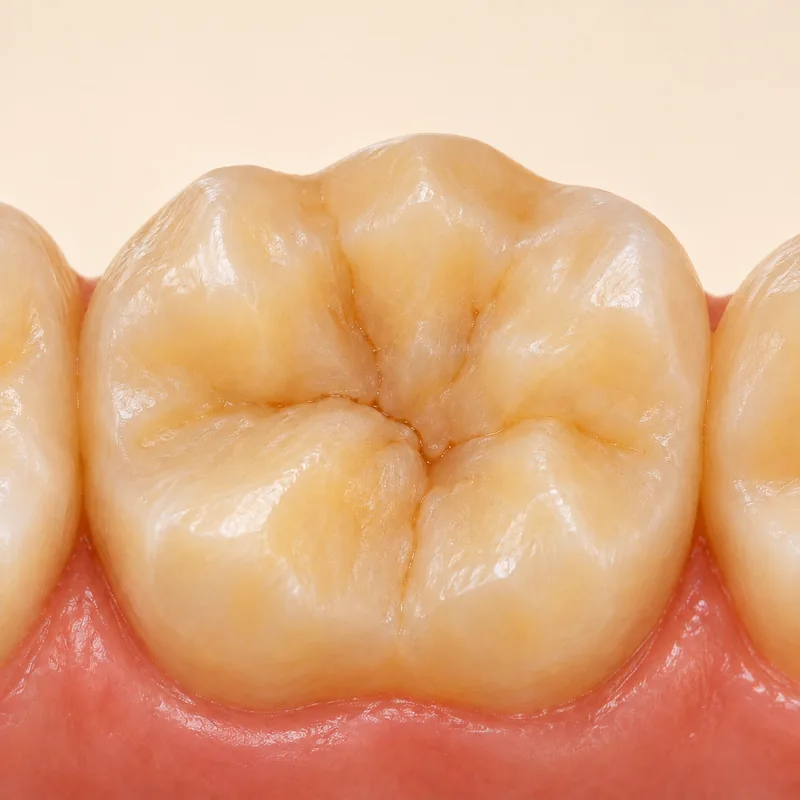
Cusps and the grooves between them form the chewing surface. Shape varies between teeth and people; a deep groove is not automatically diseased.
Plaque can remain in narrow grooves. Fluoride toothpaste and careful brushing remain important. The need for extra protection depends on the tooth and decay risk.
A dark fissure may be stained or contain a caries lesion. Examination guides monitoring, sealing or treatment; not every groove needs drilling.
Especially on the shaped chewing surfaces of back teeth.
The surface, access for cleaning and decay risk.
For new sensitivity, pain on biting or a visible defect, before the next routine check-up.
Three steps. No audio.
Each scene can also be selected manually.

Silent educational film with German on-screen text and simplified teaching images. Not a patient case or a promised treatment outcome. The full English explanation is available below.
Cusps and the grooves between them form the chewing surface. Shape varies between teeth and people; a deep groove is not automatically diseased.
Plaque can remain in narrow grooves. Fluoride toothpaste and careful brushing remain important. The need for extra protection depends on the tooth and decay risk.
A dark fissure may be stained or contain a caries lesion. Examination guides monitoring, sealing or treatment; not every groove needs drilling.
A fissure is a natural structure. A sealant is a deliberately applied protective layer on a suitable surface.
No. A natural chewing-surface groove and a newly formed crack or fracture are different findings.
No. Access for cleaning, decay risk and surface integrity matter. Existing sealants also need reviews.
No. Do not probe the groove with sharp objects. Concerning changes or pain should be examined.
An editorially suggested question for a discussion with Dr med dent Niusha Barahmand Pour:
Is this fissure healthy and accessible for cleaning, or could a sealant be appropriate?
Noticed a dark groove? A check-up can establish whether cleaning and monitoring are enough or added protection may help.
Have the chewing surface checkedAppointment selection at DoctolibA fissure is a natural structure. A sealant is a deliberately applied protective layer on a suitable surface.
Editorial research: . General information, not an individual diagnosis or treatment recommendation. Teaching illustrations are simplified and do not depict a patient case.