Purpose?
Force transfer using external support.

Orthodontic headgear transfers forces to an appliance connected to the teeth through support around the head or neck. It may form part of an individual bite-correction plan. Its safety components and exact wearing instructions are essential.
For training & practice ↓
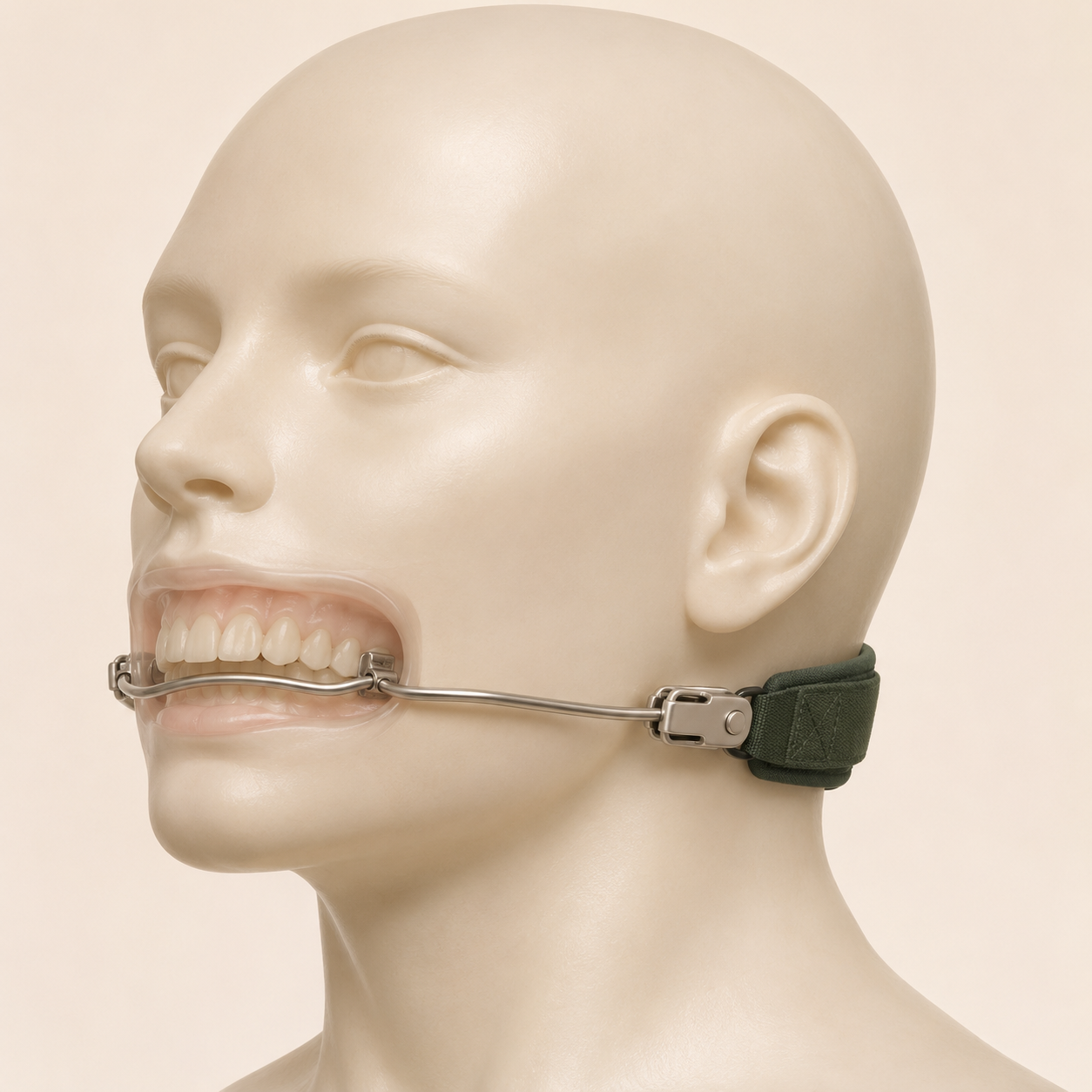
The facebow connects with the intraoral appliance. The direction of pull and attachments depend on the treatment aim. A diagram cannot replace instruction on fitting the device.
The orthodontic team specifies wearing times and the safety assembly. Do not wear headgear for sports or rough play. Other people must not pull on the facebow.
If the appliance comes off at night or is damaged, stop using it until you have spoken to the team. An injury to the eye requires immediate assessment by an eye specialist.
Force transfer using external support.
No.
Seek immediate eye-specialist assessment.
Three steps. No audio.
Each scene can also be selected manually.

Silent educational film with German on-screen text and simplified teaching images. Not a patient case or a promised treatment outcome. The full English explanation is available as text.
Headgear uses support outside the mouth. Fixed braces act through brackets and wires attached to teeth. They can be combined within a treatment plan.
No. Selection depends on the actual tooth and jaw relationship and the available alternatives.
No. Force, fit and wearing hours belong to the agreed treatment plan. Discuss changes with the treating orthodontic team.
Stop wearing it until the treating orthodontic team has checked the appliance and advised that it can be used again. Arrange this review as soon as possible.
You can bring this question to your appointment:
What role does headgear have in my plan, and which safety rules apply to this model?
Discuss your individual findings and whether a referral is appropriate.
Discuss your findingsAppointment selection at DoctolibHeadgear uses support outside the mouth. Fixed braces act through brackets and wires attached to teeth. They can be combined within a treatment plan.
Editorial research: . General information, not an individual diagnosis or treatment recommendation. Teaching illustrations are simplified and do not depict a patient case.