Always based in bone?
No; teeth can provide support.

Orthodontic anchorage means limiting unwanted movement of the supporting teeth or other supporting structures. A force moving a tooth also creates a reaction force. Planning identifies which areas should move and which should remain relatively stable.
For training & practice ↓
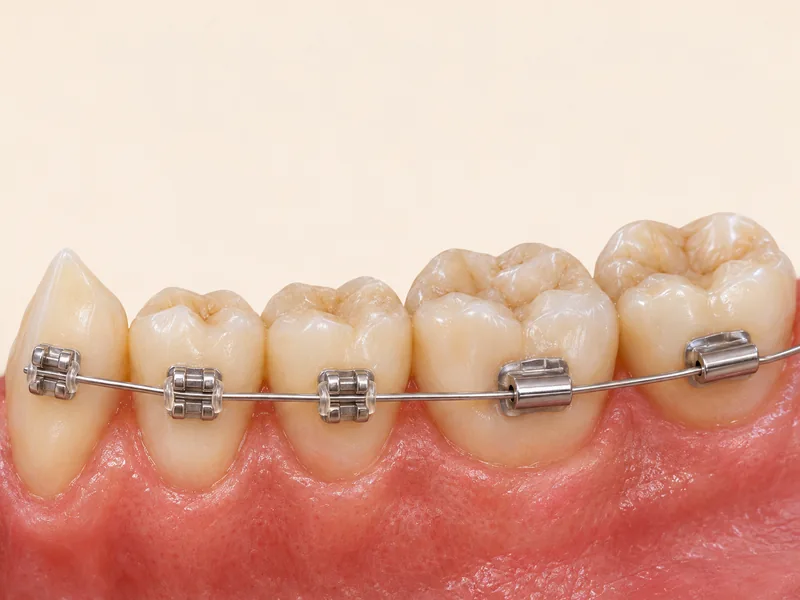
Tooth movement needs support. Force acts on both the tooth being moved and the supporting unit.
Several teeth can support a movement together. Additional appliances or temporary anchorage devices may be considered in selected situations.
A supporting area can still change position. Reviews assess whether movement is occurring as intended.
No; teeth can provide support.
Support needs monitoring.
Retention is then often the main issue.
Three steps. No audio.
Each scene can also be selected manually.

Silent educational film with German on-screen text and simplified teaching images. Not a patient case or a promised treatment outcome. The full English explanation is available as text.
Anchorage supports active forces. Retention maintains an achieved tooth position. These are different functions.
It means unwanted movement of the supporting unit. This can, for example, leave less space for the intended tooth movement.
No. Support depends on the planned movement, space and anatomy. Mini-implants are one possible approach.
No. Anchorage controls forces during active tooth movement. A retainer mainly helps maintain tooth positions after active treatment.
You can bring this question to your appointment:
Which teeth should move, and how will their support be monitored?
An examination can clarify the finding and any need for referral.
Arrange an assessmentAppointment selection at DoctolibAnchorage supports active forces. Retention maintains an achieved tooth position. These are different functions.
Editorial research: . General information, not an individual diagnosis or treatment recommendation. Teaching illustrations are simplified and do not depict a patient case.