Common in children?
Yes, but adults can also be affected.

Herpangina is an infection, usually caused by enteroviruses, with fever, a sore throat and small blisters or ulcers at the back of the mouth and throat. It commonly affects children. Despite its name, it is distinct from typical herpes simplex gingivostomatitis. Painful swallowing can make drinking difficult.
For training & practice ↓
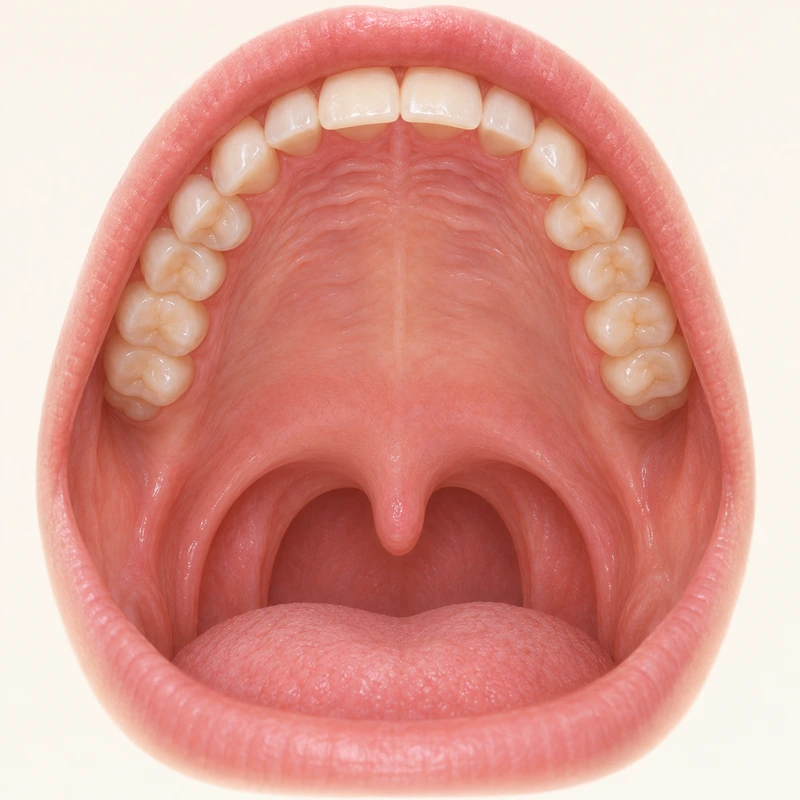
Small blisters and ulcers often involve the soft palate, tonsillar pillars or throat. Assessment considers the whole illness; a few pale spots do not establish a diagnosis.
Swallowing pain may reduce a child’s drinking. Cool, non-acidic drinks and soft foods may be easier to tolerate. Use pain relief only with age-appropriate advice.
Handwashing helps limit transmission. Seek medical advice for refusal to drink, signs of dehydration or deterioration, and reassessment if symptoms persist.
Yes, but adults can also be affected.
The back of the mouth and throat.
Offer adequate, tolerable fluids.
Three steps. No audio.
Each scene can also be selected manually.

Silent educational film with German on-screen text and simplified teaching images. Not a patient case or a promised treatment outcome. The full English explanation is available as text.
Herpangina typically involves the posterior mouth. Primary herpes simplex gingivostomatitis often affects more extensive oral areas and the gums. Names and photographs cannot replace an examination.
Both can be caused by enteroviruses. Herpangina mainly affects the back of the mouth and throat; a typical hand or foot rash suggests HFMD. The overall findings guide diagnosis.
Antibiotics do not treat the causative viruses. Care usually focuses on fluids and symptom relief. Other or additional illnesses may need to be excluded.
Yes. Children are affected more often, but adults can also become infected. Hand hygiene is especially important after using the toilet or changing nappies.
If drinking is inadequate, the child seems very unwell, fever is very high or persistent, or symptoms are not improving after several days. Do not wait for the expected course if the condition worsens.
Uncomplicated illness often improves within about a week; oral lesions may take a few days longer. Poor drinking or deterioration calls for earlier medical advice regardless of the expected duration.
Viruses may continue to be shed in stool after symptoms resolve. Visible improvement therefore does not establish a point with no transmission risk. This does not provide a fixed nursery exclusion period; if symptoms remain, discuss return with the clinician and nursery. Hand hygiene remains important.
You can bring this question to your appointment:
Is fluid intake adequate, and which changes should prompt further medical assessment?
Have acute symptoms assessed medically first. Subsequent dental care can address oral hygiene and avoiding irritation.
Discuss subsequent dental careAppointment selection at DoctolibHerpangina typically involves the posterior mouth. Primary herpes simplex gingivostomatitis often affects more extensive oral areas and the gums. Names and photographs cannot replace an examination.
Editorial research: . General information, not an individual diagnosis or treatment recommendation. Teaching illustrations are simplified and do not depict a patient case.
If you turn this on, this website stores which guides you open, separately from advertising preferences. The markers expire after a fixed 30-day period from activation. The list is not sent to us by this feature. You can turn it off here and delete the markers.
Other people using the same browser profile can also see the markers. German and English versions share one marker. Expired entries are removed the next time you open a page with this feature; deleting browser data may remove them earlier. “Viewed” means opened, not read or completed.