Always contagious?
No; the cause matters.

Stomatitis is an umbrella term for inflammation of the lining of the mouth. Possible causes include mechanical irritation, a contact reaction or an infection. The term alone identifies neither the cause nor the appropriate treatment.
For training & practice ↓
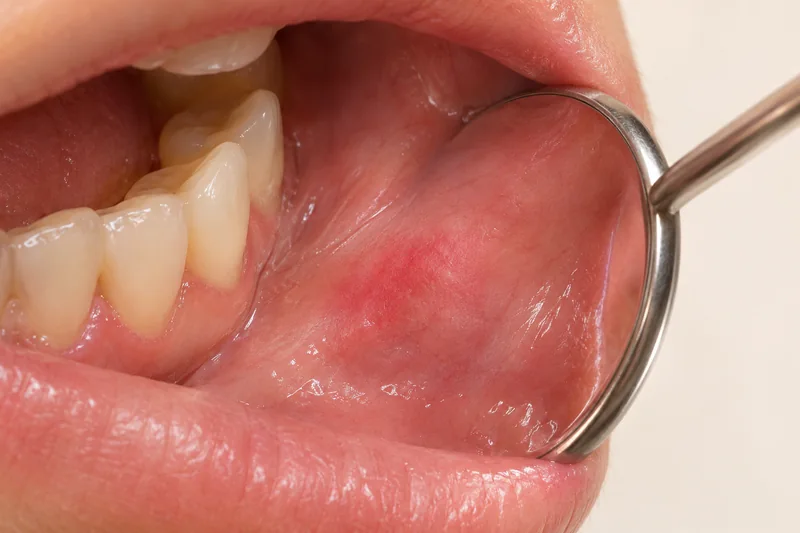
The moist lining of the mouth can become inflamed. Redness, tenderness or small sore areas may develop; appearance alone does not establish the cause.
A sharp tooth edge, rubbing from a denture, a contact reaction or an infection may be involved. Areas that look similar can have different causes.
Onset, duration, medicines and possible sources of irritation matter. A sore lasting longer than three weeks needs assessment; severe or worsening symptoms should be assessed sooner.
No; the cause matters.
No. Similar changes can have different causes.
Persistent, unusual or worsening changes should be examined.
Three steps. No audio.
Each scene can also be selected manually.

Silent educational film with German on-screen text and simplified teaching images. Not a patient case or a promised treatment outcome. The full English explanation is available as text.
Stomatitis describes inflammation. Infection can cause it, but so can rubbing, injury or a contact reaction. A single mouth ulcer is also different from widespread inflammation of the lining.
No. Stomatitis is a general term for inflammation of the mouth lining. Herpetic gingivostomatitis is a specific condition caused by herpes viruses. A red or painful area is not automatically this infection.
That depends on the cause. A mechanically irritated area is different from a transmissible infection. The word stomatitis alone does not establish whether it is contagious.
The cause needs to be assessed first. A soft toothbrush and avoiding irritating, very hot or rough-edged foods may be more comfortable when the mouth is sore. The term alone cannot determine which medicine is appropriate.
A sore that lasts longer than three weeks, looks unusual, bleeds or becomes more painful needs assessment. Do not wait three weeks if symptoms are severe or getting worse quickly.
You can bring this question to your appointment:
When did the change start, and could a source of irritation or a new medicine be involved?
An examination can help clarify changes in the mouth lining and the next steps if symptoms persist.
Arrange an assessmentAppointment selection at DoctolibStomatitis describes inflammation. Infection can cause it, but so can rubbing, injury or a contact reaction. A single mouth ulcer is also different from widespread inflammation of the lining.
Editorial research: . General information, not an individual diagnosis or treatment recommendation. Teaching illustrations are simplified and do not depict a patient case.