Always visible?
No; some remain within the jaw.

Hyperdontia means that more teeth develop than usual for that dentition. Extra teeth may erupt or remain within the jaw. Their significance mainly depends on their position and effects on neighbouring teeth.
For training & practice ↓
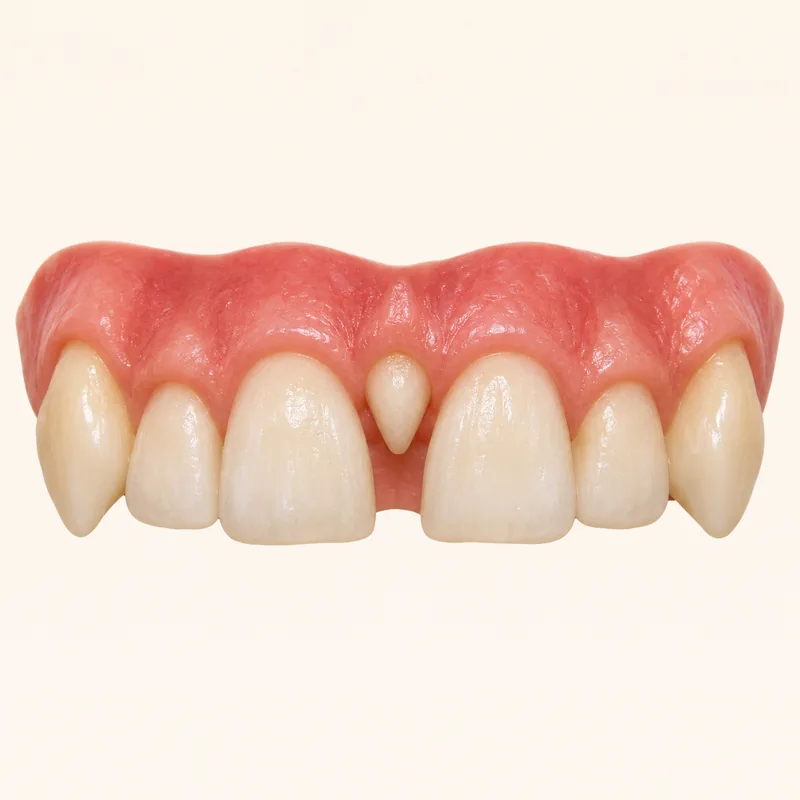
An extra tooth may resemble its neighbours or have a very different shape. Counting teeth alone does not explain the whole situation.
A supernumerary tooth can obstruct or displace a permanent tooth. Markedly uneven tooth eruption needs assessment.
Monitoring or removal is considered according to position, development and risk. Imaging is planned when clinically indicated.
No; some remain within the jaw.
Obstructed or altered eruption.
Tooth count, development and imaging if needed.
Three steps. No audio.
Each scene can also be selected manually.

Silent educational film with German on-screen text and simplified teaching images. Not a patient case or a promised treatment outcome. The full English explanation is available as text.
Hyperdontia means extra teeth; hypodontia means some teeth did not develop.
No. Benefits and risks are considered individually.
Yes. Any implications for the permanent successors are also assessed.
No. Multiple extra teeth or other findings may prompt further assessment but do not prove a disorder.
Editorially suggested question to discuss with Dr Niusha Barahmand Pour:
Does the extra tooth affect eruption or neighbouring teeth?
If a tooth erupts unusually late or unevenly, an examination can investigate the cause.
Have eruption assessedAppointment selection at DoctolibHyperdontia means extra teeth; hypodontia means some teeth did not develop.
Editorial research: . General information, not an individual diagnosis or treatment recommendation. Teaching illustrations are simplified and do not depict a patient case.