What is its purpose?
It connects the implant body to the prosthetic abutment.

The implant–abutment connection is the technical interface between the implant anchored in bone and the abutment supporting the crown or other restoration. It may be internal or external, conical or another shape. In screw-retained constructions, the fit and screw preload work together. Not every connection can be combined with every component.
For training & practice ↓
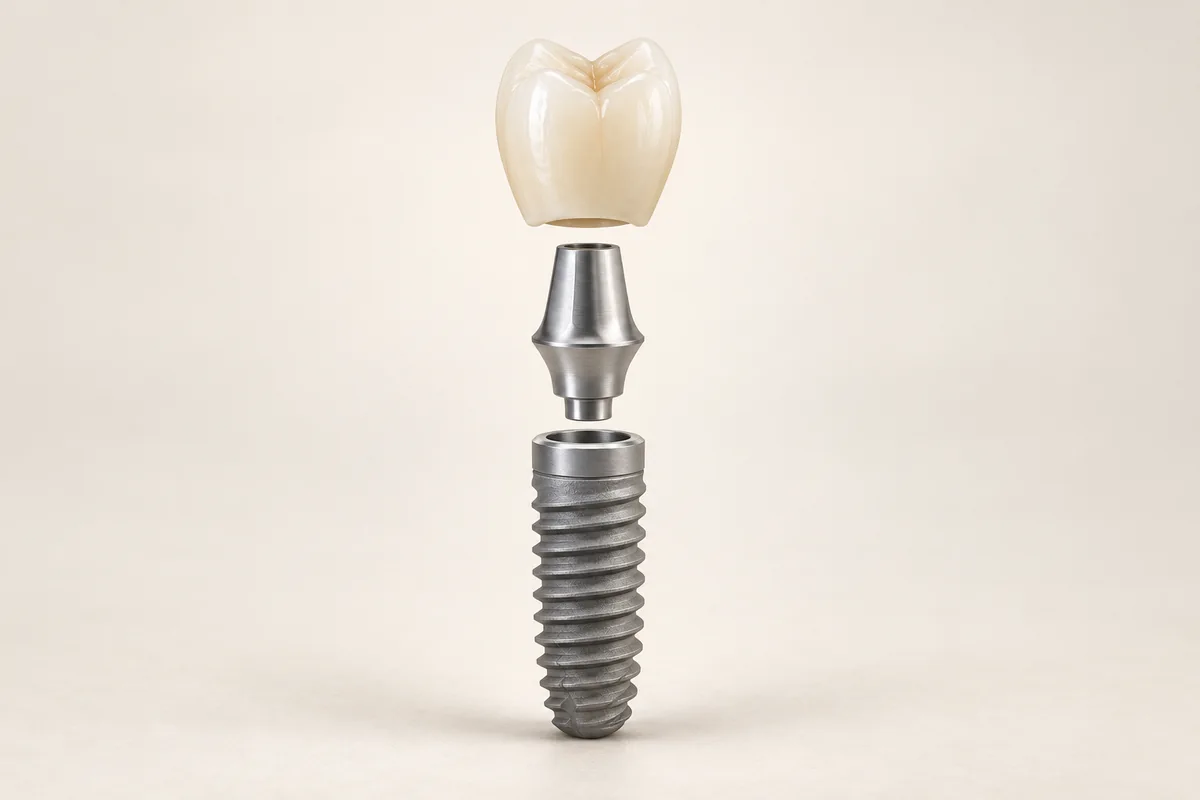
The implant is anchored in bone. Above it, the abutment connects the implant body to the restoration. Its contact surface must match the intended implant connection.
Correct tightening of the connecting screw creates preload that holds the components together. Fit, screw design and loading influence mechanical stability.
A moving crown, unusual sounds or a changed bite should be examined. Sensation alone cannot reliably establish whether looseness comes from a screw, the crown or the implant itself.
It connects the implant body to the prosthetic abutment.
No. Fit, the screw, preload and loading also matter.
Professional assessment, without attempts to repair or tighten it yourself.
Three steps. No audio.
Each scene can also be selected manually.

Silent educational film with German on-screen text and simplified teaching images. Not a patient case or a promised treatment outcome. The full English explanation is available as text.
The implant is anchored in bone. The abutment is the connecting component above it. A loose abutment connection does not automatically mean that the implant is loose in the bone.
A particular shape may show mechanical advantages in the laboratory. Laboratory comparisons do not establish a universal clinical ranking of all systems. Planning, components and loading still matter.
No. Compatibility with the implant system and planned restoration must be established. Components that look alike are not automatically interchangeable.
No. The cause needs professional assessment using suitable components and a controlled approach. Arrange a prompt examination and avoid loading the loose restoration until then.
You can bring this question to your appointment:
Which connection system is documented for my implant, and which changes should I watch for?
If an implant restoration is being planned or starts to feel different, you can discuss its components, documentation and review.
Discuss your findingsAppointment selection at DoctolibThe implant is anchored in bone. The abutment is the connecting component above it. A loose abutment connection does not automatically mean that the implant is loose in the bone.
Editorial research: . General information, not an individual diagnosis or treatment recommendation. Teaching illustrations are simplified and do not depict a patient case.