Which part does the term mean?
Strictly, the implant body in bone.

An implant-body fracture is a break in the component anchored in bone. It differs from a broken screw, abutment or crown. Feeling movement in an implant restoration does not identify which component is affected.
For training & practice ↓
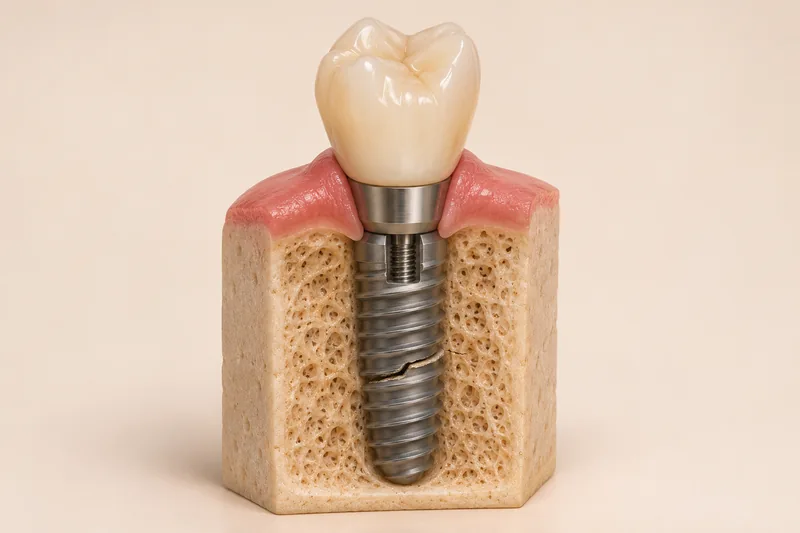
The implant body sits in bone. The abutment and restoration sit above it, often joined by screws. A fracture in one of these parts is not automatically an implant-body fracture.
Components, loading, the bite and surrounding tissues are assessed. Radiographs may help answer specific clinical questions. A model cannot replace this examination.
Repairable screw or crown problems are managed differently from an implant-body fracture. Whether parts can be replaced or the implant needs removal depends on the findings.
Strictly, the implant body in bone.
Fracture location, component condition and restoration loading.
Examination guides repair, component replacement or, where needed, removal.
Three steps. No audio.
Each scene can also be selected manually.

Silent educational film with German on-screen text and simplified teaching images. Not a patient case or a promised treatment outcome. The full English explanation is available as text.
An implant-body fracture affects the component anchored in the jaw. A screw fracture affects a connecting part. Both can compromise the restoration but require different planning.
Not necessarily. A loose screw or connection can also cause movement. The affected component needs to be identified.
No. Options depend on the fracture location, implant system and remaining components. A fractured implant body differs from a replaceable screw.
Arrange prompt assessment and avoid additional loading of the affected area meanwhile. Do not tighten or glue it yourself. Pain or swelling makes prompt assessment particularly important.
You can bring this question to your appointment:
Is the implant body damaged, or is a replaceable connecting component affected?
An examination can clarify the finding and any need for referral.
Arrange an assessmentAppointment selection at DoctolibAn implant-body fracture affects the component anchored in the jaw. A screw fracture affects a connecting part. Both can compromise the restoration but require different planning.
Editorial research: . General information, not an individual diagnosis or treatment recommendation. Teaching illustrations are simplified and do not depict a patient case.